
What are the must-see monuments to visit in Arras?
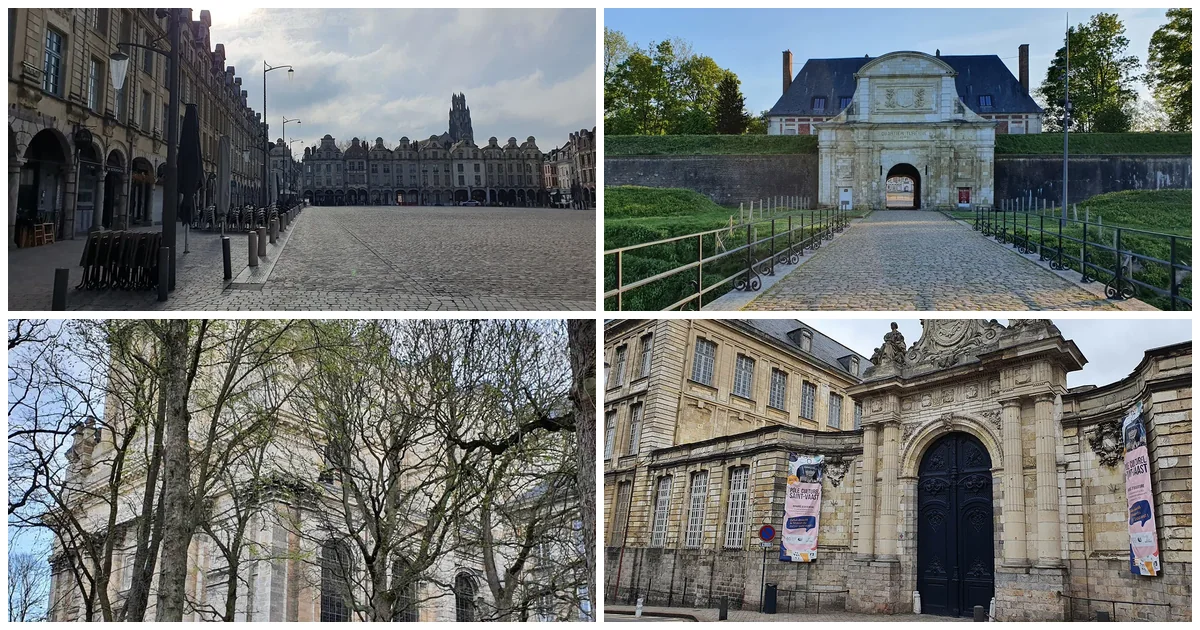
Almost nine tenths destroyed during the First World War and then patiently rebuilt, Arras today offers one of the most spectacular urban ensembles in northern France. Discovering the must-see monuments of Arras means crossing two thousand years of history in a few hundred metres, from medieval underground galleries to the Baroque facades of the Flemish squares, from the belfry listed as a UNESCO World Heritage site to the citadel designed by Vauban. The city is the right size for it: almost everything can be visited on foot, in a compact centre where every street holds a surprise. This guide sets out a tour of the sites not to be missed, with a few practical markers to plan your visit and make the most of a dense, coherent and remarkably preserved heritage, despite the ordeals of the twentieth century. It does not claim to be exhaustive, but offers a thread so as not to get lost among so many treasures and to prioritise visits according to the time available.
The Flemish squares, the monumental heart of the city
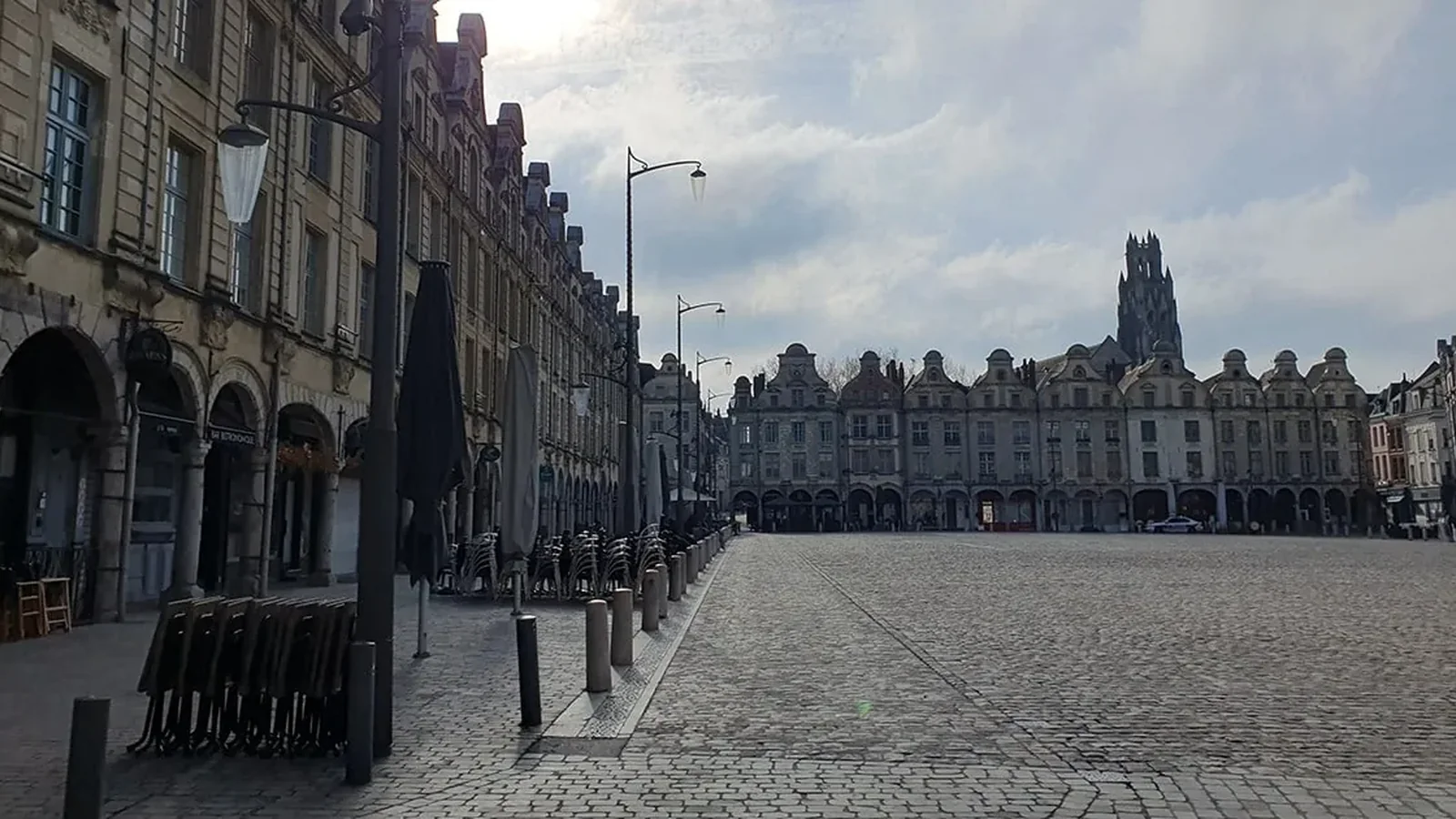
The first shock in Arras is that of the two great squares. The Grand'Place and the Place des Héros, linked by a short street, form a unique ensemble of a hundred and fifty-five arcaded facades of Flemish Baroque inspiration, rebuilt identically after the destruction of the Great War. Under these arcades follow terraces, shops and restaurants, in a setting that feels as if you had crossed the Belgian border. Over the Place des Héros watches one of the city's symbols, the Arras belfry and town hall, whose seventy-five-metre spire can be seen from afar and whose climb rewards the brave with an exceptional panorama over the rooftops. The town hall, in flamboyant Gothic style, was also rebuilt after 1918, like most of what the visitor admires today. These squares are not mere backdrops: they remain the beating centre of Arras life, hosting markets, terraces, the Christmas market and major events. Lingering there, a coffee in hand, watching the play of gables and colours, is already a visit in itself, and the best starting point to explore the rest of the city. It is also here that you grasp the miracle of the reconstruction, these facades seeming so old that you forget they are less than a century old.
Beneath the squares, the boves and the underground city
What you see of Arras is only half the story, for the city continues underground. Dug from the Middle Ages into the chalk to extract stone and then serve as cellars and warehouses, the boves of Arras form a network of underground galleries running beneath the squares and part of the centre. Cool and silent, they played a decisive role during the conflicts, offering shelter and protected passageways. Visiting them means understanding how the city survived the bombardments and how its inhabitants lived below the surface during the darkest periods. The atmosphere is striking, just a few metres from the bustle of the terraces, and the contrast between the light of the squares and the gloom of the galleries leaves a lasting memory. This underground dimension is an integral part of the Arras identity and sets the city apart from many other heritage towns, which offer only a surface reading. For the curious visitor, it is one of the most original experiences of the stay, best booked in advance, since access is usually by guided tour and slots are sought after, especially in high season and during the school holidays. Many visitors leave these galleries feeling they have touched a more intimate history than that of the surface monuments, the story of ordinary people facing hardship.
Saint-Vaast Abbey and the Fine Arts palace
A few steps from the squares stretches one of the largest monastic ensembles in the North, the former Saint-Vaast Abbey, at the very origins of the city. Rebuilt in the eighteenth century in a majestic classical style, the ensemble was turned after the Revolution into the Saint-Vaast palace, which today houses the cathedral and the Fine Arts museum. The classical sobriety of its long facades contrasts with the Baroque exuberance of the squares, offering the stroller another face of Arras, more solemn and more peaceful. You sense how much Arras was, from the outset, a city of spiritual as well as mercantile power, whose abbey long set the rhythm of local life.
The Fine Arts museum
Set in the galleries of the former abbey, the Fine Arts museum is among the richest in the region. Flemish and French paintings, medieval sculpture, porcelain and collections devoted to local history unfold in a remarkable setting, that of the palace's vast vaulted halls. The visit is worth it as much for the works as for the setting that houses them, and helps grasp the historical and artistic importance Arras long held in the north of the kingdom.
The Notre-Dame-et-Saint-Vaast cathedral
Adjoining the palace, the cathedral impresses with its dimensions and its neoclassical architecture. Vast, luminous and spare, it contrasts with the usual idea of a Gothic cathedral and reflects the eighteenth century's taste for pure lines. Damaged and then restored after the wars, it dominates its district with its pale mass and harmoniously completes the monumental ensemble of the former abbey, not to be missed on a tour of the centre.
| Monument | What to see |
|---|---|
| Belfry and town hall | Climb to the top, panorama, flamboyant Gothic style (UNESCO) |
| Grand'Place and Place des Héros | Arcaded Baroque facades, terraces, markets |
| Saint-Vaast palace | Fine Arts museum and cathedral, former abbey |
| Citadel | Vauban's star-shaped ramparts, Wall of the Shot, walks |
| Three Luppars house | Oldest house, stepped Gothic gable |
| The boves | Medieval underground galleries beneath the centre |
Vauban's citadel, the useless beauty
South of the centre, the Arras citadel, the work of Vauban, offers a very different walk. Built at the end of the seventeenth century to protect the city newly attached to the kingdom of France, it was nicknamed the useless beauty because it never underwent a siege. Its star-shaped ramparts, monumental gates and vast green spaces make it today a much-loved place to stroll for the people of Arras, also listed as a UNESCO World Heritage site among the Vauban fortifications. The site is not only a masterpiece of military architecture, it also carries a solemn memory: in its ditches, the Wall of the Shot recalls the execution of resistance fighters during the Second World War, and a nearby military cemetery completes this place of remembrance. The citadel now welcomes walkers, joggers and, each summer, major music events that take over its glacis. This dual nature, historic fortress and green lung, makes it a must for anyone wanting to step beyond the Baroque centre and discover a broader, greener side of the city, about fifteen minutes' walk from the squares. Bringing good shoes and a little time lets you make the full circuit, enjoying the views over the ramparts and the surrounding countryside.
The Three Luppars house and civil architecture
Among the hundred or so facades bordering the squares, one stands clearly apart from the rest. The Three Luppars house, on the Grand'Place, is the oldest in the city, one of the few to have crossed the centuries in its original style, with its characteristic stepped Gothic gable and its three leopards, or luppars, that gave it its name. Where most facades belong to the twentieth-century reconstruction, faithful but later, this house offers an authentic testimony of medieval Flemish architecture and recalls what the city looked like before the destruction. Now a hotel, it still welcomes visitors at the heart of the monumental setting. Standing before it means measuring the patience and skill deployed to raise Arras after 1918, respecting the spirit of an ensemble that could, at the time, have been rebuilt quite differently. This concern for fidelity to the past, rare for a reconstruction of such scale, explains the visual coherence of the squares and the strength of their effect on the visitor, who often believes they are gazing at intact buildings when they are in fact admiring a resurrection. It gives the visitor a precious marker for telling apart, among the facades, what is authentically medieval and what belongs to the twentieth-century restitution.
Remembrance of the Great War around Arras
You cannot understand Arras without its remembrance of the Great War, ever present in the city and its surroundings. Located a few kilometres from the front line for four years, the city paid a dreadful toll, and this past shaped its face as much as its soul. Beneath the city, a vast network of quarries was fitted out by British and New Zealand troops to prepare the 1917 offensive, a war tunnel that can be visited today and ranks among the most moving remembrance sites in the region. Around Arras, military cemeteries, memorials and monuments dot the landscape and bear witness to the scale of the sacrifice of soldiers from all over the world. This memorial heritage, solemn and essential, draws many visitors each year, notably from the Commonwealth, who come to pay their respects in the footsteps of their forebears. It is a reminder that the charm of the squares and the beauty of the monuments rest on a painful history, and that the rebuilt city is itself a monument to resilience. Taking the time to engage with this dimension gives the visit a depth that architectural strolling alone could never offer. Many families, from France and abroad, come to Arras specifically for this act of remembrance, making the city a major stop on the remembrance-tourism trail of the Hauts-de-France.
Visiting Arras on foot, a practical guide
Arras's great asset is its compactness. Unlike many cities where the major sites are scattered, here everything connects on foot: from the squares to Saint-Vaast Abbey takes a few minutes, and the citadel is reached in a pleasant quarter of an hour's walk. For a first discovery, it is best to start with the two squares, climb the belfry to grasp the city's geography from above, then radiate towards the Saint-Vaast palace and its museum, before reaching the citadel at the end of the day. History enthusiasts should book their visit of the boves or the war tunnel in advance, as slots go quickly. Parking on the outskirts and walking into the centre avoids parking difficulties on market and event days. A single day is enough for the essentials, but a weekend allows you to add the museums, the remembrance of the Great War and the pleasure of the terraces, without rushing. Whatever the formula chosen, the city lends itself admirably to walking, and it is on foot, looking up at the gables and the bell towers, that you best grasp the richness of its heritage. Along the way, do not hesitate to look up at the old signs and carved details, for it is in these small things that the city's most enduring charm often hides.
Churches and religious heritage
Beyond the cathedral, Arras keeps a fine religious heritage worth the detour. The city's churches, often rebuilt after the destruction, punctuate the districts with their bell towers and shelter furnishings, statues and stained glass that tell of the fervour of past centuries. Among them, Saint-Jean-Baptiste church is one of the most endearing, a small gem the hurried visitor often overlooks and which nevertheless rewards curiosity. Pushing open the door of one of these churches means finding a haven of calm away from the bustle of the squares, and discovering details of architecture and decoration the facade does not hint at. This discreet heritage completes the image of a city where the sacred and the civil have echoed each other for centuries, from the founding abbey to the parish churches. For those who take the time to stop there, it adds a note of serenity to the discovery of Arras and reminds us that a city's heritage is not limited to its most photographed monuments, but also lives in these humbler places where the ancient heart of the city quietly beats. It is perhaps there, in the silence of a nave, that you best understand what Arras has been through and managed to preserve, a lesson in patience and fidelity to the past.