
The carillon of the Arras belfry: how to listen to the town through its bells?
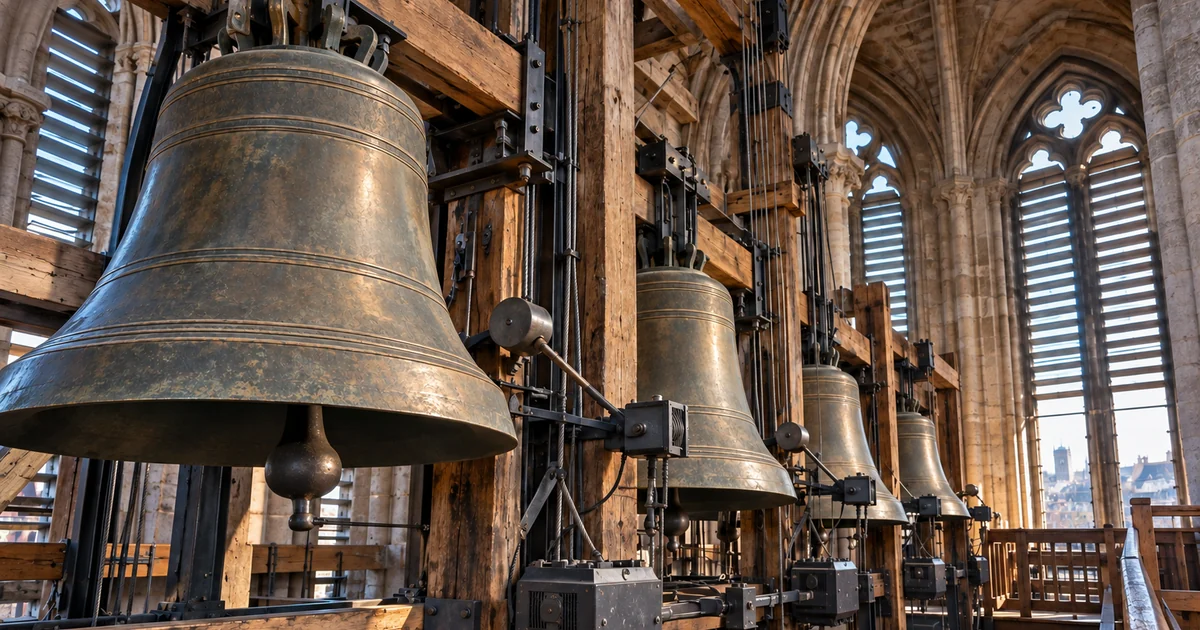
At the summit of the belfry of Arras resounds a carillon, whose notes set the rhythm of the life of the town. To listen to Arras is also to lend an ear to this music come from the heights, which is part of the sound identity of the city. The carillon of the belfry, heir to a long tradition, plays its melodies above the squares, offering a sound dimension to the Arras heritage. A look back at the carillon of the belfry of Arras, its history, its role and this way of listening to the town that completes the visual discovery of its heritage.
The belfry and its carillon
The belfry of Arras, an emblematic monument that dominates the town, houses at its summit a carillon. This belfry, symbol of communal liberties and jewel of the Arras heritage, is not only a monument to admire: it is also a sound instrument, whose bells resound above the town. The carillon, a set of tuned bells, allows one to play melodies, offering a musical dimension to the monument. This union of the belfry and the carillon makes the monument an element at once visual and sound of the heritage. The bells of the carillon, actioned to play tunes, play their notes above the squares and streets, marking the hours and the moments of the life of the town. The carillon of the belfry thus takes part in the sound identity of Arras, adding an auditory dimension to its heritage. To discover the belfry and the town hall is also to lend an ear to its carillon. This link between the monument and its music makes all the originality of the belfry as an element of the heritage. The carillon, perched at the summit, offers the town a voice, that of the bells that resound above the roofs. To understand the link between the belfry and its carillon allows one to grasp this dimension of the monument. The belfry, symbol of communal liberties, houses a carillon, a set of tuned bells allowing one to play melodies. This union makes the monument an element at once visual and sound of the heritage. The bells, playing their notes above the squares, take part in the sound identity of Arras. The carillon of the belfry adds an auditory dimension to the heritage, offering the town a voice, that of the bells that resound above the roofs.
A tradition of belfries
The carillon of Arras belongs to a long tradition, that of the belfries of the north of France and of Belgium. In this region, the belfries, civic towers symbols of communal liberties, are often endowed with carillons. These instruments, made of tuned bells, allow one to play melodies and mark the life of the towns with their peals. The tradition of carillons is ancient and deeply anchored in the culture of the region. The belfries, with their bells, formerly set the rhythm of urban life, ringing the hours, announcing the events and marking the important moments. This function, at once practical and symbolic, made the carillon a central element of the life of the city. Even today, the carillons perpetuate this tradition, offering their melodies above the towns. The carillon of Arras takes part in this heritage, inscribing the town in the tradition of the belfries of the region. This tradition, recognised as a cultural heritage, testifies to the importance of the belfries and their bells in the identity of the towns of the North. The carillon of the belfry of Arras thus belongs to a regional sound heritage, shared by numerous towns. To understand the tradition of carillons allows one to situate that of Arras. The belfries of the north of France and of Belgium, symbols of communal liberties, are often endowed with carillons that set the rhythm of the life of the towns. This ancient tradition, deeply anchored in the regional culture, made the carillon a central element of urban life. The carillon of Arras takes part in this heritage, inscribing the town in the tradition of the belfries of the region, a shared sound heritage that testifies to the importance of the bells in the identity of the towns of the North.
Listening to Arras
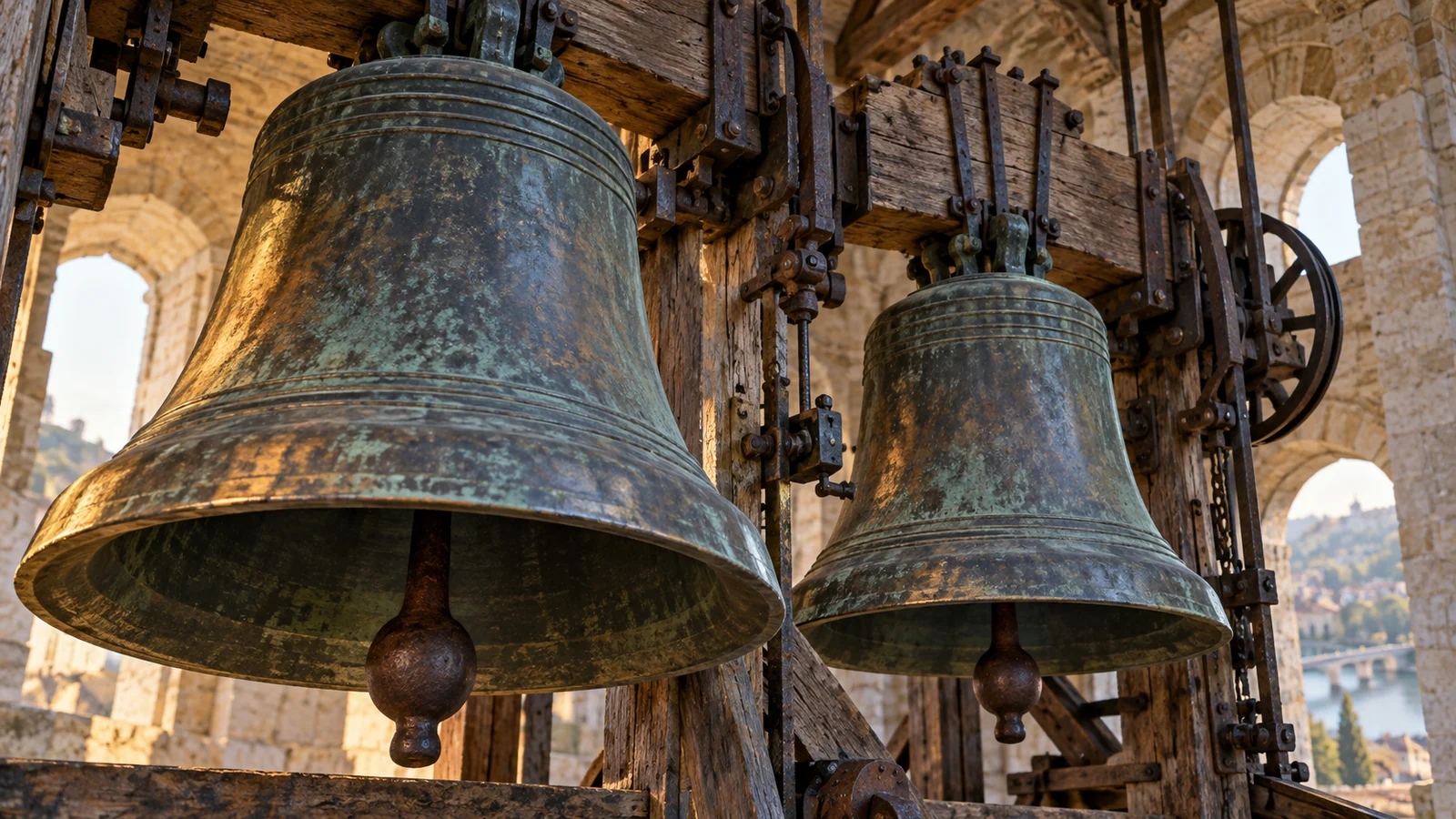
To listen to Arras is to lend an ear to the carillon of the belfry, which offers the town a sound dimension. Beyond the visual discovery of the heritage, the town is also discovered by the sounds, of which the carillon is one of the most characteristic. The notes of the bells, which resound above the squares and streets, are part of the atmosphere of the city. To stop to listen to the carillon is to live a sensory experience that completes the visit. The sound of the bells, come from the heights of the belfry, marks the hours and punctuates the life of the town with its melodies. This sound dimension, often neglected in the discovery of the heritage, enriches the experience of the visit. To listen to Arras is to perceive the town otherwise, through its sound identity. The carillon, voice of the belfry, offers a way to apprehend the city by hearing, in complement to the gaze. To take the time to listen to the carillon, on the squares or in the streets, allows one to feel the unique atmosphere of the town. This auditory experience is part of the charm of Arras, adding an additional dimension to the discovery of its heritage. To understand the interest of listening to Arras allows one to grasp this sensory dimension. To lend an ear to the carillon of the belfry is to discover the town by the sounds, beyond the visual. The notes of the bells, which resound above the squares, are part of the atmosphere of the city. To stop to listen to the carillon completes the visit with a sensory experience, allowing one to perceive the town otherwise. This sound dimension, often neglected, enriches the discovery of the heritage and is part of the charm of Arras, to apprehend also by hearing.
Music and sounds in the town
The carillon is not the only music that animates Arras: the town possesses a rich musical life, made of concerts, festivals and events that make the notes resound in its streets and on its squares. The carillon of the belfry, with its melodies come from the heights, belongs to this sound ensemble that accompanies the life of the city. Over the course of the year, music makes itself heard in the public space, transforming the squares into stages and the streets into places of celebration. Among these gatherings, the music festival in the streets of Arras illustrates this way in which the town lends an ear and becomes itself a musical space. The carillon, by its permanent presence at the summit of the belfry, offers for its part a daily music, discreet and regular, which punctuates the hours. Between these highlights and this continuous presence, Arras reveals itself a town where sound has its place, where music is part of the atmosphere. To listen to the carillon is thus to hear one of the musical voices of the town, among others, which all take part in its sound identity. This musical life, made of exceptional moments and daily sonorities, enriches the experience of the city. The carillon of the belfry, voice of the heights, dialogues in a way with the music of the streets and squares, in an ensemble that makes the town a place where one listens as much as one looks.
The carillon, instrument and music
The carillon is a veritable musical instrument, whose functioning deserves to be known. Composed of a set of tuned bells, it allows one to play melodies, in the manner of a keyboard instrument. The bells, of different sizes and tonalities, are actioned to produce notes and compose tunes. The carillon can play automatically, at regular intervals, or be played by a carillonneur, a musician specialised in this instrument. The music of the carillon, made of the crystalline sound of the bells, possesses a particular sonority, recognisable among all. It rises above the town, carried by the heights of the belfry, offering a sound spectacle accessible to all. The carillon, by its richness and its complexity, is an instrument in its own right, which requires a know-how to be played. The tradition of the carillon, with its carillonneurs and its repertoire, constitutes a living musical heritage. At Arras, the carillon of the belfry perpetuates this tradition, offering its music to the town. To discover the carillon as an instrument allows one to appreciate the richness of this musical heritage. To understand the carillon as an instrument allows one to better appreciate it. Composed of tuned bells, it allows one to play melodies, in the manner of a keyboard instrument, played automatically or by a carillonneur. The music of the carillon, with the crystalline sound of the bells, possesses a particular sonority, which rises above the town. An instrument in its own right requiring a know-how, the carillon constitutes, with its carillonneurs and its repertoire, a living musical heritage. At Arras, the carillon of the belfry perpetuates this tradition, offering its music to the town.
| Aspect | The carillon of the belfry |
|---|---|
| The instrument | A set of tuned bells |
| The tradition | That of the belfries of the North |
| The music | Melodies above the town |
| The experience | Listening to Arras, a sound dimension |
The belfry, world heritage
The belfry of Arras, which houses the carillon, benefits from an international recognition: it is inscribed on the World Heritage List of humanity, under the belfries of Belgium and France. This inscription honours the exceptional value of these monuments, symbols of communal liberties, and of their role in the history of the towns. The belfry of Arras, like the other recognised belfries, testifies to this history and this heritage. Its carillon is an integral part of this listed monument, adding to its heritage value a sound and musical dimension. This international recognition underlines the importance of the belfry and its carillon in the heritage, not only local but universal. The belfry, with its bells, embodies the history of the towns of the North and of their liberties, a heritage recognised and protected. To discover the belfry and listen to its carillon is thus to approach an exceptional heritage, recognised at the highest level. The carillon, perched at the summit of this listed monument, offers its music from a place charged with history and heritage value. This dimension adds to the prestige of the carillon and to the interest of listening to it. To understand the status of world heritage of the belfry allows one to grasp its value. Inscribed on the World Heritage List under the belfries of Belgium and France, the belfry of Arras honours the exceptional value of these monuments, symbols of communal liberties. Its carillon is part of this listed monument, adding a sound dimension to its heritage value. This recognition underlines the importance of the belfry and its carillon in the universal heritage. To listen to the carillon is to approach an exceptional heritage, whose music rises from a monument charged with history and recognised at the highest level.
The carillon above the squares
The notes of the carillon spread above the squares of Arras, these vast spaces bordered by facades that make the singularity of the town. It is there, on these squares where one strolls and where one sits at a table, that the music of the bells is perceived best, carried by the heights of the belfry to the ears of the strollers. The Place des Héros, at the foot of the belfry, offers a privileged setting to listen to the carillon, whose melodies resound above the roofs and the facades. To stop on this square, to raise one's eyes towards the belfry and to lend an ear to the bells, is to live fully this sound dimension of the town. The squares of Arras, with their remarkable architecture, form a setting that showcases the music of the carillon, while the latter adds an additional dimension to their atmosphere. This encounter between the built heritage and the sound heritage makes all the charm of the experience. To listen to the carillon from the squares is to grasp the intimate link between the monument, its music and the urban space that surrounds them. The bells, come from the heights, dialogue with the stones of the facades, in a harmony that unites the visual and the sound. To take the time to stop on a square to listen to the carillon thus offers a suspended moment, where the town is discovered by hearing as much as by the gaze, and where the heritage becomes music.
A sound dimension of the heritage
The carillon of the belfry adds to the heritage of Arras a precious and often little-known sound dimension. Heritage is not limited to the visual: it also comprises an auditory dimension, of which the carillon is the expression at Arras. This sound dimension, made of the sound of the bells, takes part in the atmosphere and identity of the town. It offers an additional way to apprehend the heritage, by hearing and not only by the gaze. To take into account this sound dimension enriches the discovery of the town, by revealing an often neglected aspect of its heritage. The carillon, with its music, is part of this intangible and sensory heritage that contributes to the charm of Arras. This dimension, which completes the visual heritage, deserves to be known and appreciated. To listen to the carillon is to discover this sound facet of the Arras heritage. The music of the belfry, which rises above the town, offers a unique experience, which marks the memory and enriches the recollection of the visit. This sound dimension, alongside the visual riches, is part of the complete experience of the heritage of Arras. The carillon, voice of the town, thus adds a musical note to the discovery of the city and its heritage. To understand the sound dimension of the heritage allows one to appreciate all its richness. Heritage is not limited to the visual: the carillon is its sound expression at Arras, taking part in the atmosphere and identity of the town. This auditory dimension offers an additional way to apprehend the heritage, by hearing. The carillon, with its music, is part of the intangible heritage that contributes to the charm of Arras. To listen to the carillon is to discover this sound facet, which completes the visual riches and is part of the complete experience of the Arras heritage.