
World fry championship 2026 in Arras: winners and tribute to Charles de l'Écluse
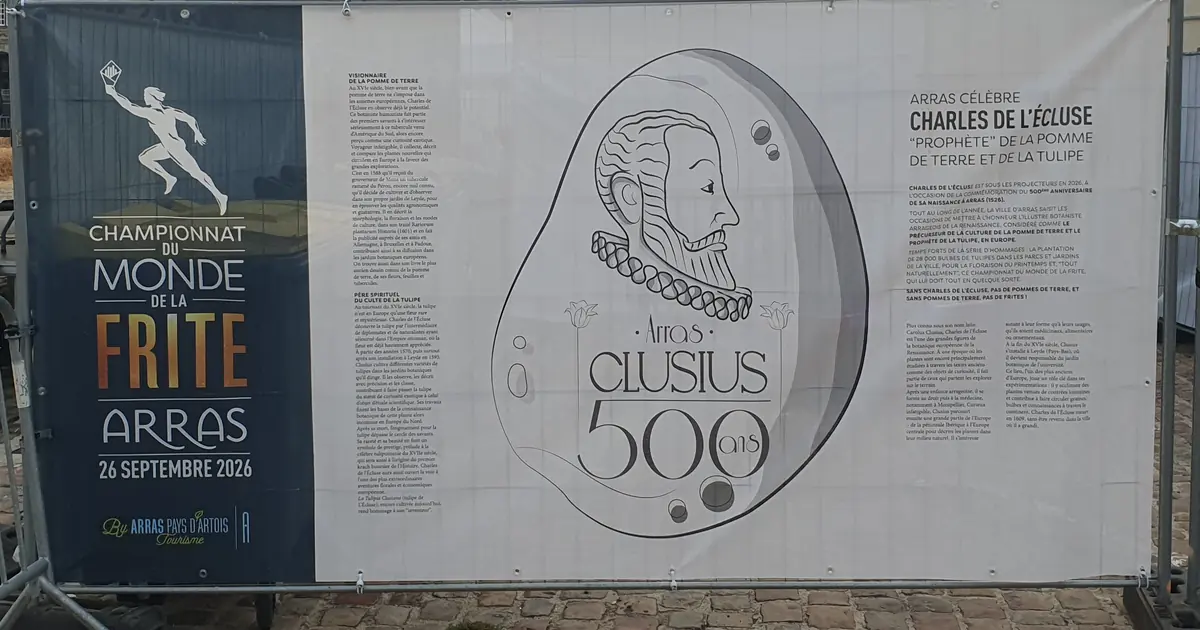
On Saturday 26 September 2026, the Grand'Place of Arras turned into a giant open-air chip shop for the 4th edition of the World Fry Championship. Around the stage set up in front of the baroque facades, tens of thousands of food lovers came to watch the crowning of the best fry artisans, in a festive popular atmosphere of frying smells, fierce contests and good humour. But the 2026 edition had a particular flavour: it coincided with the 500th anniversary of the birth in Arras of Charles de l'Écluse, the Renaissance botanist without whom, it is said, there would be neither potato nor fry. A look back at the winners of this championship, and above all at the figure of Clusius, the unexpected common thread of the event.
The 4th edition of the World Fry Championship
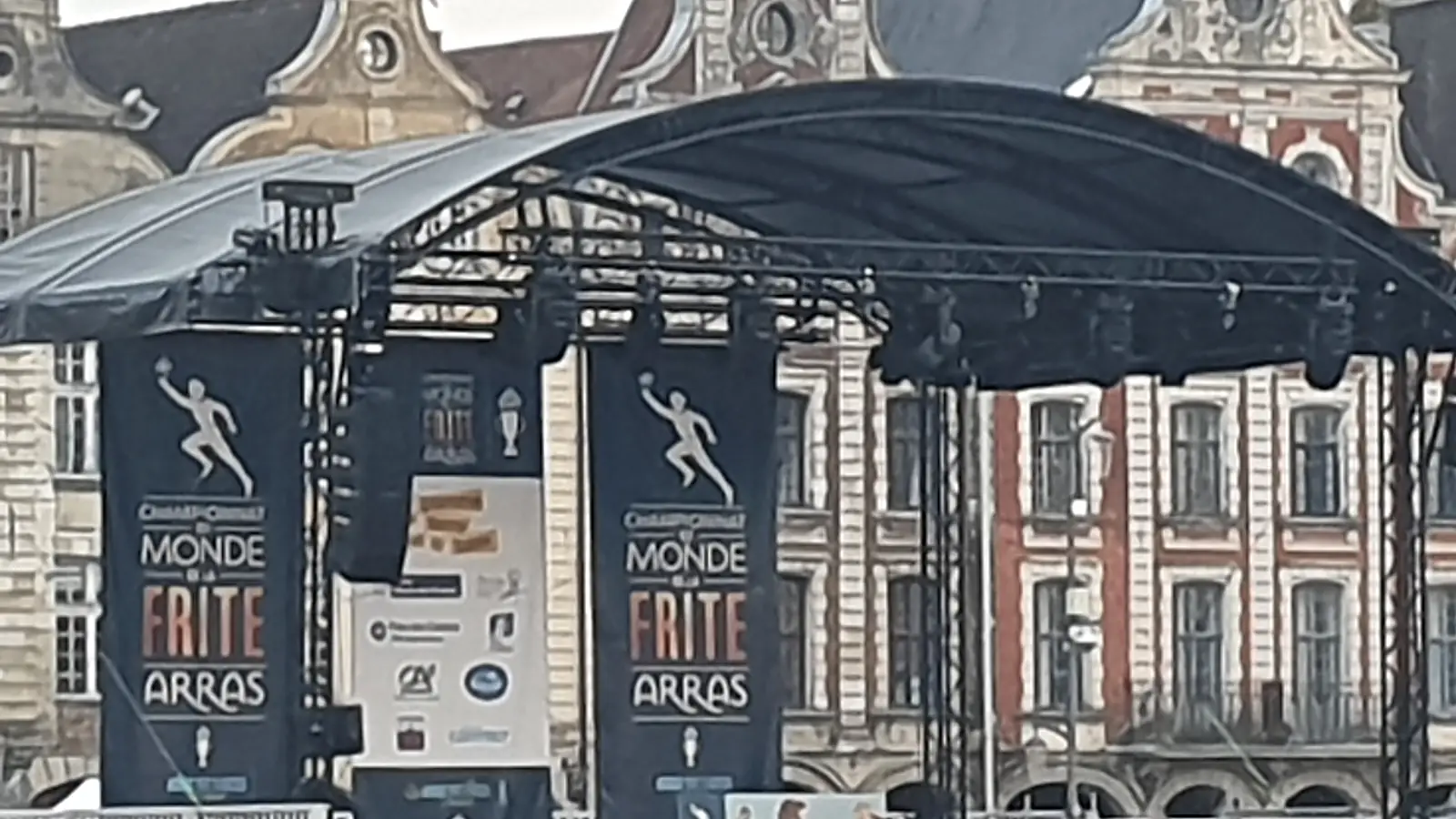
Organised by Artois Tourisme, the World Fry Championship has established itself in a few editions as the great gourmand rendezvous of the Arras autumn, and its 4th edition confirmed this status by attracting nearly seventy thousand visitors in a single day. The principle remains unchanged and formidably effective: to gather on the Grand'Place, one of the vastest baroque spaces in Europe, the best fry makers, chefs and artisans come to defend their know-how before a jury and a large public. Around the stage and its great banners bearing the effigy of the contest, the chip stalls, stands and entertainment paced the day, between tastings, demonstrations and the announcement of results. For those discovering the event, the world fry championship has already been presented on this site, which retraces its spirit and its unfolding. The 2026 edition put several categories in competition, from professionals to amateurs, by way of young people in training and artisans come from abroad, each rewarding a facet of the art of the fry. This diversity makes all the richness of the contest, which celebrates the family fry, cooked at home, as much as the authentic fry of professionals, artisanal crisps, sauces or the fry of the world. Beyond the competition, the championship has become a formidable tool for promoting the territory and its gourmand heritage, in a region where the fry is far more than a dish: a veritable cultural institution. The 4th edition, carried by mild weather and record attendance, once again demonstrated the attachment of the people of Arras and its visitors to this symbol of conviviality.
A 2026 prize list marked by the Hauts-de-France
The prize list of this 4th edition held fine surprises and crowned artisans come from all over France and beyond the borders. In the flagship category, the Authentic Fry, reserved for professionals, it was Logan Poirson, of the Baraque Poirson, in the Pays de la Loire, who was crowned, ahead of stiff competition. The Family Fry, which rewards amateurs, went to the Breton Sébastien Rodeff, while the Fry of the World distinguished the Spaniard Javier San Pio Garrido, of the San Fries brand in Madrid, proof of the international influence of the event. The artisanal crisps crowned André Vanlerberghe and his Chips Française, the Battle of Champions was won by the Lille native Aurèle Mestré, of the Friterie Mestré, and the Fry Sauces category went to Alexandre Blondiaux. But the great satisfaction of the edition lies in the performance of the candidates from the Hauts-de-France, who secured many places on the podium, including three champion titles, confirming that the region remains the land of excellence of the fry. The finest symbol of this regional success came from the Fry Hope category, dedicated to young apprentices, whose podium was one hundred per cent local: Noha Logez, of the CFA Don Bosco, won ahead of Noah Soufflet, of the Agro-Environmental Campus, and Jade Hartel, of the Baudimont school, all three from the Hauts-de-France. This harvest of rewards for the regional youth was hailed as a strong sign for the future of the trade, and offered the prize-giving one of its most moving moments.
| Category | 2026 winner | Origin |
|---|---|---|
| Authentic Fry | Logan Poirson (La Baraque Poirson) | Pays de la Loire |
| Family Fry | Sébastien Rodeff | Brittany |
| Fry of the World | Javier San Pio Garrido (San Fries) | Madrid, Spain |
| Fry Hope | Noha Logez (CFA Don Bosco) | Hauts-de-France |
| Artisanal crisps | André Vanlerberghe (La Chips Française) | France |
| Battle of Champions | Aurèle Mestré (Friterie Mestré) | Lille |
| Fry Sauces | Alexandre Blondiaux | Hauts-de-France |
Logan Poirson, champion of the Authentic Fry
The supreme consecration of the day went to Logan Poirson, crowned in the Authentic Fry category, the most prestigious of the contest, the one that designates in a way the world fry champion. Come from the Baraque Poirson, in the Pays de la Loire, this fry maker prevailed at the end of a demanding trial that gathered thirteen professional candidates, all versed in the delicate art of the double cooking. His secret? An old family recipe, passed on from generation to generation, which he put in the spotlight before the jury. The symbolism of his victory escaped no one: he secured the title on the very day of his grandfather's birthday, a wink of fate that made his crowning particularly moving. This triumph illustrates the very spirit of the championship, where technique, the quality of the potato, the mastery of the cooking and respect for tradition count as much as boldness. For to succeed in a perfect fry, golden on the outside and melting on the inside, is a veritable know-how, where every detail matters, from the choice of the potato variety to the temperature of the frying bath. By crowning an artisan attached to a family recipe, the jury sent a clear message: the fry is a living heritage, which is passed on and perpetuated. Logan Poirson's triumph, greeted by the acclamations of the crowd, will remain one of the great moments of this 4th edition, and his name now joins the prestigious list of world fry champions.
Charles de l'Écluse, 500 years: the common thread of the edition
If the fry was indeed the star of the day, another figure hovered over the Grand'Place: that of Charles de l'Écluse, whose 2026 edition celebrated the 500th anniversary of his birth in Arras, in 1526. Throughout the year, the town seized the occasions to honour this illustrious Arras botanist of the Renaissance, considered the precursor of the cultivation of the potato and the prophet of the tulip in Europe. The world fry championship, which takes place each year on the Grand'Place of Arras, this time fully inscribed itself in this series of tributes, so direct is the link between the fry and the Arras scholar. The reasoning, displayed without detour on the great banners of the event, holds in a formula as simple as it is unanswerable: without Charles de l'Écluse, no potatoes in Europe, and without potatoes, no fries. In other words, the queen of the fried foods of the North owes part of its existence to a man born there five centuries earlier, whose scientific curiosity helped bring the tuber from South America into the gardens, then into the plates of the continent. This putting in perspective gave the celebration an unexpected depth, linking the popular pleasure of a fry eaten on the square to the intellectual adventure of a Renaissance botanist. It also recalled that the gastronomic heritage of a territory often plunges its roots into a long history, made of exchanges, journeys and discoveries, whose actors have sometimes fallen into oblivion.
Carolus Clusius, the man from Arras who explored botany
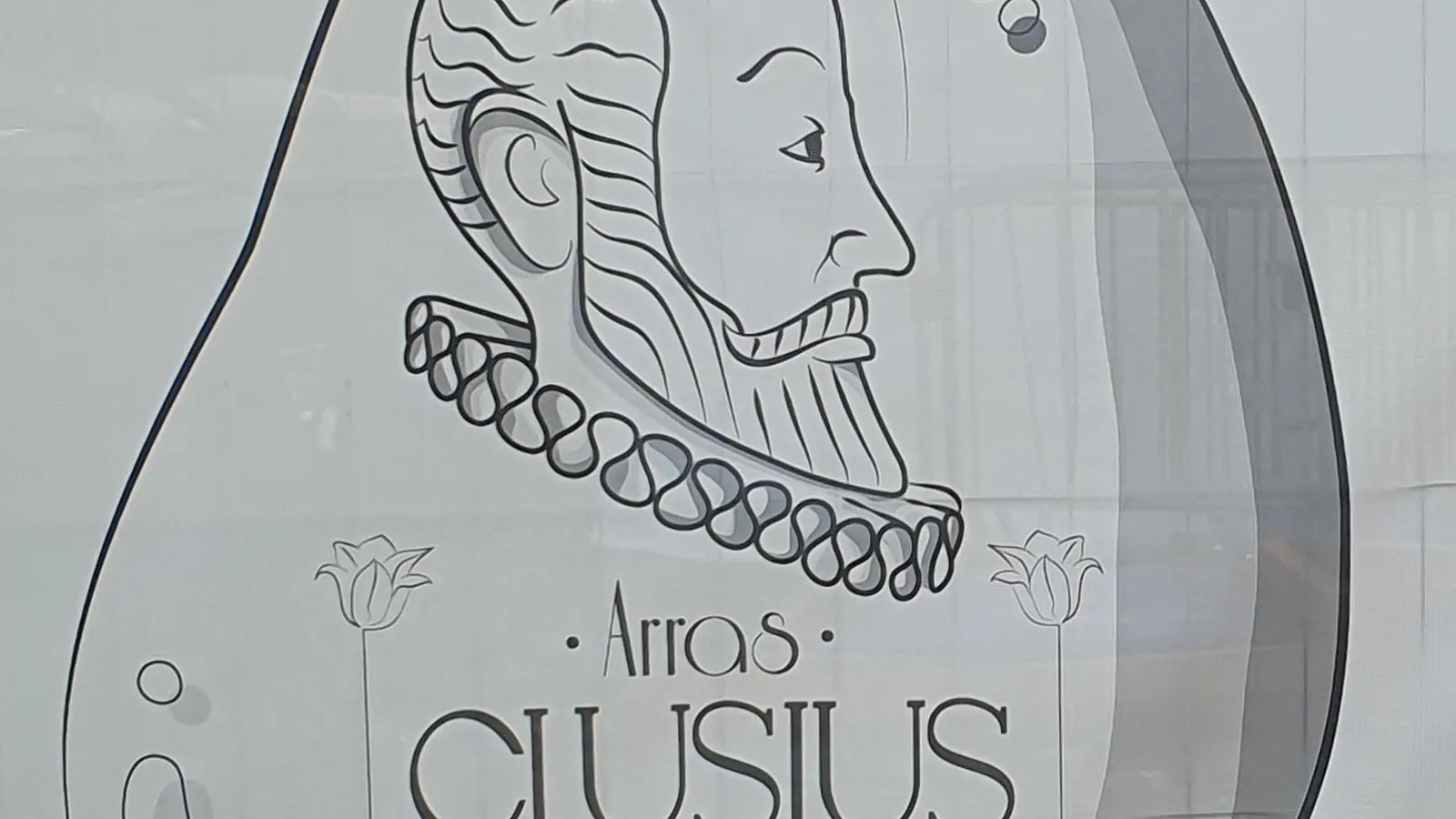
Better known under his Latin name of Carolus Clusius, Charles de l'Écluse is one of the great figures of European Renaissance botany. Born in Arras in 1526, he spent his childhood there before training in law and then in medicine, notably at Montpellier, one of the great centres of learning of the era. At a time when plants were still mainly studied through ancient texts, as objects of curiosity inherited from Antiquity, Clusius belongs to that generation of scholars who chose to go and observe them directly in the field. A tireless curious mind, he travelled a large part of Europe, from the Iberian peninsula to Central Europe, to describe plants in their natural environment, taking an interest as much in their form as in their uses, whether medicinal, alimentary or ornamental. This approach of direct observation, innovative for its time, made him a pioneer of modern botany, attentive to precise description and to the classification of species. At the end of the 16th century, he settled in Leiden, in the Netherlands, where he became responsible for the botanical garden of the university, one of the oldest in Europe. This place played a key role in his experiments: he acclimatised there plants come from distant lands and helped circulate seeds, bulbs and knowledge across the continent, maintaining an immense correspondence with the scholars of his time. A man of network as much as of the field, he thus wove a veritable European botanical community. Charles de l'Écluse died in 1609 in Leiden, without ever having returned to the town where he had grown up, but leaving a considerable body of work that would durably mark the history of plants.
The precursor of the potato in Europe
It was in the 16th century, long before the potato imposed itself on European plates, that Charles de l'Écluse already observed its potential. This humanist botanist was among the very first scholars to take a serious interest in this tuber come from South America, then still perceived as an exotic curiosity and regarded with suspicion. The founding episode took place in 1588: he received from the governor of Mons a tuber brought back from Peru, still little known, which he decided to cultivate and observe in his own garden in Leiden, in order to test its agronomic and gustatory qualities. Far from contenting himself with a superficial observation, he methodically described its morphology, its flowering and its modes of cultivation, in his great treatise Rariorum plantarum historia, published in 1601, and promoted it among his scholar friends, in Germany, in Brussels or in Padua. He thus contributed to its diffusion in the European botanical gardens, playing a role of essential go-between at a moment when the plant could have remained a mere curiosity of the cabinet. One even finds in his book one of the oldest known drawings of the potato, with its flowers, its leaves and its tubers, a precious testimony of this encounter between Renaissance science and a plant destined to feed the world. It would still take nearly two centuries for the potato to truly impose itself in France and in the North, but the work of Clusius was one of the first stones of this long history. By thus linking today's fry to the tuber described by an Arras man of the Renaissance, the town recalls with mischief that its emblematic dish has unsuspected scholarly roots.
The prophet of the tulip
Clusius's other great passion, the one that made his fame in his lifetime, is the tulip. At the turn of the 16th century, this flower was in Europe only a rare and mysterious curiosity, come from the Ottoman Empire. Charles de l'Écluse discovered it through diplomats and naturalists who had stayed in Constantinople, where the flower was already highly appreciated at the court of the sultan. From the 1570s, then above all after his settling in Leiden in 1593, Clusius cultivated different varieties of tulips in the botanical gardens he directed, observed them, described them with precision and classified them, helping to move the tulip from the status of exotic curiosity to that of object of scientific study. His works laid the foundations of the botanical knowledge of this plant then unknown in Northern Europe. After his death, the craze for the tulip went far beyond the circle of scholars: its rarity and its beauty made it a symbol of prestige, preluding the famous tulip mania of the 17th century, that speculative fever which saw the prices of bulbs soar to the absurd, before a brutal collapse considered one of the very first stock-market crashes in history. Charles de l'Écluse thus, quite involuntarily, opened the way to one of the most extraordinary floral and economic adventures of Europe. The Clusiana tulip, or tulip of l'Écluse, still cultivated today, pays tribute to its discoverer and perpetuates his name in the gardens. This passion for the flowers and plants of the whole world echoes, five centuries apart, the gourmand curiosity celebrated on the Grand'Place, and joins the gourmandise of the mussels and fries of the Hauts-de-France, where the fry always tells a story of terroir.
Arras celebrates Clusius, and the fry
By making the 4th edition of the championship a tribute to Charles de l'Écluse, Arras pulled off a fine feat: to link the most popular celebration there is to the memory of a Renaissance scholar, and thus to give the fry its letters of nobility. The highlights of this series of commemorations were not limited to the championship: the town notably planted twenty-eight thousand tulip bulbs in its parks and gardens, to offer in spring a flowering in echo of the prophet of the tulip, and multiplied throughout the year the occasions to spotlight the child of the country. The world fry championship, which owes it everything in a way, constituted its gourmand highlight, as a way of coming full circle between the tuber described in 1601 and the fry eaten in 2026. This double celebration, scholarly and popular, sums up rather well the identity of Arras: a town proud of its heritage, able to summon its history to nourish the present, and to transform a simple fry festival into a veritable lesson in the history of science. For the tens of thousands of visitors who came to walk the Grand'Place on this 26 September, the event offered far more than a tasting: a plunge into five centuries of history, from the botanical garden of Leiden to the chip stalls of the North. And if Charles de l'Écluse never returned in his lifetime to his native town, he will have, five hundred years after his birth, found a place of choice in the heart of Arras, between the tulips of spring and the smell of the fries of autumn. A rendezvous is already set for the next edition, which will perpetuate this tradition that has become unmissable.