
The Wellington Quarry: what does the underground of Arras hide?
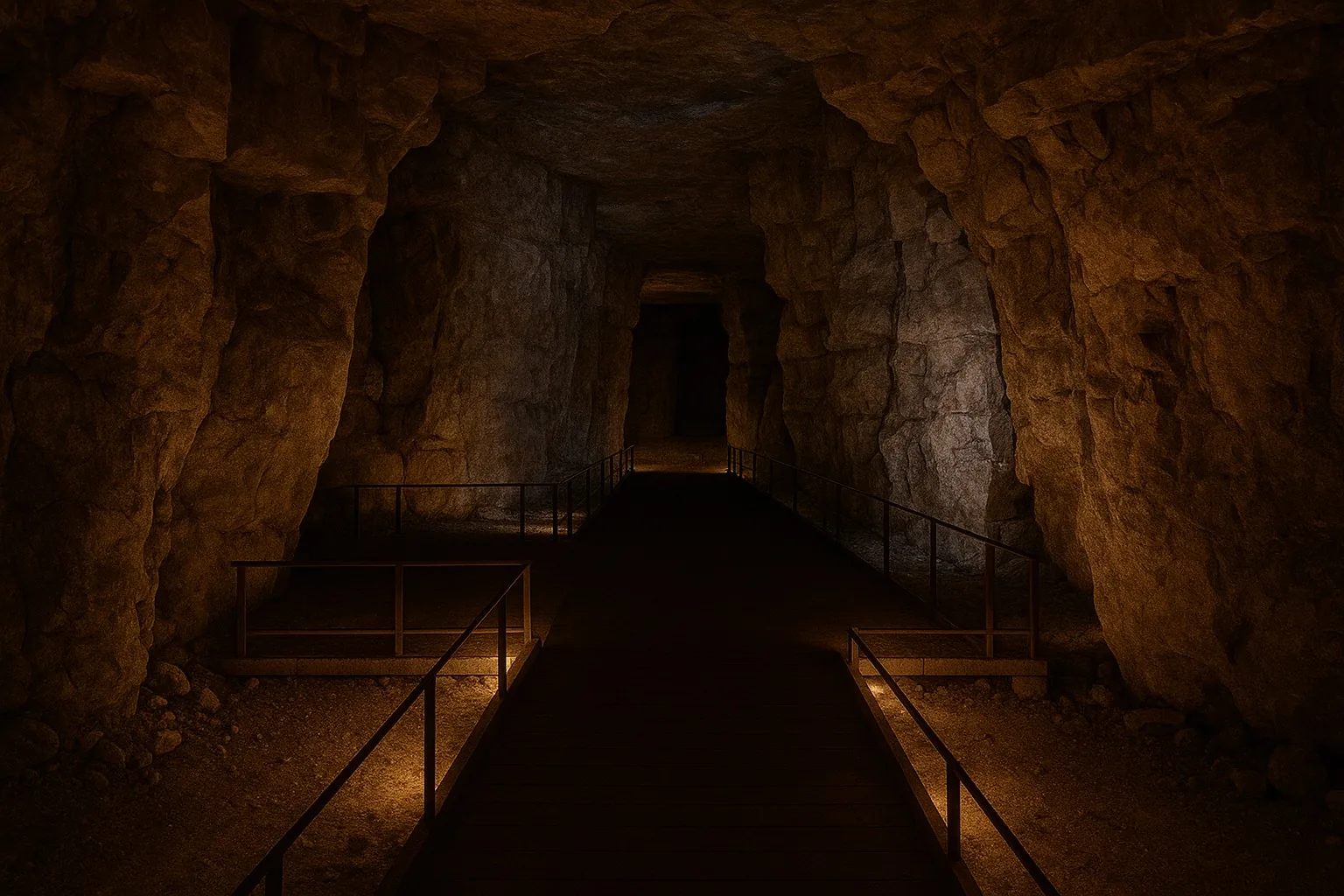
Beneath the streets of Arras lies an underground world laden with history, whose most famous witness is the Wellington Quarry. This network of galleries dug into the chalk was, in the spring of 1917, the secret refuge of thousands of Commonwealth soldiers, hidden under the town before one of the great offensives of the First World War. Now a memorial and museum, the site today allows one to descend twenty metres underground, in the footsteps of these men, and to understand a little-known but crucial episode of the Battle of Arras. Between military history, feat of engineering and place of contemplation, the Wellington Quarry offers a striking dive into the underground of the town. Here is what to know about this unique place, its origin, its role in the war and what one discovers during the visit.
A place of memory beneath the cobbles of Arras
The Wellington Quarry is not a monument like the others: it is an underground place of memory, invisible from the surface, that tells a dramatic page of the history of Arras. Located beneath the town, it is part of that underground of Arras one barely suspects while walking the squares and streets. The site has established itself as one of the great places to discover in the city, on a par with the other treasures listed among the must-see and unusual places in Arras. What strikes one at once is the contrast between the life beating on the surface and the emotion-laden silence of the underground galleries. To descend into the Wellington Quarry is to leave the present and enter a suspended space, where time seems to have stopped in 1917. This place is nothing like a reconstructed set: these are the real galleries, in which thousands of men lived, waited and suffered, on the eve of going over the top. This authenticity makes all the strength of the site and explains the emotion it arouses in visitors. To understand the Wellington Quarry is first to accept looking beneath the surface, there where hides a history the town long kept in its entrails, and that the memorial finally brought to light, offering Arras one of its most striking and singular visitor sites.
The boves: chalk quarries turned refuge
To understand the Wellington Quarry, one must go back well before the war, to the origin of these galleries dug into the chalk. The subsoil of Arras is rich in an ancient network of underground quarries, the boves, worked over the centuries to extract the stone that served to build the town. These cavities, sometimes medieval, form a veritable labyrinth beneath the city. When the First World War froze the front in the immediate vicinity of Arras, the high command grasped all that could be drawn from this underground maze. Sheltered from bombardment and from view, these quarries offered a considerable space to house troops, store equipment and prepare an operation in secret. It was this particular geology, this soft, easily dug chalk, that made possible the underground adventure of 1917. The existing quarries were fitted out, enlarged and connected to one another to form a coherent network, able to accommodate thousands of men. Thus a heritage inherited from stone extraction was reconverted, in the urgency of war, into a military shelter of unprecedented scale. This continuity between the civil past of the boves and their military use is one of the most fascinating aspects of the site. It recalls that the subsoil of Arras, shaped by centuries of labour, one day became the silent actor of a decisive moment of history, offering soldiers come from the ends of the earth an unhoped-for refuge beneath the town.
The New Zealand tunnellers
The very name of the quarry tells a story: that of Wellington, capital of New Zealand, given by the men who fitted out these galleries. For it was New Zealand tunnellers, belonging to a company specialised in digging, who were charged, from 1916, with connecting and extending the underground quarries of Arras. These professional miners, used to working rock, accomplished a considerable feat of engineering, digging and consolidating kilometres of galleries in difficult conditions. In tribute to their origins, they named the various sections of the network after New Zealand and British towns, so that one advanced beneath Arras from Wellington to other distant cities. This presence of troops from the ends of the earth on Arras soil is one of the most moving aspects of this history: men come from the antipodes came to dig and fight for a European front. Their work, carried out in the shadows and in danger, was decisive for the preparation of the offensive. The galleries they shaped still bear the trace of their passage, in the inscriptions and installations they left. To pay tribute to the New Zealand tunnellers is to recognise the often forgotten role of these engineer soldiers, whose underground work made possible what was to follow. The Wellington Quarry is thus, too, a monument to their memory and to the singular bond that has united, ever since, distant New Zealand and the town of Arras.
| Marker | Detail |
|---|---|
| Nature | Former chalk quarries (boves) beneath Arras |
| Fitting out | New Zealand tunnellers, from 1916 |
| Role | Hiding thousands of soldiers before the assault |
| Offensive | The Battle of Arras, launched on 9 April 1917 |
| Today | Memorial and museum, a visit twenty metres underground |
Thousands of men hidden beneath the town
The aim of all this underground work was as bold as it was formidable: to conceal thousands of soldiers as close as possible to the enemy lines, to make them surge out by surprise on the day of the attack. In the days preceding the offensive, the galleries of Arras welcomed a multitude of Commonwealth combatants, often evoked as around twenty to twenty-four thousand men, living underground sheltered from German eyes. The network had been equipped to allow this underground life: lighting, water points, rudimentary sanitation, a light railway, and even care spaces. To imagine these men massed in the damp chalk, in artificial light and tense silence, awaiting the hour of the assault, gives the measure of the ordeal. Cold, damp, promiscuity and anguish marked out these days of waiting. This concentration of troops beneath the town, invisible to the enemy, constituted a major tactical asset: instead of crossing no man's land in the open, the soldiers could spring from the ground a few dozen metres from the enemy positions. The success of the secret was vital, and it held. This underground page of the war, made of waiting and silence more than fury, is perhaps the most poignant: it reminds us that behind the great offensives, there are first men, crouched in the shadows, hanging on the zero hour, between fear and duty.
9 April 1917: the attack that sprang from the ground
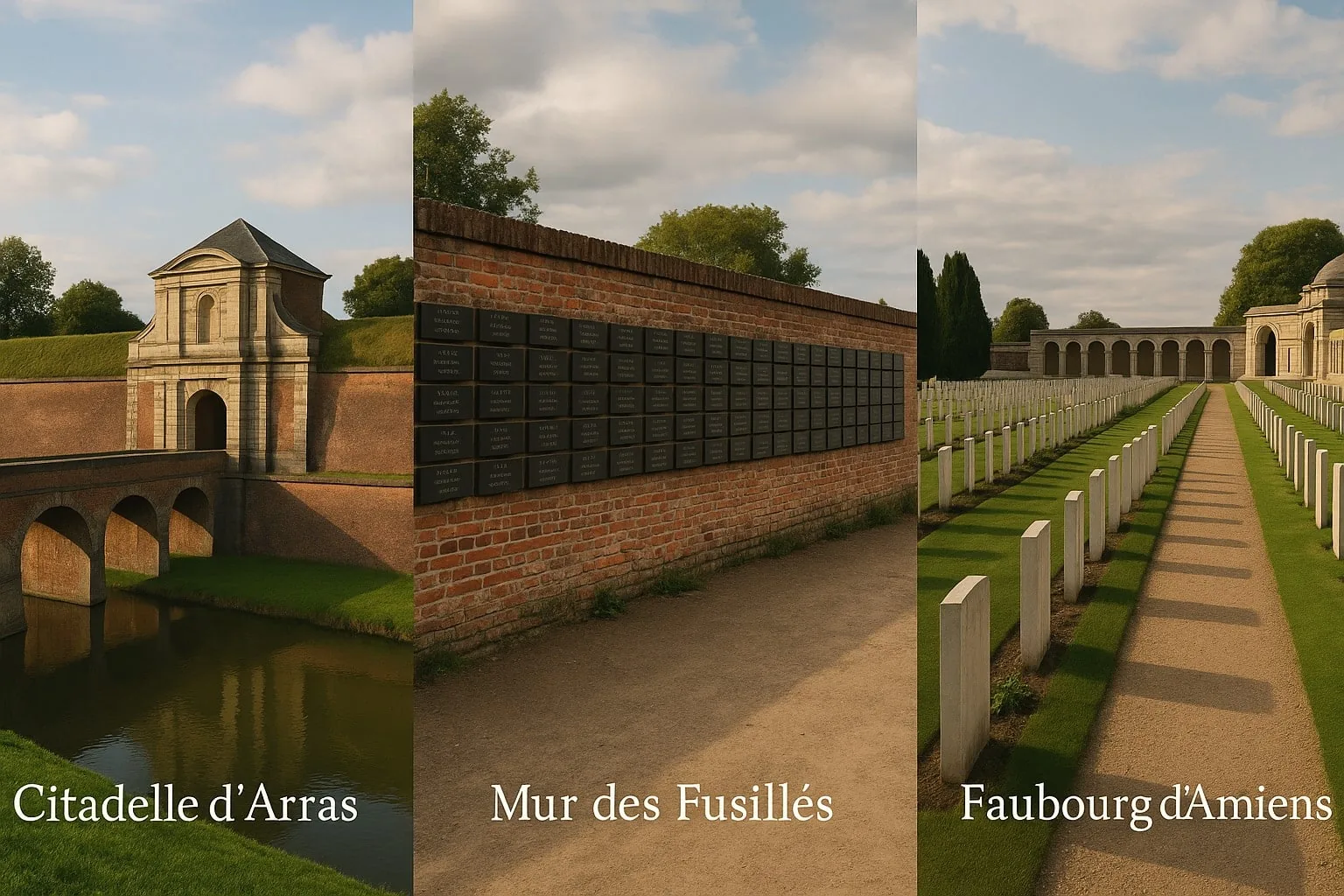
On the morning of 9 April 1917, the waiting ended. The soldiers hidden in the quarries sprang from the ground, as close as possible to the enemy lines, to launch the offensive known as the Battle of Arras. The element of surprise, made possible by weeks of underground preparation, played fully in the first hours. This battle, part of the great offensives of the spring of 1917 on the Western Front, was of extreme violence and cost, like so many others, a heavy human toll. The Wellington Quarry was the discreet starting point of this assault, the place from which part of the engaged troops set out. The memory of these fights and their victims is today present throughout the town and its surroundings, through many places of contemplation, such as the Wall of the Shot and the military cemeteries that recall the sacrifice of this generation. To understand the role of the quarry in the offensive of 9 April is to grasp the intimate link between this underground site and the military history of Arras. The memorial does not merely tell of a technical feat: it honours the memory of the men who, coming out of these galleries, went into combat. It is this human and tragic dimension that gives the place all its gravity, and that turns the visit into a true moment of memory, far beyond the mere curiosity for an out-of-the-ordinary underground site.
Visiting the memorial today
Now a memorial and museum, the site can be visited and offers a strong immersive experience. The visit begins with a descent by lift some twenty metres underground, down to the galleries where the underground life of 1917 reigned. Under the guidance of a guide and with the help of audio devices, the visitor walks through the tunnels, discovers the living conditions of the soldiers and the traces they left, notably inscriptions engraved or drawn on the chalk, moving testimonies of their passage. The temperature there is cool and constant all year round, around ten degrees, so that it is recommended to bring warm clothing, even in summer. The visit lasts about an hour and a quarter and suits a wide public, with a marked educational dimension. Because of the lift access and the guided character of the visit, it is advisable to enquire in advance about the times and terms, and to book at busy periods. The atmosphere of the place, between dimness, coolness and silence, contributes to the intensity of the experience and naturally invites contemplation. Far from a classic museum, the Wellington Quarry brings history to life through the senses, by placing the visitor where the soldiers were. This immersion, respectful and documented, is what distinguishes the site and explains the strong impression it leaves. One comes out with the feeling of having touched a reality of the war too often reduced to dates and figures.
Around the quarry: the places of memory of Arras
The Wellington Quarry is not visited in isolation: it is part of a set of places of memory that make Arras a major stage of the memorial tourism of the Great War. After the descent underground, it is natural to prolong the reflection on the surface, by discovering the other sites linked to the military history of the town and its region. Among them, the cemeteries and memorials testify to the sacrifice of the combatants, such as the Faubourg d'Amiens military cemetery, where many Commonwealth soldiers rest. The town and its surroundings have other places of commemoration, monuments and remains, which make up a veritable trail of memory. To follow the Wellington Quarry with these sites allows one to grasp the extent of what the First World War represented for Arras, a front town harshly tried. This memorial tourism, far from being morbid, is an approach of transmission and contemplation, particularly strong in a region marked in its flesh by the two world wars. For the visitor, articulating these different places gives coherence and depth to the discovery. The Wellington Quarry is often its starting point or its climax, so much does it condense, in its galleries, the history of men come from afar to fight and die here. To remember them, by walking these places, is perhaps the fairest way to honour what the town went through and not to let this memory fade. To plan a visit, opening times and booking, one can consult the official Wellington Quarry website.