
Notre-Dame-de-Lorette: visiting the largest necropolis in France near Arras
A few kilometres from Arras, on a hill overlooking the plain of the Artois, stretches Notre-Dame-de-Lorette, the largest national necropolis in France. This high place of memory, where tens of thousands of soldiers of the First World War rest, associates an immense necropolis, a basilica, a lantern tower and, nearby, an international memorial. The theatre of deadly fighting in 1914 and 1915, the site is today a place of contemplation and memory, inscribed on the World Heritage List of humanity. Let us discover Notre-Dame-de-Lorette, its history, its monuments and its memorial scope, in the immediate vicinity of Arras.
Notre-Dame-de-Lorette, the largest necropolis in France
The national necropolis of Notre-Dame-de-Lorette, located in the commune of Ablain-Saint-Nazaire in the Pas-de-Calais, is the largest French military necropolis. Stretching over more than twenty-five hectares, it gathers the remains of about forty-three thousand combatants of the First World War. There are more than forty thousand bodies buried in individual graves, as well as eight ossuaries that shelter the remains of unidentified soldiers. This immense place, at once cemetery and memorial, testifies to the extent of the sacrifice consented during the Great War on the soil of the Artois. The necropolis stands on a strategic hill, the spur of Lorette, which dominates the region and was a major stake of the fighting. Today, this peaceful and solemn site contrasts with the violence of the confrontations that took place there. Notre-Dame-de-Lorette constitutes a place of memory of national and international scope, where one comes to gather and honour the memory of the dead. By its extent and its symbolic charge, the necropolis occupies a particular place in the memorial landscape of the First World War. It recalls, a few kilometres from Arras, the price paid by generations of soldiers. To discover Notre-Dame-de-Lorette is to approach one of the greatest places of memory in France, charged with history and emotion.
Hill 165 and the battle of Artois
The hill of Lorette, culminating at one hundred and sixty-five metres of altitude, was the theatre of fighting of extreme violence during the First World War. A dominant position offering a strategic viewpoint over the plain, it became a major stake of the battles of the Artois, which took place from October 1914 to October 1915. For nearly a year, French and Germans disputed this spur in fierce confrontations, which caused tens of thousands of victims. This fighting, among the deadliest of the Artois front, is part of the struggle for control of the region, where also stood the ridge of Vimy, another high place of the fighting: the Vimy memorial commemorates, not far from there, the sacrifice of the Canadian soldiers during the battle of the ridge in 1917. The fighting of Lorette, by its intensity and its human toll, left the hill devastated and strewn with bodies. It is on this soil imbued with history that the necropolis was then built, to gather and honour the dead. To understand the battle of the Artois and the strategic importance of the hill allows one to grasp why this place became such a memorial sanctuary. Hill 165, yesterday a battlefield, is today a place of peace and contemplation. Its tragic history founds the memorial scope of the site of Notre-Dame-de-Lorette.
The national necropolis
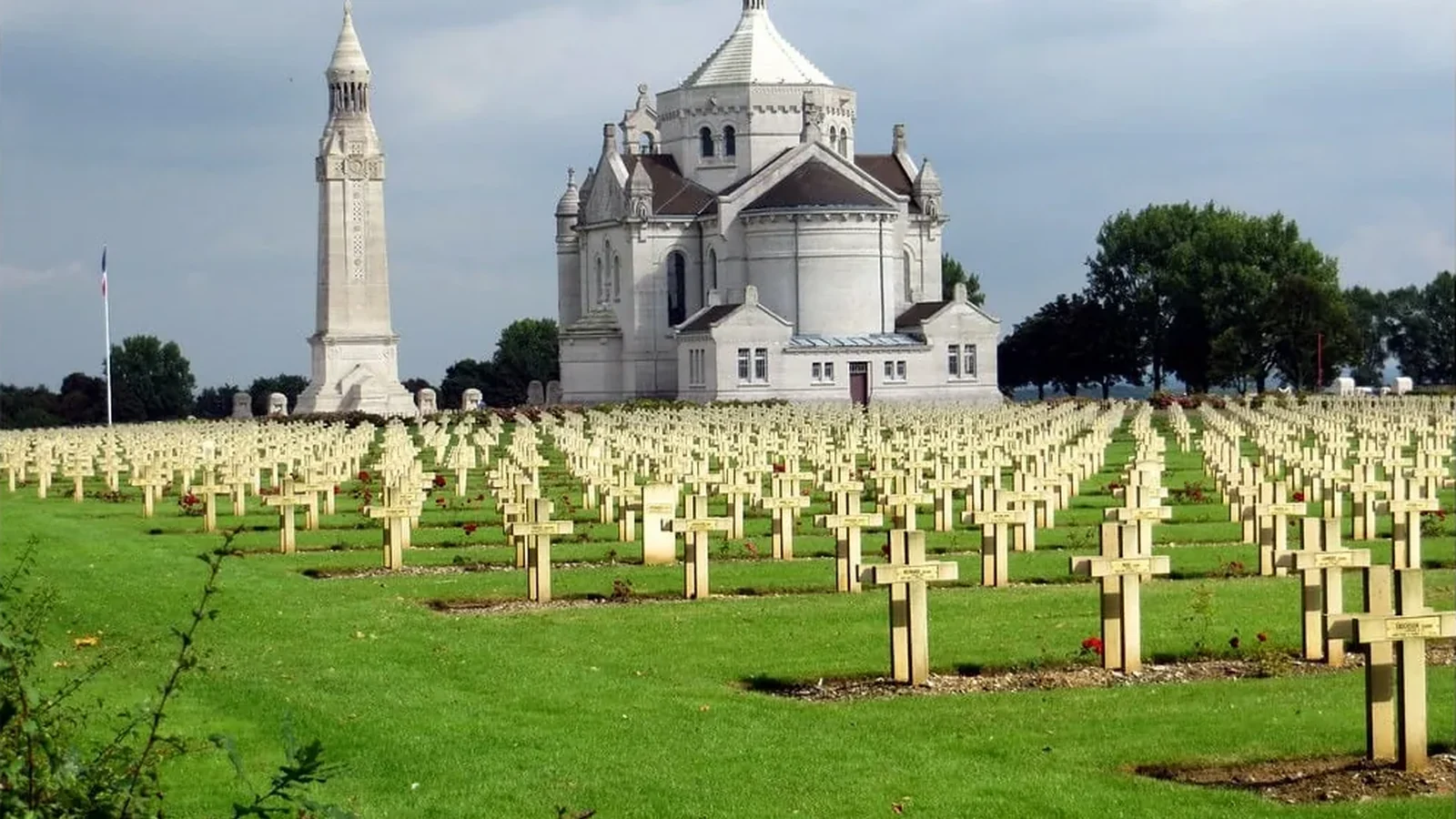
The necropolis of Notre-Dame-de-Lorette impresses by its extent and by the alignment of its graves as far as the eye can see. More than forty thousand white crosses stand there, marking the individual graves of the identified soldiers, in a solemn ordering that underlines the immensity of the sacrifice. To these graves are added eight ossuaries, including the main ossuary, which shelter the remains of thousands of unidentified combatants, fallen without one being able to give them a name. The necropolis thus gathers, in the same place, the bodies of soldiers who died on the battlefields of the Artois and its surroundings. The layout of the site, with its vast spaces, its paths and its monuments, invites contemplation and meditation. Each grave, each cross, each name recalls a life cut down by the war, and the whole gives the measure of the slaughter. The necropolis was laid out in the years that followed the war, to offer a dignified burial to these combatants. It constitutes today a major place of memory, where families, visitors and official representatives come to honour the dead. To walk through the necropolis, between the graves and the ossuaries, is a moving experience, which confronts one with the reality of the sacrifice. The national necropolis of Notre-Dame-de-Lorette thus remains a striking testimony of the human cost of the Great War.
| Element | Marker |
|---|---|
| The necropolis | About 43,000 combatants, more than 25 hectares |
| The basilica | Romano-Byzantine style, consecrated in 1937 |
| The lantern tower | 52 metres, revolving lantern |
| The memory | Site inscribed on the World Heritage List in 2023 |
The Romano-Byzantine basilica
At the heart of the site rises the basilica of Notre-Dame-de-Lorette, an edifice in the Romano-Byzantine style that dominates the necropolis. Built to accompany the place of memory, it was consecrated in 1937 and elevated to the rank of minor basilica. Of relatively modest dimensions, with about forty metres in length, it nevertheless strikes by its architecture and its decoration, inspired by Byzantine art. Its mosaics, its ornaments and its contemplative atmosphere make it a place of prayer and memory, within an ensemble turned towards the remembrance of the dead. The basilica, blessed by the bishop of Arras and consecrated a few years later, is part of the religious and commemorative vocation of the site. It offers a space of contemplation, where the spiritual dimension and the memory of the combatants mingle. Its architecture, singular in the regional landscape, testifies to the care brought to the layout of this high place. The basilica and the lantern tower, built together, form the monumental heart of the necropolis. To visit the basilica is to discover a remarkable edifice, charged with meaning, within a place dedicated to memory. The Romano-Byzantine basilica of Notre-Dame-de-Lorette thus takes part in the solemnity and the spiritual scope of the site. It completes, by its presence, the memorial ensemble dedicated to the dead of the Great War.
The lantern tower
Beside the basilica stands the lantern tower, the emblematic monument of Notre-Dame-de-Lorette, fifty-two metres high. Resting on a square base, this tower dominates the necropolis and the surrounding plain, visible from afar. At its summit, a revolving lantern projects at night a luminous beam, whose regular rotation sweeps the horizon. This lighthouse of memory was conceived to symbolically guide the souls of the dead, watching over the necropolis and the combatants who rest there. The tower also shelters a chapel and an ossuary, reinforcing its memorial dimension. Its slender silhouette, dominating the hill, has become one of the symbols of the site and of the remembrance of the Great War in the Artois. The revolving light, visible at night for kilometres, recalls the presence of the place of memory and perpetuates the remembrance of the departed. The lantern tower, by its height and its symbolic function, embodies the memorial vocation of Notre-Dame-de-Lorette. To climb or contemplate the tower offers a viewpoint over the immensity of the necropolis and over the landscape of the Artois. This monument, at once landmark and symbol, watches over the dead and over the memory. The lantern tower of Notre-Dame-de-Lorette thus remains one of the most striking and moving elements of the site.
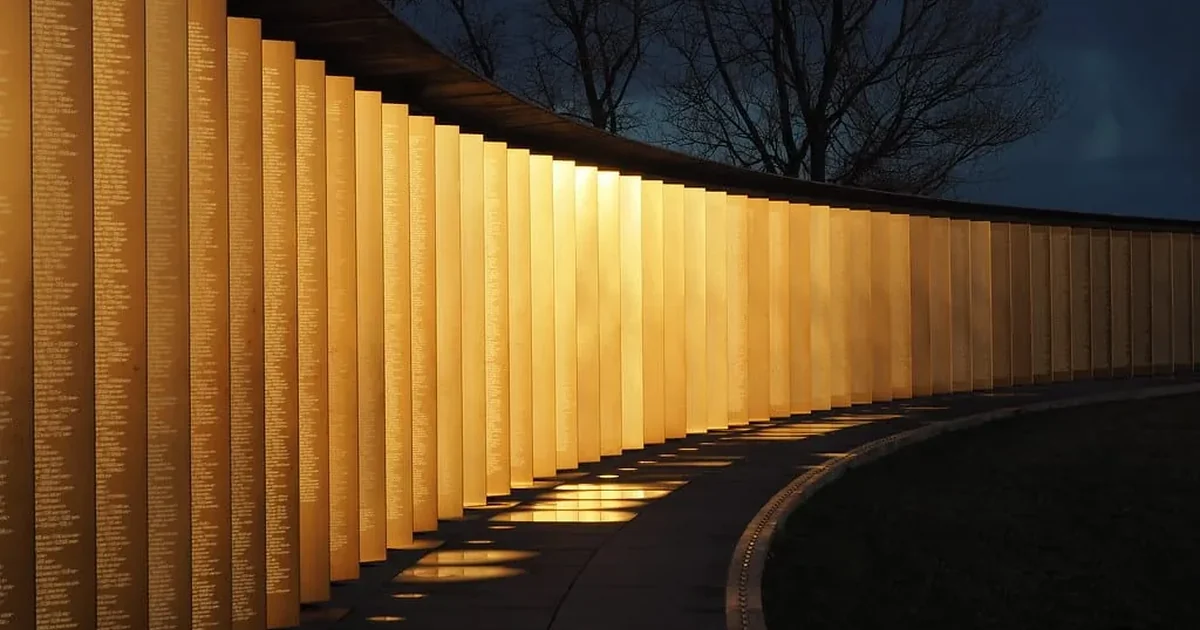
The Ring of Memory
Near the necropolis, a more recent monument completes the site: the Ring of Memory, an international memorial inaugurated in 2014. This immense ring-shaped structure bears engraved, without distinction of nationality, the names of hundreds of thousands of soldiers who died in the region during the First World War. On its walls are listed the names of combatants of all the nations engaged, united in the same tribute, a symbol of peace and reconciliation: to discover this memorial and its universal scope, the Ring of Memory presents this monument dedicated to all the dead, beyond the camps and the borders. The Ring, by its choice to gather the names without distinction, carries a strong message: that of the equality of all before death and of rediscovered fraternity. Built nearly a century after the fighting, it inscribes the remembrance of the war in a perspective of peace and union between peoples. This international memorial dialogues with the neighbouring necropolis, adding a universal dimension to the place of memory. The Ring of Memory, by its form and its message, completes and enriches the scope of the site of Notre-Dame-de-Lorette. It makes this place a symbol not only of sacrifice, but also of reconciliation. To discover the Ring is to prolong the visit of the necropolis with a reflection on peace.
A high place of memory listed by UNESCO
The recognition of the universal scope of Notre-Dame-de-Lorette has been consecrated by its inscription on the World Heritage List of humanity. In 2023, the site was indeed inscribed on the World Heritage List of UNESCO, under the funerary and memorial sites of the First World War on the western front. This inscription, which concerns a set of places of memory spread across several countries, honours the exceptional value of these sites, witnesses of the mourning and remembrance of the Great War. Notre-Dame-de-Lorette, by its extent and its symbolic charge, figures among these high places recognised at the highest level. This international recognition underlines the importance of the site, not only for France, but for humanity as a whole. It inscribes the necropolis in a network of places of memory, united by the remembrance of the dead and by a message of peace. The inscription by UNESCO reinforces the vocation of the site as a universal place of memory, to be preserved and passed on. It invites one to consider Notre-Dame-de-Lorette not as a simple cemetery, but as an exceptional memorial heritage. This distinction contributes to making the site known and to ensuring its preservation for future generations. Notre-Dame-de-Lorette, listed by UNESCO, thus asserts itself as a high place of the world memory of the First World War.
Visiting and gathering
To visit Notre-Dame-de-Lorette, a few kilometres from Arras, is a striking experience, between the discovery of heritage and contemplation. The site, open to the public, lends itself to a visit imbued with solemnity, where one walks through the necropolis, the basilica, the lantern tower and the Ring of Memory. The visit invites reflection on the sacrifice of the soldiers and on the lessons of history, in a setting at once grandiose and moving. The site is part of a territory profoundly marked by the First World War, of which Arras itself bears the traces: to understand the context, Arras during the Great War retraces the history of the town during the conflict, illuminating the scope of the places of memory of the surroundings. From Arras, Notre-Dame-de-Lorette is easily accessible, which makes it a natural stopover for whoever is interested in the history of the region. The visit can be combined with that of other nearby places of memory, forming a pathway of remembrance in the Artois. To gather at Notre-Dame-de-Lorette is to pay tribute to the dead and to perpetuate their memory. This moment, imbued with gravity, leaves a lasting impression. To visit this high place is also to understand the history of the Artois and the price of peace. Notre-Dame-de-Lorette thus offers a visit rich in meaning, to be discovered from Arras.