
Where and when to enjoy the markets and flea markets in Arras?
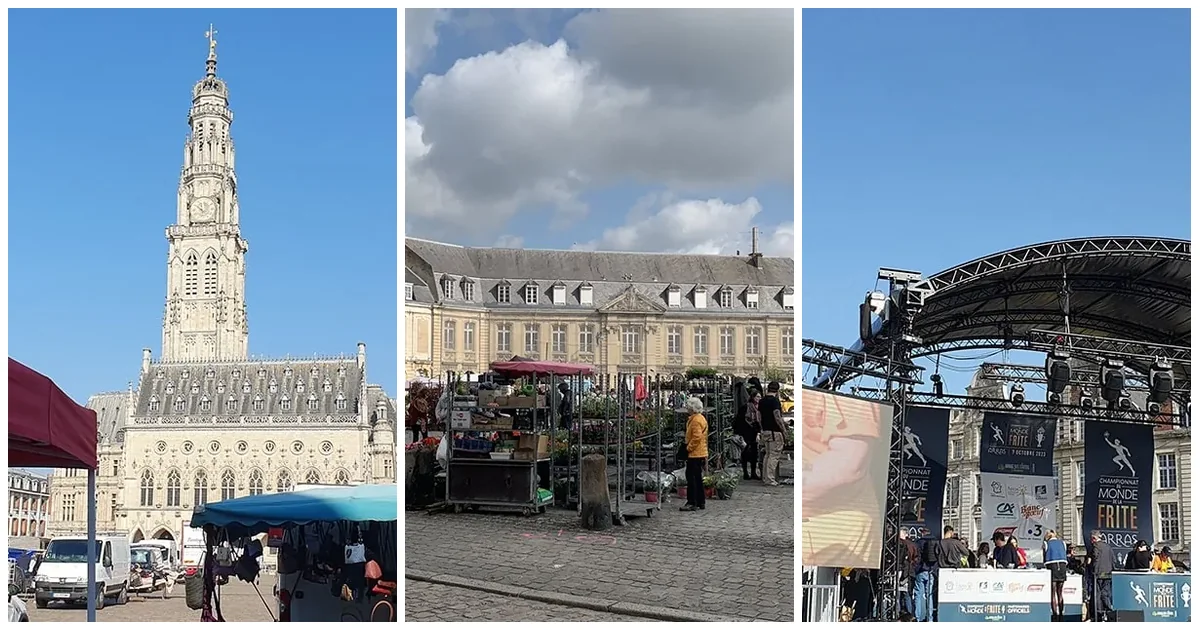
In Arras, the Saturday market is no mere shopping chore, it is an institution. Twice a week the Flemish squares fill with colourful stalls, and on Saturday morning the city hosts one of the largest markets in the Hauts-de-France, thronged by residents and visitors from across the Artois. To this weekly tradition are added summer flea markets, neighbourhood car-boot sales, the 1st May flower market and the food gatherings that make the North's reputation. This guide reviews the markets and flea markets of Arras, their days, their places and their specialities, to help you make the most of them, whether you are after fresh produce, a bargain among the bric-a-brac or simply the unique atmosphere of a market morning under the arcades. It does not claim to replace a visit on the spot, but to give the keys to choosing your day, your time and your corner of the square, whether you are after the great Saturday market, the calm of Wednesday or the buzz of a summer flea market.
Arras markets, a tradition at the heart of the squares
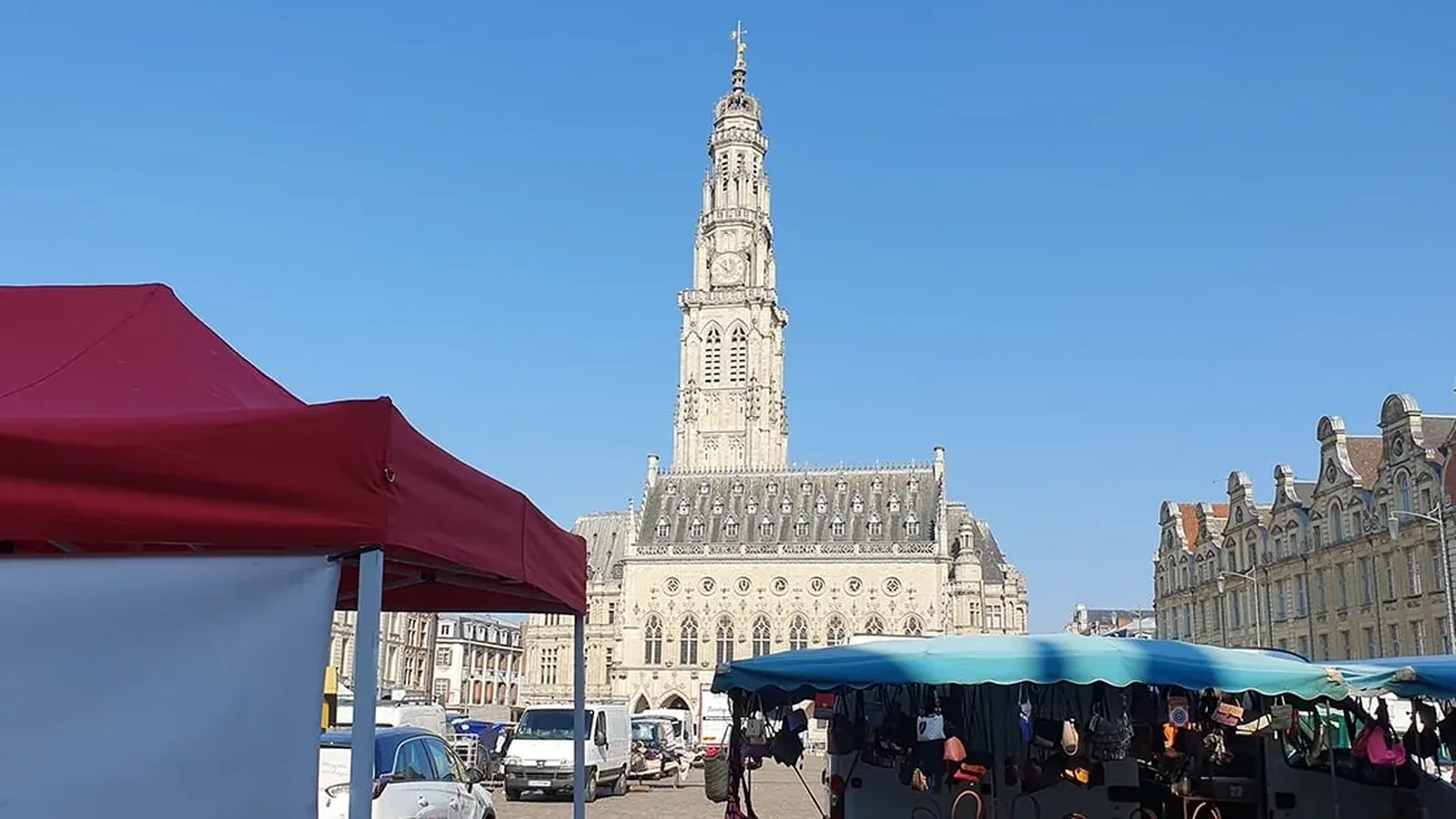
It is hard to imagine Arras without its open-air markets. For centuries the Grand'Place and the Place des Héros, with their arcaded facades inherited from Flemish trade, were designed to host commerce and fairs. That vocation has never faded: even today the stalls set up at the foot of the belfry and under the arcades, in a setting few towns can offer their traders. To know the exact days and locations, the article dedicated to Arras markets and their times remains the best way in, but the essentials come down to a few simple markers this guide develops. The Arras market is not only a place to buy, it is a social gathering where you meet your neighbours, take time to chat with the producer and pass on to children a taste for seasonal produce. This human dimension, somewhat lost in the supermarkets, explains the loyalty of a public that sometimes crosses the whole conurbation to shop here. The heritage setting adds a value no retail-park car park will ever match, and turns simple provisioning into a real weekend outing. This continuity, from medieval trade to today's stalls, makes the Arras market a living heritage as much as a business, a legacy the city keeps up without having to turn it into a museum.
The Saturday market, the great weekly gathering
On Saturday morning, Arras lives its commercial highlight of the week. The great Saturday market spreads its stalls across the two main squares and the adjoining streets, bringing together greengrocers, cheesemongers, butchers, fishmongers, but also sellers of clothes, flowers and all manner of goods. Its size makes it one of the largest in the region, drawing visitors well beyond the urban community. People come early in the morning to enjoy the choice, before the crowd thickens and the best pieces go. The atmosphere is distinctive, a blend of ch'ti tradition and good-natured hubbub, punctuated by the singsong accents of traders calling out to shoppers. Doing your Saturday shopping in Arras means agreeing to take your time, to wander from stall to stall, to compare and to taste. It is also a chance to extend the morning with a coffee on a terrace on the square, once the basket is full, or with a stroll through the town-centre shops. For many residents this Saturday ritual shapes the weekend and remains a pleasure as much as a necessity, a moment they would not trade for anything against the impersonal aisles of a hypermarket. Many families have made it a ritual passed down through the generations, to the point that a Saturday morning without the market would feel, to an Arras local, like a week robbed of its best moment.
The Wednesday market and weekday habits
Less spectacular than Saturday's, the Wednesday market nonetheless holds an essential place in Arras habits. More compact, it is aimed first at residents of the centre and nearby districts, who come for a midweek top-up without the weekend crush. You find the same safe values, fresh produce, seasonal fruit and vegetables, local specialities, in a more peaceful atmosphere conducive to exchanges with the traders. This weekday market illustrates well the local role that non-sedentary trade still fills, offering a flexible alternative to supermarkets for those who value freshness and direct contact. For the elderly, families and all those living a stone's throw from the squares, it is a regular, almost intimate landmark, very different from the event Saturday has become. Its relative discretion also makes it a privileged moment for the curious visitor, who will discover a more authentic, less touristy side of Arras life, far from the bustle of the big gatherings. It is often on weekdays, in these quiet markets, that you best grasp the bond between a city and its traders, and the way a historic centre remains, against all odds, a place of daily life. This quieter gathering is a reminder that a market need not be huge to be useful, and that regularity sometimes matters more than spectacle.
Local produce and specialities of the North
A market is worth first what you find there, and on that score Arras has serious arguments. The stalls showcase the specialities of the North and the Artois: Maroilles and regional cheeses, the chicory locals call chicons, regional potatoes, charcuterie, craft beers from the many breweries of the Hauts-de-France. You also find seasonal market-garden produce, often grown nearby, along with the staples of local cooking, from herring to sweet treats. This richness owes to the position of Arras, at the heart of a prosperous farming region where the food industry weighs heavily in the economy. Shopping at the market therefore also means supporting a short supply chain and local producers, in a spirit of proximity to which consumers are increasingly attached. The traders, often long established, know their customers and adapt their offer with the seasons, from autumn game to the first spring strawberries. This relationship of trust, patiently built, makes all the difference from the anonymity of the aisles, and gives the Arras market a flavour residents claim with pride as a piece of their identity. At a time when the traceability and origin of food increasingly concern consumers, this closeness to the producer becomes a weighty argument, far beyond simple gustatory pleasure.
Flea markets and car-boot sales, browsers welcome
Arras and its region hold a genuine cult of the flea market, the regional discipline par excellence. All through the warm season, neighbourhood car-boot sales and large displays follow one another, to the delight of browsers. The most emblematic event remains, without contest, the summer Puces à Bidasse, an Arras tradition that turns a part of the city into a vast treasure-hunting ground for a day. People come to unearth an antique piece of furniture, crockery, vinyl records or simply for the festive mood that accompanies these big displays. The flea-market culture is part of a long history of the North, where the famous Lille braderie is the benchmark, and Arras keeps this passion for browsing alive on its own scale. Beyond the pleasure of the find, these events carry very current values: reuse, second-hand, circular economy, the passing on of objects with a history. They draw an intergenerational crowd, from seasoned collectors to families clearing the attic, and fill the city with a special buzz. For the visitor, chancing upon an Arras flea market on a summer Sunday guarantees a refreshing morning and often a bargain to talk about for a long time. Many of the pieces of furniture and objects that fill Arras homes were in fact unearthed at these displays, proof that the flea market is not just a pastime but a genuine way of furnishing and decorating differently.
The 1st May flower market and seasonal events
Some markets come round only once a year, and are all the more awaited for it. The 1st May flower market is one of these unmissable dates on the Arras calendar: on that day, besides the traditional sprig of lily of the valley, the squares fill with plants, flowers and greenery, to the delight of amateur gardeners preparing for the fine season. It is one of the moments when the city most visibly reconnects with its horticultural vocation and its taste for flowered squares. Other seasonal events pace the year, from occasional producers' markets to specialist stalls that accompany the year-end festivities. This seasonality is part of the charm of markets: it gives each period its own atmosphere, produce and colours, and invites you to return at different times of the year. Where mass retail offers the same uniform range all year round, the market follows the rhythm of the seasons and traditions, making it a living observatory of local life. For the visitor, timing a visit to one of these events means treating yourself to a richer, more authentic experience than a simple tour of the historic centre, and leaving with the feeling of having touched the soul of the city. These occasional events are worth noting in advance, for they do not come round again for a year and concentrate, for a single day, an atmosphere the rest of the year cannot match.
Getting organised to enjoy the markets
Making the most of the Arras markets calls for a few simple reflexes. The first concerns parking: on market days it is best to aim for the outlying car parks or arrive early, as central spaces fill quickly and traffic slows around the squares. Coming in the early morning offers the best choice and a more relaxed mood, before the late-morning crowds. Bringing change, a sturdy bag and good shoes is always useful, given how far the big markets stretch. For fresh produce, do not hesitate to chat with the traders, to ask advice on preparing a cheese or a fish, for that is the market's added value compared with a self-service aisle. Browsers, for their part, will do well to note in advance the dates of the big flea markets, often announced by associations and the town hall. Finally, it would be a shame to leave without extending the morning with a terrace break or a stroll through the shopping streets, because in Arras the market is not an isolated interlude but the starting point of a whole morning at the heart of the city. One last tip is to come with an empty stomach, because it would be a shame to resist the smells of rotisserie and specialities that drift between the stalls from late morning.
Street food and gourmet traditions
You cannot talk about the markets and fetes of Arras without mentioning street food. The North holds a particular attachment to its popular specialities, and the chip has an almost sacred place, celebrated right up to the world fry championship, which gathers enthusiasts and the curious around this regional symbol. At markets and big gatherings, the food stands offer the classic cone of chips as well as waffles, croustillons or specialities based on local produce. This street food, simple and generous, naturally extends the market experience: after filling your basket, you let yourself be tempted by a quick treat, in a friendly atmosphere. It reflects a way of life where food is a pretext for sharing, deeply rooted in ch'ti culture. For the visitor, tasting these specialities on the spot, between two stalls, is often the best way to understand the region's gourmet identity, that of a North proud of its traditions and happy to share them with anyone willing to sit down. It is also why so many visitors leave Arras remembering less a particular monument than the taste of a cone of chips shared on a busy square, a modest but lasting souvenir of their visit.