
How to sort your waste in Arras?
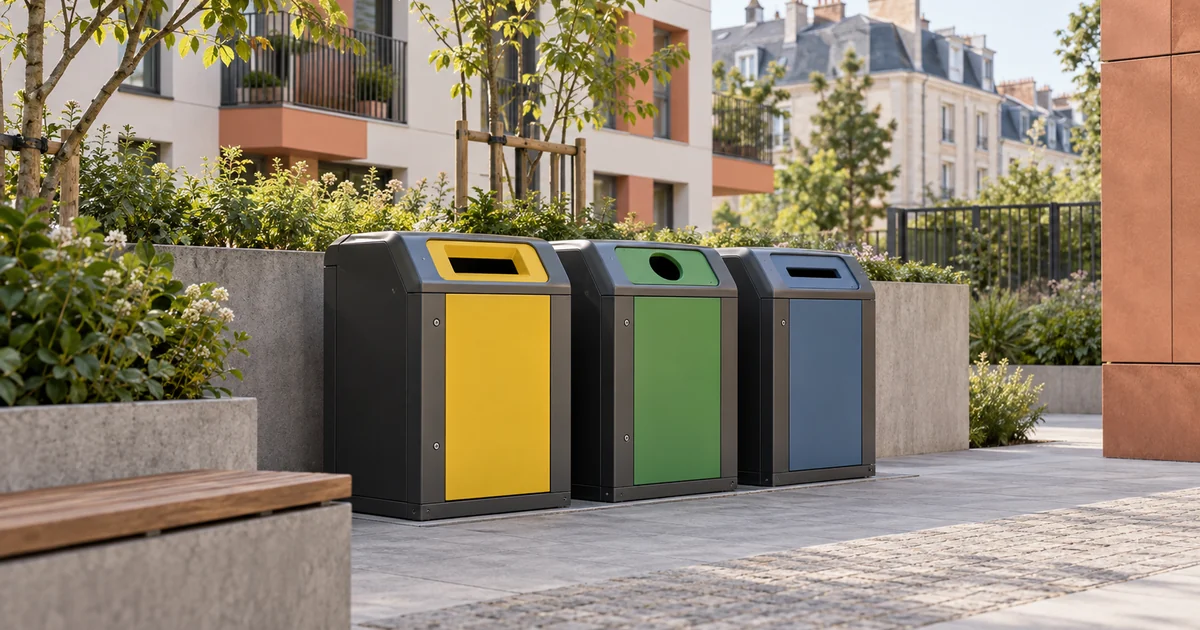
To sort one's waste well is a simple and essential gesture, at the service of the environment and the living environment. In Arras, waste management is organised on the scale of the conurbation, with the collection of household waste, selective sorting, voluntary drop-off points for glass and recycling centres for bulky waste. To know what to sort, how and when allows one to participate efficiently in this organisation. This practical guide takes stock of waste sorting in Arras, from sorting instructions to collection days, by way of the recycling centres and waste reduction, to adopt the right gestures every day and contribute to a better environment.
Waste management in Arras
Waste management in Arras inscribes itself in an organisation on the scale of the conurbation, which associates collection and valorisation. The competency in matters of waste falls under the intercommunal framework, the collection being ensured on the ground by dedicated teams: to understand this territorial organisation, the urban community of Arras and its competencies sheds light on the distribution of missions between the communities. Waste management comprises several aspects: the collection of residual household waste, the selective collection of packaging and papers, the voluntary drop-off of glass, as well as the recycling centres for the other waste. This organisation aims to collect, sort and recover waste, in a logic of respect for the environment and reduction of landfill. Each inhabitant has a role to play, by sorting their waste correctly and respecting the collection instructions. To know the local organisation well allows one to understand why and how to sort. Waste management, often little known, rests on a complex system that mobilises important means. To participate in it, by quality sorting, contributes to the efficiency of the whole. To know the actors and the modalities of waste management is thus the starting point of successful sorting. This organisation, at the service of the territory, allows one to treat waste in respect of the environment. To inform oneself about its working helps everyone to become an actor of sorting.
Selective sorting every day
Selective sorting every day rests on the separation of waste according to its nature, in order to allow its recycling. The principle is simple: recyclable waste, like packaging and papers, is separated from residual household waste, which groups what does not recycle. This separation is generally carried out with the help of distinct bins or bags, according to local instructions. Packaging in plastic, metal, cardboard, as well as papers, is sorted to be recycled, while non-recyclable waste is destined for the treatment of household waste. To sort well supposes knowing the instructions, which specify what goes in each bin. The sorting instructions have changed and have often been simplified, but it remains useful to check them to avoid errors. Quality sorting, without error, improves the efficiency of recycling and avoids the rejection of poorly sorted batches. To adopt the right gestures every day, by separating recyclable waste from the rest, is within everyone's reach. This sorting, once integrated into habits, becomes a simple and efficient reflex. Selective sorting, a citizen gesture, contributes to the valorisation of waste and the preservation of resources. To sort well every day is thus the first link of a responsible waste management. To know and apply the sorting instructions allows everyone to participate in this collective effort.
Glass and voluntary drop-off
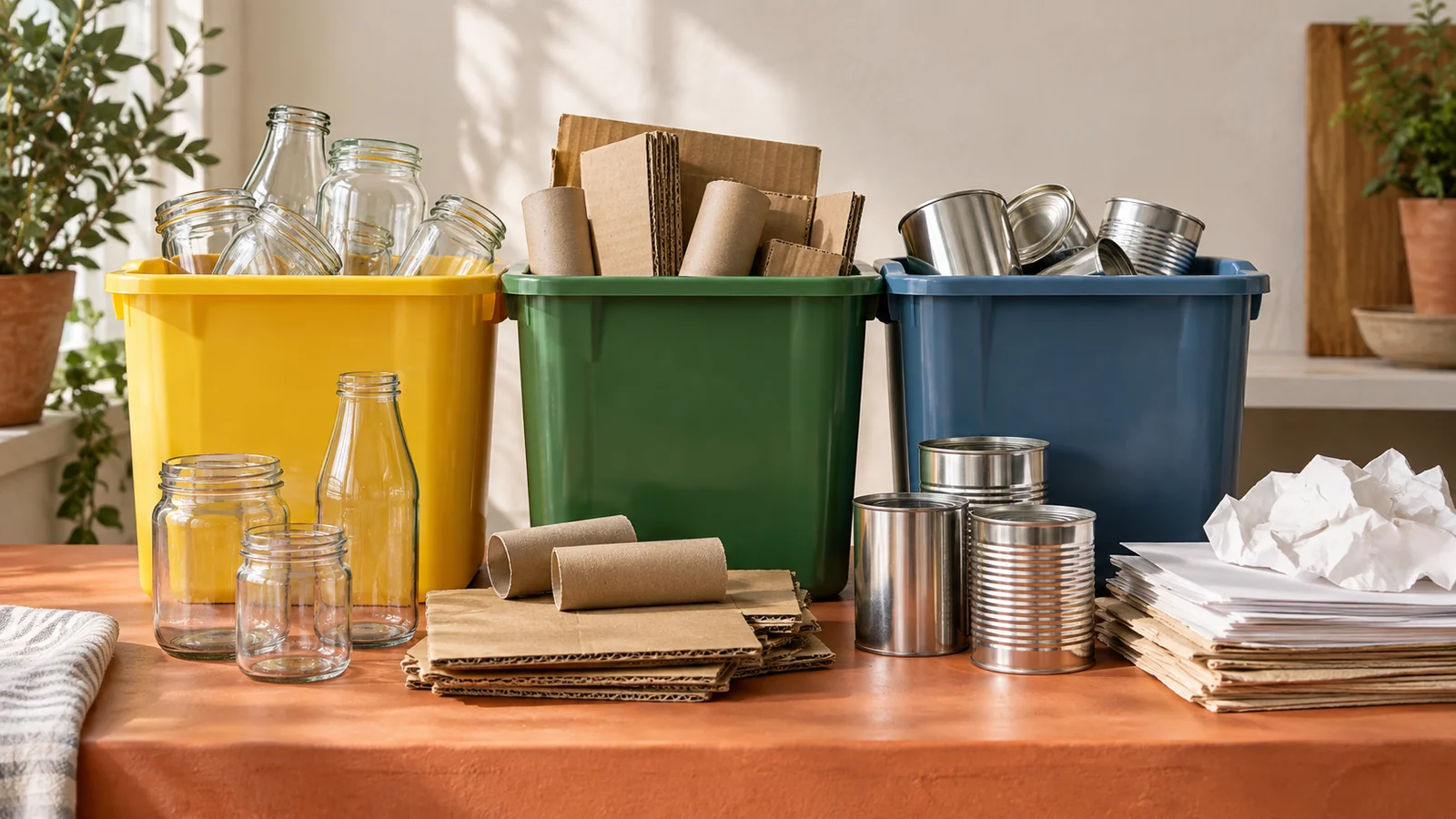
Glass is the object of a specific collection, generally by voluntary drop-off in dedicated containers. Unlike household waste and packaging, often collected door-to-door, glass is deposited in bins or containers spread across the town and the conurbation. These voluntary drop-off points allow one to collect packaging glass, like bottles, jars and pots, with a view to its recycling. Glass is indeed recyclable infinitely, which makes its separate collection an important challenge. One should deposit there packaging glass, cleared of its caps and lids, but exclude certain elements like crockery, windows or bulbs, which do not fall under this stream. To spot the voluntary drop-off points near one's home facilitates the gesture of sorting glass. These containers, accessible at any time, allow one to deposit one's glass at one's own pace. The recycling of glass, sparing of resources and energy, illustrates the interest of sorting. To sort one's glass well, by depositing it in the dedicated containers, contributes to this virtuous stream. To know the location of the voluntary drop-off points and the associated instructions allows one to sort glass efficiently. This gesture, simple and regular, takes part in the valorisation of an entirely recyclable material. The sorting of glass, by voluntary drop-off, thus completes the waste collection system.
Collection: days and instructions
The collection of waste follows a calendar and instructions that it is important to know in order to present one's waste well. Household waste and recyclable waste are collected on determined days, according to a calendar specific to each sector. In Arras, the collection days have been the object of adjustments, and one should refer to the up-to-date calendar to know the days applicable to one's address. It is recommended to put out one's bins the evening before or according to the instructions, and to bring them in after the collection, in order to facilitate the work of the teams and to preserve the cleanliness of the public space. The instructions also specify the way to present the waste: closed bins, compliant bags, respect of the days and times. In case of a public holiday, the collection may be shifted, and information is broadcast to signal these changes. To respect the calendar and the collection instructions allows one to ensure the smooth running of the service. It is useful to consult the official sources to know the collection days and the possible modifications, which can change. To present one's waste well, on the right days and according to the instructions, facilitates the collection and the sorting. These rules, simple to follow, contribute to the efficiency of the service and to the cleanliness of the town. To know and respect the collection calendar is thus essential for a fluid management of waste.
| Waste | Where to deposit it |
|---|---|
| Household waste | Dedicated bin, door-to-door collection |
| Packaging and papers | Sorting bin, selective collection |
| Glass | Voluntary drop-off containers |
| Bulky and other waste | Recycling centre |
The recycling centres
For waste that does not fall under the usual collection, the recycling centres constitute the suitable recourse. These facilities receive a great variety of waste: bulky items, green waste, rubble, electrical and electronic waste, dangerous products, cardboard and many others. They allow one to deposit what cannot go in the collection bins, with a view to a suitable treatment or valorisation. Access to the recycling centres is generally subject to conditions, like opening hours and sometimes an access card, which one should know. To sort one's waste at the recycling centre supposes distributing it in the provided skips, according to its nature, to allow its recycling or treatment. The recycling centres play an essential role in waste management, by avoiding fly-tipping and by allowing the valorisation of many materials. To inquire about the accessible recycling centres, their hours and their access conditions allows one to organise one's deposits. A bulky or specific waste thus finds its place at the recycling centre, rather than in the household waste. To use the recycling centres well contributes to a responsible waste management and to the preservation of the environment. These facilities, complementary to the collection, are indispensable for particular waste. To know their working and their access conditions allows one to deposit one's waste there by the rules. The recycling centres thus complete the sorting and collection system of the conurbation.
Moving in and organising for sorting
When one moves to Arras, organising for waste sorting is among the procedures not to forget. On arriving in a new dwelling, it is useful to inquire about the collection modalities, the collection days and the sorting instructions specific to one's address. One must also ensure that one has the necessary bins, and where applicable request them from the competent services. To settle in a new dwelling comes with many formalities, of which the organisation of sorting is part: on this subject, moving to Arras addresses the procedures linked to settling in the town, among which waste management has its full place. To take these dispositions from the move-in allows one to integrate the right sorting gestures quickly. To spot the voluntary drop-off points for glass, the nearest recycling centre and the collection days facilitates the organisation of everyday life. To organise oneself for sorting, from arrival, avoids errors and allows one to participate from the outset in waste management. This procedure, simple but useful, is part of settling into a new dwelling. To inform oneself well about the local modalities of collection and sorting allows one to start on the right foot. To integrate sorting into one's organisation, from the move-in, quickly makes it a reflex. To organise oneself for sorting is thus a step not to neglect during a move to Arras.
Reducing your waste
Beyond sorting, reducing one's waste at the source is the most virtuous gesture for the environment. The best waste is indeed the one that one does not produce, and many actions allow one to limit the quantity of waste generated. Composting, for example, allows one to recover organic waste, like peelings and food scraps, by transforming them into compost for the garden. Reuse, repair and donation prolong the life of objects and prevent them from becoming waste. Bulk purchases, the limitation of packaging and the refusal of waste also contribute to reducing waste. To adopt these habits, progressively, allows one to significantly decrease the volume of one's bins. Waste reduction, upstream of sorting, lightens the treatment load and preserves resources. Everyone can act at their level, through simple everyday gestures. To reduce one's waste is thus complementary to sorting, in a global approach of respect for the environment. These actions, accessible to all, have a real impact when they become widespread. To commit to waste reduction, through composting and everyday gestures, contributes to a more sustainable way of life. To reduce before sorting is the principle of a responsible waste management. To adopt these reflexes takes part in the preservation of the environment and the living environment.
A challenge for the living environment
Sorting and waste management constitute a veritable challenge for the living environment and the environment of the town. A good waste management contributes to the cleanliness of the public space, to the preservation of the landscapes and to the quality of life of inhabitants. Conversely, fly-tipping and poor sorting degrade the living environment and harm the environment. To preserve the beauty of the town, its streets and its green spaces also passes through a responsible waste management: the places of nature and relaxation, like the Governor's Garden, recall the importance of preserving a pleasant living environment, which the respect of sorting instructions contributes to protecting. Waste sorting thus inscribes itself in a broader approach of respect for the environment and the territory. By sorting and reducing their waste, everyone participates in the preservation of the living environment for present and future generations. This challenge, at once local and global, concerns all inhabitants. To adopt the right gestures, every day, contributes to a healthier environment and a more pleasant town. Waste sorting, a citizen gesture, thus goes beyond the simple formality to become an act of preservation. To contribute to this collective effort is to participate in the quality of life in Arras. Responsible waste management is thus everyone's business, at the service of the living environment.