
Arras, a city of history and culture in France
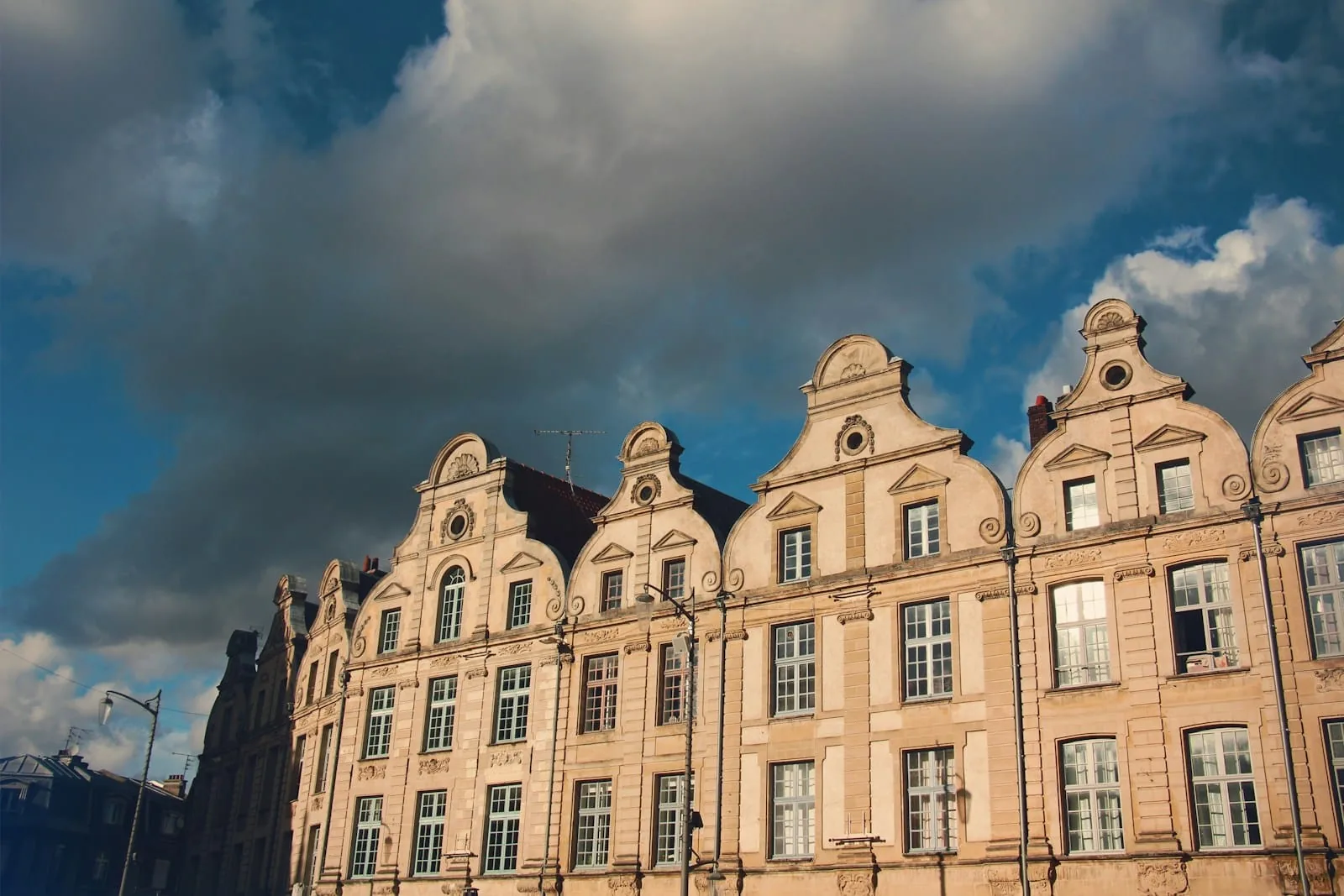
Welcome to Arras Ville, the blog written by people who love Arras and take the time to tell its story. We are a small, passionate editorial team based in the heart of the Pas-de-Calais, and we hold one simple conviction: our city deserves to be talked about in ways that go beyond the postcards. Behind its Baroque façades and its golden belfry lies a living city, fond of good food, endlessly curious, proud of its history and firmly turned towards the future. Here we share what we love: early morning strolls across the Grand-Place, the stories buried beneath the Wellington Quarry, the best spots to enjoy an andouillette sausage or a cone of fries, the secrets of a heritage listed by UNESCO, and the thousand ways to make the most of the Hauts-de-France. Whether you are a lifelong Arrageois, a newcomer, a student who has just arrived or simply a traveller in search of ideas, you are at home here. Settle in, keep your eyes wide open, and let us guide you through two thousand years of history and a present far more vibrant than you might imagine.
Welcome to Arras, city of art and history
Arras is the administrative capital of the Pas-de-Calais, a department that stretches from the plains of the Artois to the beaches of the North Sea, within the great region of the Hauts-de-France. Set on the banks of the Scarpe, halfway between Lille and Amiens, the city has always occupied a crossroads position, where the roads of Flanders meet those of Picardy and where the chalky plateau of the Artois slopes gently down towards the damp lowlands of the North. With its forty thousand or so inhabitants, the Arrageois, it is the ideal size: large enough to offer a rich cultural life, lively shops, a university and a high-speed railway station, yet human enough to feel like home in no time at all and to cross familiar faces as you walk its streets. You fall in love with Arras the moment you cross your first square, when your gaze drifts along the Baroque façades with their ornate gables, those brick and stone houses lined up like a parade beneath their continuous arcades, their colours shifting from sand to ochre with the changing light of the northern sky. The city holds the dual label of City of Art and History and cultivates a way of life in which the gentleness of the North blends with an elegance inherited straight from the Grand Siècle. Here, history is not a frozen backdrop: it still beats in the carillon of the belfry, which chimes its tunes above the rooftops several times a day, in the cobbled lanes, in the vaulted cellars where people once danced and where they still celebrate today. Arras is a cloth-making capital that became a capital of good living, a city scarred by war and magnificently rebuilt, a place that has kept its soul while opening up to the world. It is also a city of character, shaped by the temperate northern climate, by the red brick of the Artois, by the sandstone of its cobbles, and by that slightly gruff but deeply sincere hospitality that has made the reputation of the people here, always quick to offer a craft beer or a piece of insider advice. Around its historic core, the city unfolds its suburbs, its gardens, its tree-lined boulevards and its banks of the Scarpe, where people love to walk, run or cycle when the weather turns fine. There is a particular tempo to be breathed here, neither that of a breathless metropolis nor that of a sleepy village, but that of a balanced city that takes the time to live without ever growing bored. Around it, the countryside of the Artois rolls out its great fields of wheat, sugar beet and potatoes, its brick villages topped with church spires and its square-courtyard farms, an open plain landscape crossed by the TGV trains speeding towards Paris or Lille. An administrative and judicial city, seat of the prefecture, of the departmental council and of many public services, Arras is also an active economic hub, oriented towards food processing, logistics and services, that has never forgotten its merchant roots. Long protected by its fortifications, it gradually pulled down its walls to let its suburbs breathe, while keeping, at the turn of a stroll, the moving traces of its military past. This blend of openness and memory, of nourishing land and worked stone, gives the city an immediately recognisable personality, at once rural and refined, down-to-earth and literary. Before diving into the great chapters of its history and the treasures of its heritage, let us take you along on our discoveries. Here are the latest articles from our editorial team:
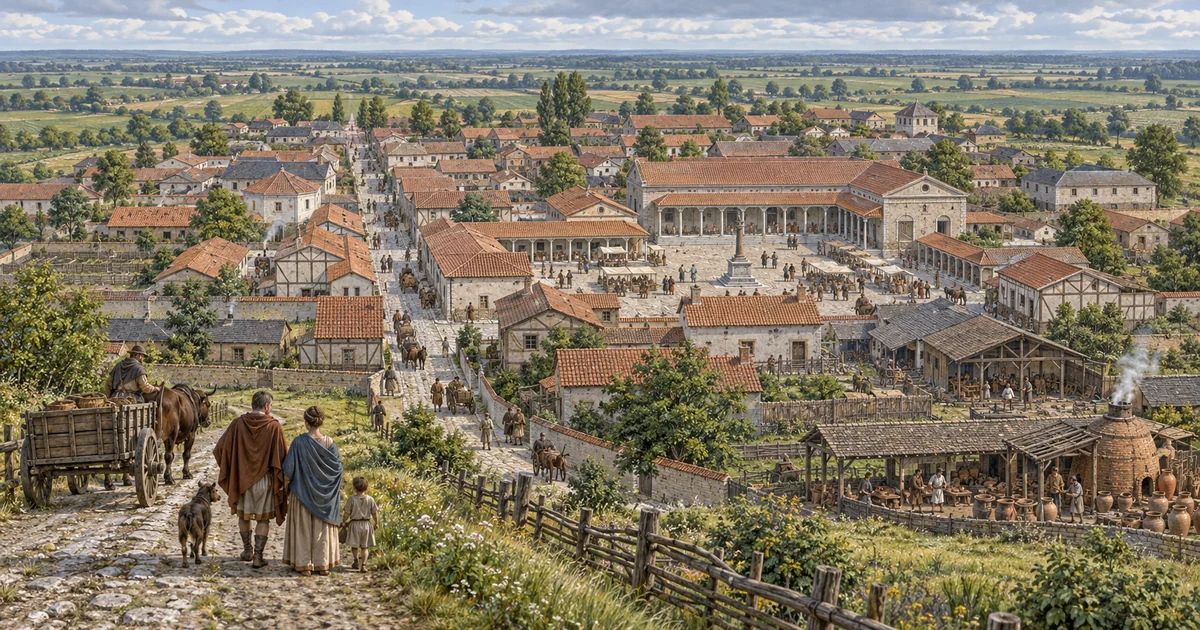
Nemetacum, what did the Gallo-Roman city of Arras look like?
Nemetacum, the Gallo-Roman town of the Atrebates on the hill of Baudimont: town planning, textiles exported across the empire, fortifications and ancient decline.
What was the battle of the Sabis, where the Atrebates fought?
The battle of the Sabis (57 BC): the Atrebates of the Arras area in the Belgic coalition that nearly beat Caesar, before the region's submission.
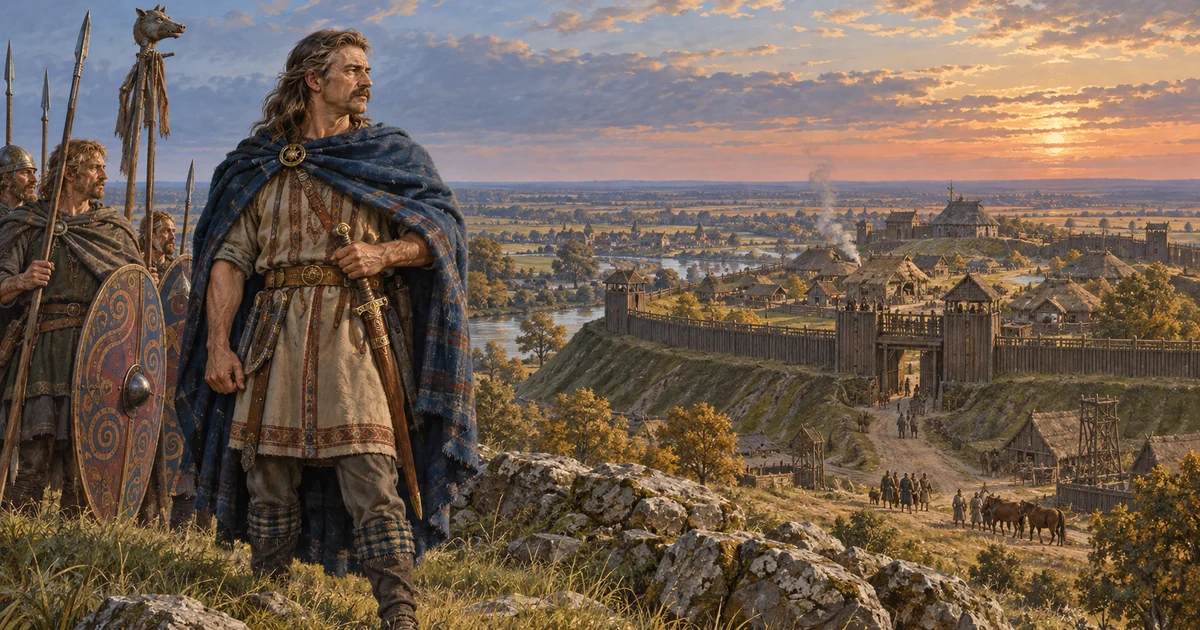
Who was Commius, king of the Atrebates, at the origins of Arras?
Commius, king of the Atrebates: the first historical figure linked to Arras, from Caesar's ally to leader of the Gaulish revolt and exile in Britain.
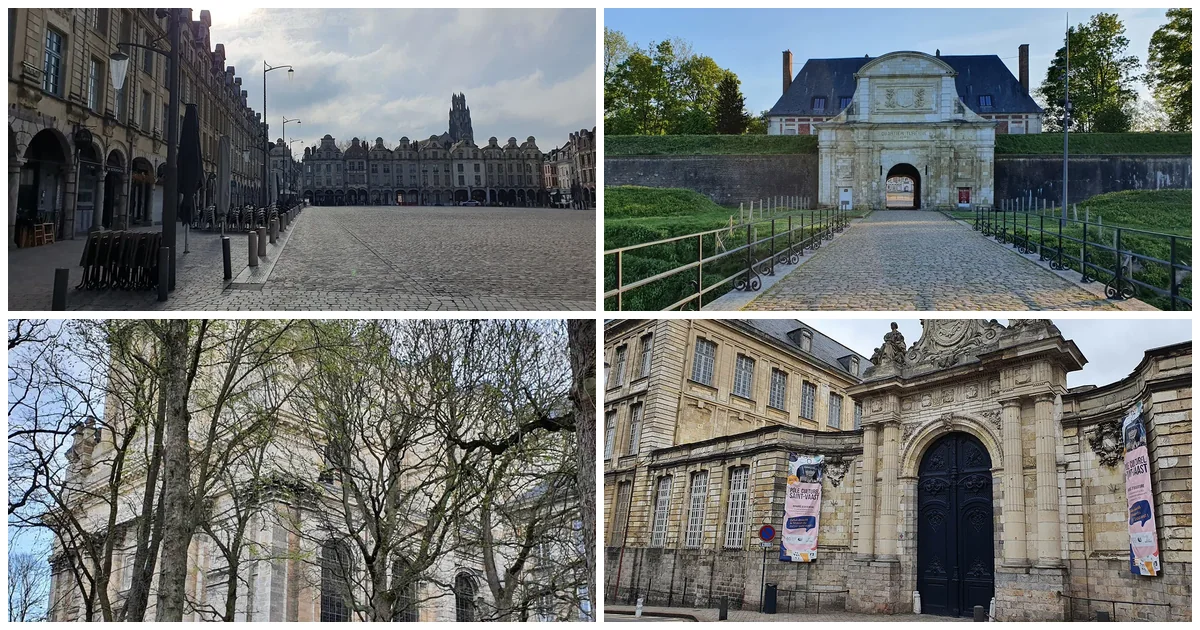
What are the must-see monuments to visit in Arras?
UNESCO belfry, Baroque squares, Vauban citadel, Saint-Vaast Abbey and boves: the guide to the must-see monuments of Arras, on foot.

Two thousand years of history
The story of Arras begins long before its cathedrals and belfries, in the days when the powerful Gaulish people of the Atrebates occupied the region and gave their name to the future city. Their capital, Nemetacum, also called Nemetocenna, where Julius Caesar himself spent one winter of the Gallic Wars, became a prosperous road junction under the Roman Empire, one of the largest towns in northern Gaul, whose foundations, baths and streets are still revealed by excavations beneath the Baudimont district. Over the centuries, the Christian city took shape around a guardian figure: Saint Vaast, the bishop said to have evangelised the region in the sixth century, whom legend shows taming a bear; his name remains attached to the powerful Saint-Vaast Abbey, long one of the wealthiest and most influential Benedictine monasteries in the kingdom, around which the upper town grew, facing the merchant town. It was the Middle Ages that gave Arras its first golden age. Grown into a great cloth-making city, it prospered thanks to the trade in wool and above all in its sumptuous tapestries, so renowned across Europe, reaching the courts of England and Italy, that the word « arras » long meant a wall hanging in several languages. Rich, cultured, endowed with bankers and poets, Arras shone as a hub of literature and theatre, and in 1435 hosted the famous Congress of Arras, a great diplomatic negotiation between France and Burgundy. But its prosperity sharpened many appetites. Passing under the rule of the Dukes of Burgundy and then, through dynastic marriages, into the fold of the Habsburgs, the city endured the long era of Spanish sovereignty, those Spanish Netherlands that left a lasting mark on its architecture, its religion and its customs, and of which the Union of Arras of 1579 remains a notable episode. Not until 1640 and a memorable siege did the armies of Louis XIII and Richelieu finally wrest Arras from the Spanish crown; the Treaty of the Pyrenees of 1659 confirmed its definitive attachment to France, which Vauban’s ramparts would soon protect. This dual belonging, French by law and Flemish in its stones, explains many of Arras’ singularities: its scrolled façades inherited from the Baroque of the former Netherlands, its old devotion, its brotherhoods and its trading traditions. Under the Ancien Régime, the city became a peaceful provincial town, capital of the Artois, rich in convents, a college and its abbey; letters and sciences were cultivated there in an academy frequented by local high society. It was also in Arras that, in the Middle Ages, a remarkable popular theatre flourished, with authors such as Adam de la Halle, whose Jeu de la Feuillée and Jeu de Robin et Marion rank among the oldest secular plays in the French language, proof that the city was, very early on, a capital of creation as much as of trade. The great Arras banking families lent to princes across Europe, and the city struck its own coinage, a sign of its power. The Age of Enlightenment would see the birth, in a house in the town, of one of its most famous and most controversial children: Maximilien de Robespierre, an Arras lawyer, member of the local academy and lover of verse before he became one of the central and most feared figures of the French Revolution. The twentieth century, by contrast, would be tragic. Standing just a few kilometres from the front line, Arras was devastated by the First World War: bombarded for four long years, turned into a garrison and trench town, it lost its belfry, its town hall and almost all of its historic squares, reduced to rubble. The Second World War, with the Occupation and fresh tragedies, would add its own wounds. Yet the city, stubborn to the core, rose again. The patient reconstruction of its façades, stone by stone, faithfully identical, in scrupulous respect of the original design, carried out through the nineteen-twenties and thirties, remains one of the finest examples of urban rebirth in the country and the symbol of a collective pride that never bowed before adversity.
Heritage that takes your breath away
You only need to look up to understand why Arras ranks among the most beautiful cities in the North. Its emblem, the belfry, rises seventy-five metres above the town hall, crowned by a golden lion that watches over the city and whose carillon sets the rhythm of the day. Inscribed on the UNESCO World Heritage List as one of the Belfries of Belgium and France, this civic tower has, since the Middle Ages, symbolised the communal freedoms wrested from the lords; from its platform, reached by a few steps and then a lift, a striking panorama opens over the mosaic of rooftops and, on a clear day, across the entire plain of the Artois as far as the slag heaps of the mining basin. At its feet stretch the city’s two jewels, the Grand-Place and the Place des Héros, also known as the Petite Place, two vast cobbled esplanades lined with one hundred and fifty-five houses with Flemish Baroque façades rebuilt identically after the Great War. Beneath their continuous arcades, every gable tells a story and every carved cartouche recalls a trade, a shop sign or a merchant family; together they form one of the largest homogeneous architectural sets in Europe, striking in their coherence yet rich in a thousand details. The town hall, with its Flamboyant Gothic façade and its long gallery, conceals in its depths the famous boves, that network of underground galleries dug into the chalk from the tenth century onward and used in turn as quarry, cellar, warehouse, refuge for the inhabitants and, during the war, shelter from the bombs; today they are visited by lamplight, in a timeless atmosphere. A little apart stands the Vauban Citadel, built from 1668 by the celebrated engineer of Louis XIV as part of the « pré carré » defending the frontier, unfurling its star-shaped ramparts, its casemates, its chapel and its vast parade ground; affectionately nicknamed « the Beautiful Useless One » because it never underwent a siege, it too is listed by UNESCO among the fortifications of Vauban, and shelters the poignant Wall of the Shot, in memory of the resistance fighters who fell during the Second World War. South of the city, memory takes on a graver tone at the Wellington Quarry, a network of tunnels where New Zealand miners dug, from 1916, a colossal underground shelter several kilometres long to conceal nearly twenty-four thousand soldiers on the eve of the Battle of Arras in April 1917; now a deeply moving underground museum discovered twenty metres below ground, it pays tribute to the men who went down into the darkness to prepare the assault. Nearby, the Place du Théâtre and its Italian-style theatre, the mansions with their carved doorways, the birthplace of Robespierre and the many churches remind us that Arras’ heritage is not confined to its two great squares, but runs through the whole fabric of the old town. Lovers of detail will linger over the weathervanes, the wrought-iron shop signs, the grimacing masks that adorn the keystones of the arcades, or the subtle shifts of hue between the sandstone, the brick and the white stone of the Artois that give each façade its own shade. You should also look up to the steep roofs pierced with dormer windows, wander the gardens of the Scarpe and guess, beneath the tarmac, the line of the old dismantled ramparts. The regained perfection of the Grand-Place and the Place des Héros makes them, moreover, a sought-after film set, where more than one production has planted its cameras, so striking is the illusion of an intact past. When evening comes, when the lighting caresses the gables and the belfry is outlined against the sky, the city takes on the air of an open-air theatre that neither photography nor memory quite does justice to; you have to be there, to walk on the gleaming cobbles and let yourself be wrapped in the inhabited silence of these immense squares. Finally, the former Saint-Vaast Abbey, a masterpiece of eighteenth-century Classical architecture with its monumental cloisters and its library, now houses the Fine Arts Museum, whose collections of painting, medieval sculpture, porcelain and Gallo-Roman remains converse with the majestic neoclassical cathedral next door. From crypt to bell towers, from cellars to ramparts, from wartime tunnel to museum galleries, Arras is a city to be explored as much on the surface as deep below, and one that holds a surprise around every street corner for those who know how to look.
Arras through the seasons
A city can also be judged by the way it knows how to celebrate, and on that score Arras is never caught off guard. When summer comes, the Citadel is transformed to welcome the Main Square Festival, one of the largest music events in northern France, which every July draws tens of thousands of festival-goers, up to more than fifty thousand a day, to cheer international headliners of pop, rock and electronic music in the unique setting of Vauban’s ramparts. The atmosphere is electric, the nights are short, the terraces overflow, and the whole city pulses to the rhythm of the concerts for a full weekend. No sooner has summer closed than the pleasures of local produce take over, with the famous andouillette festival, a mouth-watering tribute orchestrated by a good-natured brotherhood to the pork speciality that the Arrageois defend with a mixture of humour and gravity, and the no less delightful World Fry Championship, where the culinary totem of the North, the perfectly golden potato, is celebrated without the slightest self-consciousness in the joyful spirit of a fair. Then winter wraps the city in its lights when the Christmas market opens, one of the most popular in the region: dozens of wooden chalets settle across the Place des Héros and around the belfry, a big wheel turns above the illuminated rooftops, an ice rink welcomes families, and visitors wander with a mug of mulled wine amid the scents of gingerbread, waffles and chocolate, while the Baroque façades take on the air of a fairy tale. Spring, for its part, wakes the gardens and multiplies open-air gatherings, while the long evenings of late season invite strolls beneath the arcades and dinners that stretch on and on. Culture lovers are not forgotten either: the theatre, the concert halls, the art-house cinema and the many exhibitions of the Fine Arts Museum ensure a dense programme from autumn to spring, rounded out by talks, literary festivals and encounters that nourish the mind as much as the taste buds. All year round, finally, the markets set the pace of local life: every Wednesday and Saturday, the Grand-Place fills with colourful stalls where producers from the Artois, market gardeners, cheesemakers, fishmongers and brewers offer the best of the region, in an unbroken trading tradition that dates back to the golden age of cloth and makes the square one of the largest open-air markets in the country. To these great events add a host of clearance sales, flea markets, concerts, live shows, exhibitions and neighbourhood festivals that make Arras a city where something is always happening, from the spring carnival to the December lights. The great clearance sales periodically turn the streets into a huge open-air jumble sale where people browse for hours, while funfairs, summer fireworks and traditional processions keep the bond between the generations alive. Each neighbourhood has its habits, its associations and its moments of celebration, so that the Arras calendar hardly knows a dull moment, and a passing visitor almost always stumbles, by luck, upon some event, a street concert or a producers’ market. Here, people do not merely contemplate their heritage: they live it, inhabit it and celebrate it through the seasons, with the good cheer, conviviality and hearty appetite that so define the people of the North, for whom the table and the festival are serious matters.
Living well in Arras
If Arras had to be summed up in a single phrase, one might speak of French quality of life, northern edition. The city cultivates a rare balance between the energy of a departmental capital and the gentleness of a place built to human scale. Getting around is easy, often on foot or by bike, from the belfry to the shaded boulevards by way of the Baroque squares where people settle onto café terraces at the first rays of sun, while the bus network conveniently serves the neighbourhoods and surrounding towns. The pedestrianised, shop-lined city centre offers independent boutiques, well-known brands, bookshops and welcoming cafés, while the covered market and the open-air stalls keep alive the taste for direct contact with producers. When it comes to food, Arras is a genuine delight for lovers of northern cuisine: here you can savour andouillette, carbonnade flamande slow-cooked in beer, gratinated welsh, maroilles cheese, sugar tart and the essential fries, not to mention the pastries and the many craft beers that are the pride of the brewers of the Artois, to be enjoyed on a terrace of the Grand-Place. The tables of Arras range from the convivial brasserie to the cosy estaminet, from the market bistro to the fine-dining restaurant, by way of the neighbourhood fry shops where the cone is eaten standing up, sprinkled with salt and topped with sauce, like an unchanging ritual. On Sunday morning, the market is prolonged by drinks among friends, and the long family tables, gathered around a potjevleesch or a maroilles tart, say better than anything the North’s attachment to shared pleasures. It is a city wonderfully suited to family life, with its parks and gardens such as the Jardin des Allées, its schools, its sports and cultural facilities, its swimming pool, its theatre, its media libraries and a community fabric of remarkable richness in which everyone finds a place. Students are not left out either: the university hub, anchored by the University of Artois and its higher schools, brings the city a youthful energy and a lively nightlife around the central squares and bars, while offering respected courses just a stone’s throw from home. Housing, finally, remains far more affordable here than in the great metropolises, allowing you to enjoy space and charm without breaking the bank. The city also knows how to make room for wide green spaces, from the banks of the Scarpe laid out for walking to the glacis of the Citadel, now a place for strolling and sport, by way of the flowered squares that punctuate the neighbourhoods. Neighbourhood life keeps a rare warmth here: people know one another at the baker’s, chat at the market, meet up at the street party or the local sports club, and small shops resist standardisation far better than elsewhere. This conviviality, combined with a moderate cost of living, comprehensive healthcare facilities and a welcome sense of safety, makes for a peaceful daily life that many, coming from bigger cities, discover with relief. But one of Arras’ great assets lies in its exceptional connections: thanks to the TGV, the city is only fifty minutes from Paris and a mere few minutes from Lille, which appeals to a growing number of families, remote workers and professionals seeking a calmer setting without giving up proximity to the capital and its opportunities. Living in Arras means enjoying the best of both worlds: the charm of a historic city, the buzz of a lively capital, the generosity of the northern table, the beauty of the surrounding landscapes and the ease of reaching the great metropolises in a flash. It is this blend, at once steeped in heritage and deeply welcoming, that explains why so many newcomers, once settled, never leave again and become, in their turn, the most fervent ambassadors of their city.
At the gateway to the Hauts-de-France
Choosing Arras also means giving yourself an ideal gateway to the treasures of the Hauts-de-France, this northern region whose landscapes and memories carry a rare intensity. Barely half an hour away, the city of Lille unfolds its Flemish bustle, its red-brick Vieux-Lille, its first-rate museums such as the Palais des Beaux-Arts, its animated Grand-Place and its vibrant student atmosphere. Just as close, the town of Lens has reinvented itself around the magnificent Louvre-Lens, an outpost of the famous Paris museum set upon a former mining pit, where masterpieces can be admired in a luminous, free Gallery of Time that has transformed the way this territory is seen and drawn visitors from around the world. For this territory carries a singular history: the mining basin of the Nord-Pas-de-Calais, with its twin slag heaps turned into green hills, its rows of miners’ cottages and its pithead frames rising towards the sky, is inscribed on the UNESCO World Heritage List as an evolving cultural landscape, a moving testimony to three centuries of coal-mining, hard labour and working-class solidarity. To the west, the Côte d’Opale offers its immense sandy beaches, its cliffs and its wind-swept headlands, from Cap Blanc-Nez to Cap Gris-Nez, from where the English coast can sometimes be glimpsed, with the great Nausicaá aquarium at Boulogne-sur-Mer and the elegant resort of Le Touquet less than an hour and a half by road. To the south, the city of Amiens watches over its cathedral, the largest in France and also listed by UNESCO, and over its endearing hortillonnages, floating gardens threaded with canals that are explored by boat. Not forgetting the Great War memorials scattered across the Artois, from the striking Canadian memorial at Vimy to the Ring of Remembrance at Notre-Dame-de-Lorette, which engraves in stone the names of hundreds of thousands of soldiers of every nationality, places of reflection and remembrance of rare power. To all this add the fortified town of Montreuil-sur-Mer, the marshes of Saint-Omer, the carillons of Douai, the Baie de Somme with its seals, and the Flemish villages with their picturesque belfries. A little further afield, yet still within reach for a getaway of a day or two, neighbouring Belgium and its Flemish towns, the canals of Bruges and Ghent, or the gentle forests and châteaux of the Oise around Chantilly and Compiègne widen the range of possible escapes still further. The region lends itself wonderfully to slow travel, on foot or by bike, along the towpaths, the greenways traced over former railway lines and the trails that climb to the top of the slag heaps to offer unexpected panoramas. A land of breweries, cheeses, waffles and markets, it also delights food lovers who enjoy sampling, from one village to the next, the specialities of a culinary heritage of unrivalled generosity. From Arras, everything is within reach: a day at the sea, a cultural getaway to Lille, an immersion in mining memory, a hike across the slag heaps, a boat trip through the hortillonnages or a contemplative tour of the battlefields. You can set off in the morning to wander a beach on the Côte d’Opale, lunch on a seafood platter, admire the collections of the Louvre-Lens in the afternoon and come home to dine in Arras without ever feeling rushed, so short are the distances and so clear the roads. The city is not only a destination in itself; it is also the perfect base camp for exploring a region whose richness, diversity and depth of soul are too often underestimated.
Arras, a major site of Great War remembrance
You cannot truly understand Arras without grasping how deeply the First World War marked its flesh and its soul. For more than four years, the city found itself on the front line, barely a few kilometres from the trenches, under the constant fire of German artillery that reduced its districts to ruins and turned its cellars into shelters for the population and the soldiers. It was here, in the spring of 1917, that the Battle of Arras was fought, a vast Allied offensive led by British, Canadian, Scottish, Australian and New Zealand troops. The best-kept secret of that battle lies today beneath the visitors’ feet: at the Wellington Quarry, New Zealand tunnellers, miners by trade, extended and connected the old medieval boves to dig an underground network several kilometres long, capable of sheltering nearly twenty-four thousand men from the shells, equipped with running water, electricity, kitchens and even a hospital. On the morning of 9 April 1917, the soldiers surged from the ground just metres from the enemy lines, in a moment of total surprise. Now a moving underground museum, the quarry takes the visitor twenty metres below ground to share, for the length of a tour, the harrowing daily life of those men who carved their names, their jokes and their prayers into the chalk. All around Arras, the countryside of the Artois is dotted with military cemeteries, their perfect rows of white headstones tended with infinite care by the Commonwealth War Graves Commission; there you read the names of young men who came from every corner of the British Empire and beyond, fallen far from home. A few kilometres away rises the striking Canadian memorial at Vimy, whose two white stone pylons crown the ridge won at great cost by the Canadians in April 1917; the site, with its preserved trenches and its shell craters frozen in the grass, is one of the most poignant places of remembrance on the Western Front. Not far off, the hill of Notre-Dame-de-Lorette brings together the largest French national necropolis and the Ring of Remembrance, an immense ribbon of bronze on which are engraved, without distinction of nationality or side, the names of nearly six hundred thousand soldiers. To visit Arras and its surroundings is therefore also to perform a duty of remembrance, to walk on a land ploughed by history and to measure, in the silence of the cemeteries as in the gloom of the quarry, the appalling price paid by an entire generation.
Wandering through Arras, between lanes and terraces
There is a way of loving Arras that needs neither ticket nor programme: simply wandering, at the whim of the lanes and the squares. Begin with the Grand-Place, the largest, in the early morning, when the cobbles still glisten with dew and the first cafés set out their chairs beneath the arcades; let your gaze run along the one hundred and fifty-five façades before slipping through an alley to the more intimate Place des Héros, dominated by the lace-like silhouette of the town hall and its belfry. Between the two, the Rue de la Taillerie and the shopping streets teem with boutiques, bookshops, chocolate makers and old shopfronts, while on market days, Wednesday and Saturday, the whole city seems to gather around the stalls overflowing with vegetables from the Artois, cheeses, flowers and fish. Push on towards the Place du Théâtre and its Italian-style theatre, slip into the hidden courtyards of the mansions, then head down to the Basse-Ville, a more working-class and peaceful district born around the station and the old suburbs, where you discover another Arras, that of everyday life, of rows of brick houses, unpretentious estaminets and quiet little squares. The charm of Arras lies in this ideal scale: everything is done on foot, every street corner holds a surprise, a carved gable, a wrought-iron sign, a discreet chapel or an unexpected view of the belfry. When the aperitif hour comes, the terraces of the two great squares become the city’s open-air drawing room: there people put the world to rights over a local craft beer, watch the passers-by, and savour the sweetness of a summer’s evening that lingers late under the golden light of the North. Through the seasons the setting changes but the pleasure remains: sunlit terraces and colourful markets in the fine weather, chalets and mulled wine at Christmas, the poetic mists of autumn over the Scarpe. To wander through Arras is to let yourself drift, with no fixed route, until the city, little by little, yields its secrets and gives you, as it gives us, the irresistible urge to come back.
A blog to fall in love with Arras
By now you will have understood that Arras Ville is not just one more guidebook: it is a declaration of love to a city we walk, question and tell with passion. Our editorial line can be summed up in a few words: accuracy of the facts, joy of storytelling, honest perspective and boundless curiosity. We believe we love best what we understand, which is why we devote as much energy to digging through the archives and checking a date as to unearthing the finest spot for a Sunday lunch or the most beautiful view of the belfry. To help you find your way, we have organised our publications into four complementary sections. The History section dives into the city’s two thousand years, from Nemetacum to the medieval tapestries, from Spanish sovereignty to Robespierre, from the trenches of 1917 to the reconstruction; it is made for the curious who want to understand what lies behind each façade, each street name and each stone. The What to do section gathers our ideas for outings, visits and events, from the belfry to the Wellington Quarry, from the Fine Arts Museum to the Main Square Festival, from the Christmas market to strolls along the Scarpe, so you never miss anything that brings the city to life throughout the year. The Practical life section speaks to those who live Arras day to day or are about to settle here: shops, transport, good places to eat, schools, tips for the newcomer, advice on the TGV to Paris and pointers to help you feel at home from the very first day. Finally, the Hauts-de-France section widens the horizon towards Lille, the Louvre-Lens, the mining basin, the Côte d’Opale, Amiens and all the treasures of the region, turning every weekend into an adventure. Whether you are here for a single article or for hours of reading, we hope to pass on a little of the flame that drives us and to give you, in turn, the urge to wander these squares and lanes. We write for residents and visitors alike, for lovers of old stones and for the curious in search of good food, with the same care and the same wish to do things well; each article is nourished by reading, by encounters, by walks through the city and by conversations with those who bring it to life day after day. Our finest reward is to see you push open a door, look up at a façade, try a northern recipe or plan a getaway thanks to one of our publications. Explore, share, come back: Arras has so much to tell you, and we take such pleasure in telling it. Welcome to our home, welcome to Arras.