
The boves of Arras: how to visit the underground town?

Beneath the streets and squares of Arras stretches a little-known and fascinating world: the boves, a network of underground galleries dug over the centuries. Former quarries become cellars, refuges then shelters during the wars, these underground passages tell a secret part of the history of the town. Today, it is possible to visit them and discover this hidden Arras, beneath the surface. A look back at the boves of Arras, their history and the visit of this underground town, one of the most original experiences to have in the city.
Arras, a town on its underground passages
Arras is a town that rests, literally, on its underground passages. Beneath the ground of the city stretches a vast network of galleries, the boves, dug over the centuries. This underground world, unknown to many, constitutes one of the most original aspects of the Arras heritage. Where the town on the surface offers its famous squares and its monuments, the subsoil conceals another universe, made of galleries and rooms dug into the rock. This underground dimension is an integral part of the history and identity of Arras. The boves testify to a long history, that of the exploitation of the subsoil and its multiple uses over the centuries. They tell a hidden part of the life of the town, often ignored by those who travel the surface. To discover Arras is also to discover this underground world, which adds a depth to the visit of the city. The presence of these underground passages, beneath the streets and squares, confers on Arras a unique character, that of a double town, on the surface and underground. This duality, between the visible town and the hidden town, makes all the interest of the discovery of the boves. To understand that Arras rests on its underground passages allows one to grasp this little-known dimension of the town. Beneath the surface, a vast network of galleries testifies to a long history of exploitation and use of the subsoil. The boves, this underground world, are an integral part of the Arras heritage and add a fascinating depth to the discovery of the city. To explore Arras is also to descend underground, in discovery of this little-known but history-charged underground town.
What are the boves?
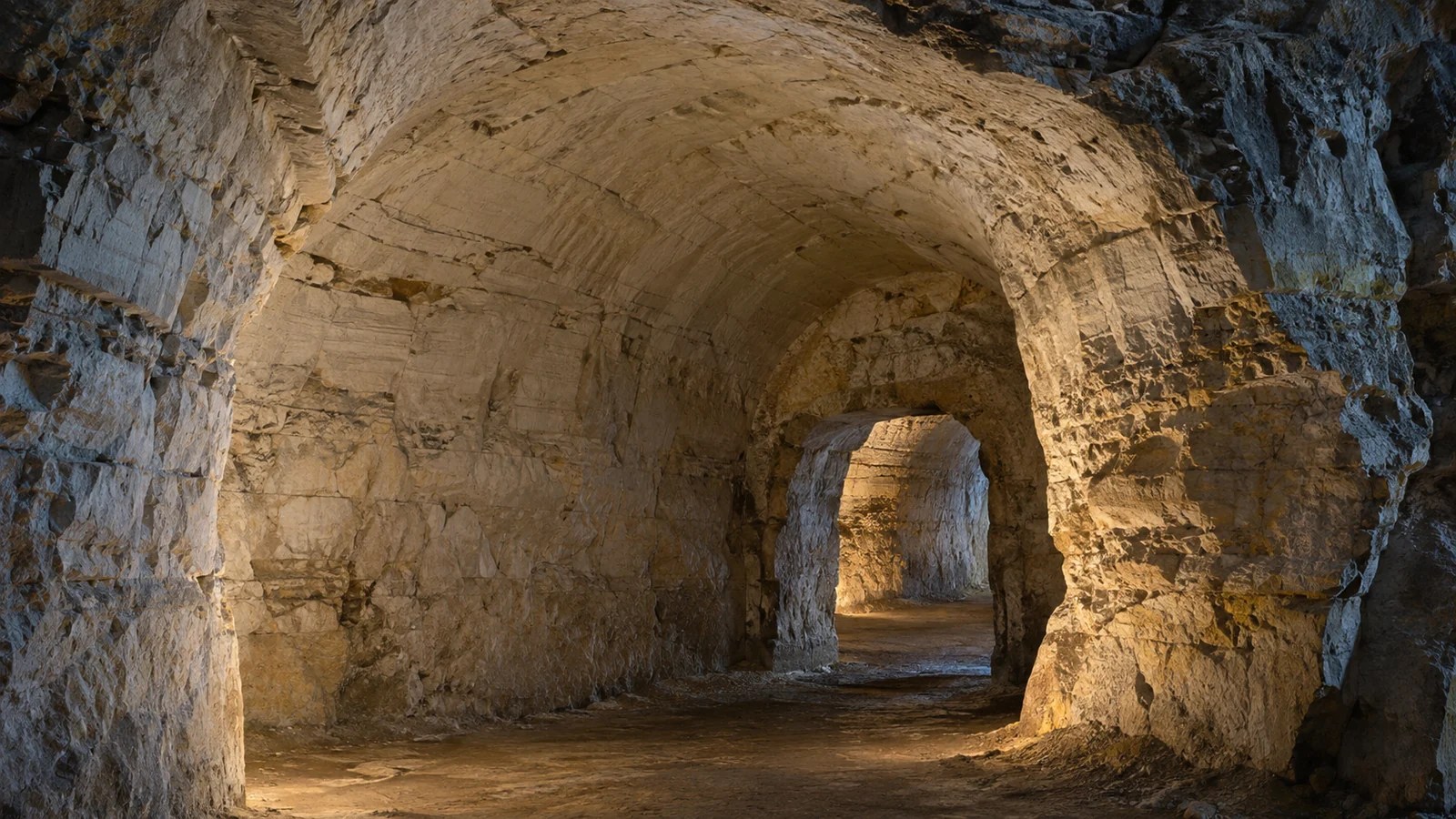
The boves designate the underground galleries dug beneath Arras. The term, proper to the region, designates these cavities and underground networks that stretch beneath the town. Originally, they were quarries, dug to extract the stone necessary for the construction of the buildings of the city. In digging the subsoil to extract materials, the people of Arras created, over the centuries, a vast network of galleries. These underground quarries, once exploited, were not abandoned: they found numerous uses, serving in turn as cellars, warehouses, refuges and shelters. The boves thus constitute a complex network, the fruit of centuries of exploitation and development of the subsoil. They stretch beneath a large part of the town, forming a veritable underground labyrinth. This network, dug into the soft rock of the Arras subsoil, testifies to the ingenuity and work of the inhabitants over the centuries. The boves are not natural caves, but indeed cavities dug by the hand of man, for precise uses. To understand what the boves are allows one to grasp the nature of this underground heritage. Galleries dug beneath Arras, originally to extract stone, they formed over the centuries a vast underground network with multiple uses. These cavities, dug by man into the rock of the subsoil, testify to a long history of exploitation and development. The boves, this complex underground network, constitute one of the most original heritages of Arras, the fruit of the work of the inhabitants over the centuries.
Medieval origins
The boves of Arras plunge their origins into the Middle Ages. It is at this era that the digging of the underground galleries began, to extract the stone necessary for the construction of the town. The subsoil of Arras, composed of a soft rock easy to extract, offered an accessible building material. Rather than extracting the stone in the open air, galleries were dug underground, exploiting the subsoil in depth. This exploitation, begun in the Middle Ages, continued over the centuries, gradually creating the vast network of the boves. The digging of these galleries answered a concrete need: to have materials to build the town in full growth. The boves are thus the testimony of the rise of Arras in the Middle Ages, when the town was developing and needed stone for its constructions. This medieval origin confers on the boves a remarkable antiquity, making them a heritage several centuries old. The underground network stretched gradually, at the rhythm of the exploitation and the needs of the town. The boves thus testify to the long history of Arras and to the exploitation of its subsoil since the Middle Ages. To understand the medieval origins of the boves allows one to grasp their antiquity and their reason for being. Dug from the Middle Ages to extract the building stone, they answered the needs of a town in full growth. This exploitation, continued over the centuries, created the vast underground network we know. The boves, of medieval origin, testify to the long history of Arras and to the ingenuity of its inhabitants, who knew how to exploit the subsoil to build their city over the centuries.
A use through the centuries
Once the quarries were exploited, the boves knew multiple uses over the centuries. These underground galleries, once emptied of their stone, were not abandoned, but reused in diverse ways. They served notably as cellars, offering cool and stable spaces for the conservation of foodstuffs, wine and goods. Merchants and inhabitants used these underground spaces for storage, taking advantage of their favourable conditions. The boves also served as refuges in case of danger, offering a shelter underground. Over the centuries, they were thus integrated into the life of the town, fulfilling varied functions. This reuse of the old quarries testifies to the ingenuity of the inhabitants, who knew how to make use of this underground network. The boves were part of daily life, as spaces of storage and refuge, beneath the town on the surface. This long history of diverse uses, from the Middle Ages to the modern era, makes the boves a living heritage, integrated into the life of the city. The underground galleries thus accompanied the history of Arras, fulfilling successive functions in the service of the inhabitants. To understand the uses of the boves over the centuries allows one to grasp their place in the life of the town. Old quarries reused as cellars, warehouses and refuges, they were integrated into the daily life of the people of Arras. This reuse, from the Middle Ages to the modern era, testifies to the ingenuity of the inhabitants and makes the boves a living heritage. The underground galleries accompanied the history of Arras, fulfilling varied functions and testifying to the richness of this underground network in the service of the city and its inhabitants.
The boves during the war
The boves knew, during the First World War, a crucial use: that of shelters and military tunnels. While Arras, a front town, was subjected to the bombardments, the underground network offered a precious protection against the shells. Inhabitants and soldiers found refuge in the boves, sheltered from the shelling. This underground network was also arranged and extended for military ends, notably to prepare the offensive of 1917. Tunnellers linked and enlarged the galleries, creating a vast underground network capable of sheltering thousands of soldiers. The Wellington Quarry, whose history one can discover by visiting the Wellington Quarry and the underground of Arras, is one of the most famous testimonies of this military use of the underground passages. During the war, the boves thus played an essential role, offering shelters and spaces to prepare the operations. This chapter of the history of the boves, linked to the Great War, adds to their heritage interest a memorial dimension. The underground galleries, which had served as quarries and cellars, became shelters and war tunnels, witnesses of the dramatic history of the town during the conflict. To understand the use of the boves during the war allows one to grasp this dimension of their history. During the First World War, the underground network offered shelters and tunnels, protecting inhabitants and soldiers from the bombardments and serving to prepare the offensives. The Wellington Quarry is the most famous testimony of it. This military use adds to the boves a memorial dimension, linked to the martyrdom of Arras during the Great War. The underground passages, refuges and war tunnels, thus testify to the dramatic history of the town.
| Use | Era |
|---|---|
| Stone quarries | From the Middle Ages |
| Cellars and warehouses | From the Middle Ages to the modern era |
| Military shelters and tunnels | First World War |
| Tourist visit | Today |
Visiting the boves today
Today, it is possible to visit the boves and discover this underground world. Visits allow one to descend beneath the town and to travel a part of this network of galleries, guided through this hidden universe. This discovery offers an original and fascinating experience, that of a plunge into the subsoil of the city. Visitors can thus explore the galleries, discover their history and understand the multiple uses they knew over the centuries. The visit of the boves allows one to apprehend this underground dimension of Arras, often ignored by those who content themselves with the surface. It completes the discovery of the town, by revealing its subsoil and its hidden history. Access to the boves is made notably from the centre of the town, beneath the emblematic buildings, near the belfry and the town hall, beneath which stretches a part of the network. This visit, supervised, allows one to discover in complete safety this underground heritage. It constitutes one of the most original experiences to have at Arras, offering a fresh look at the town. To understand how to visit the boves allows one to prepare this discovery. Guided visits allow one to descend beneath the town and to travel the underground network, in discovery of its history and its uses. Accessible from the centre, beneath the emblematic buildings, this visit offers an original and fascinating experience. To explore the boves is to discover the underground town of Arras, a little-known but captivating dimension of the heritage of the city, which completes and enriches the discovery of the surface.
An underground experience
The visit of the boves offers a veritable underground experience, which plunges the visitor into a universe different from that of the surface. To descend into the boves is to leave the visible town to discover its subsoil, in a particular atmosphere made of coolness, silence and mystery. The galleries, dug into the rock, offer a striking spectacle, that of an underground world shaped by centuries of exploitation and use. To travel these galleries is to go back in time, in discovery of the hidden history of the town. The experience is at once instructive and moving, allowing one to understand the history of the boves and to feel the so particular atmosphere of these underground places. The visit reveals the traces of the different uses, from the quarries to the war shelters, in a course that mingles history and discovery. This immersion into the subsoil of Arras constitutes a unique experience, which marks visitors. It offers a striking contrast with the town on the surface, revealing a hidden and fascinating dimension of the city. The underground experience of the boves is one of the most original discoveries to have at Arras, far from the usual circuits. To understand what the visit offers allows one to appreciate its interest. A veritable underground experience, it plunges the visitor into a universe of coolness, silence and mystery, in discovery of the galleries dug over the centuries. Mingling history and immersion, this visit reveals the hidden history of the town and offers a striking contrast with the surface. The experience of the boves, original and moving, constitutes one of the most marking discoveries to have at Arras, revealing the underground and little-known dimension of the city.
A unique heritage to discover
The boves constitute a unique heritage, which makes Arras a town to discover in depth, in the literal sense. This underground network, the fruit of centuries of history, offers an additional dimension to the heritage of the city, already rich on the surface. The boves recall that Arras is not limited to its famous squares and its monuments, but also conceals, underground, a fascinating universe. This underground heritage, original and little-known, deserves to be discovered, both for its historical interest and for the unique experience it offers. To visit the boves is to enrich the discovery of Arras with a hidden dimension, that of the underground town. This experience completes the visit of the surface, notably of the famous squares like the Place des Héros, beneath which stretches a part of the network. The contrast between the town on the surface, with its monuments, and the underground town, with its galleries, makes all the interest of this discovery. The boves add to Arras a unique historical and heritage depth. They testify to the long history of the town and to the ingenuity of its inhabitants. To understand the value of the boves allows one to appreciate this unique heritage. An underground network the fruit of centuries of history, it offers an additional dimension to the heritage of Arras, revealing the hidden town beneath the surface. Original and little-known, this underground heritage deserves to be discovered, for its historical interest and the experience it offers. The boves make Arras a town to explore in depth, where the discovery of the surface is completed by that of the subsoil, in a unique heritage that testifies to the long and rich history of the city.