
Arras in the nineteenth century: why was the town eclipsed by industrial Lille?
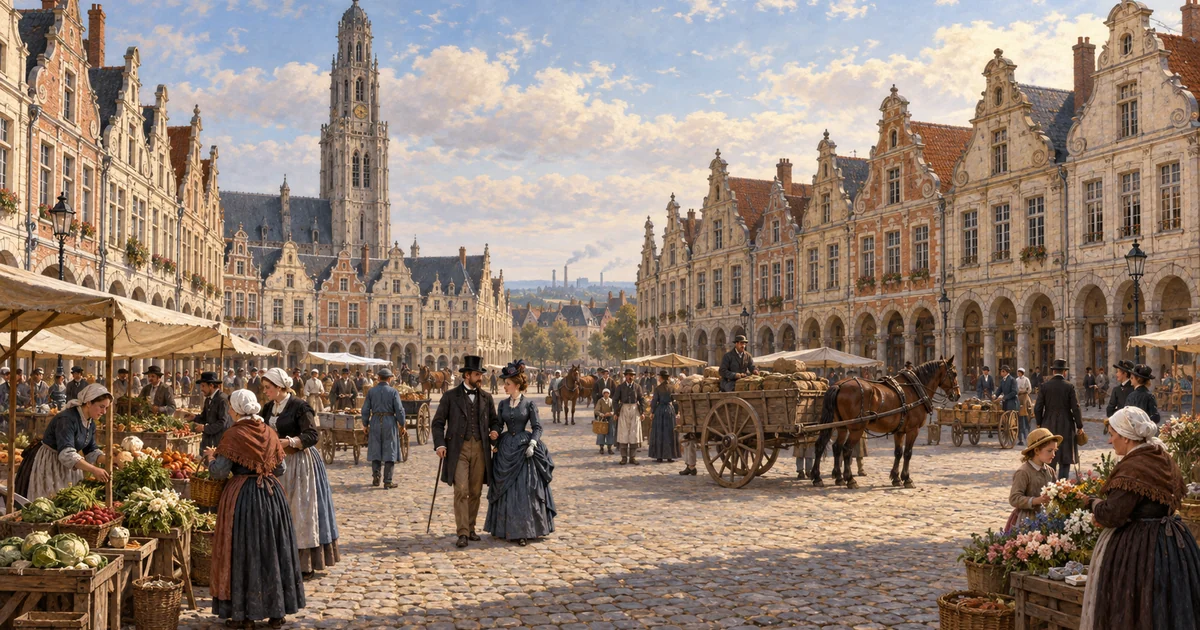
In the nineteenth century, while Lille and the mining basin knew a spectacular industrialisation, Arras followed a quite different trajectory. An administrative, commercial and agricultural town, it did not become the great industrial centre that its neighbour of the North was. In the shadow of Lille, the textile metropolis, and of the booming mining basin, Arras appeared somewhat eclipsed. This situation, often presented as a lag, deserves a nuanced look: for if Arras did not know great industry, it preserved an identity and a heritage that other towns lost. A look back at the Arras of the nineteenth century, between modernisation and relative eclipse.
Arras in the nineteenth century
In the nineteenth century, Arras was above all an administrative, commercial and agricultural town. Capital of the Pas-de-Calais, it housed the prefecture and the departmental administrations, which conferred on it a role of regional centre. Its economy rested largely on trade, craft and activities linked to the rich agriculture of the Artois, of which it was the outlet and the market. The town, surrounded by fertile plains, played a role of exchange centre for the agricultural products of its region. This vocation, inherited from its history, deeply marked the physiognomy and activity of the city. Arras knew, in the nineteenth century, the transformations proper to the era: arrival of the railway, demolition of the ramparts, urban expansion and modernisation. These evolutions opened the town and linked it to the great networks, as the history of the arrival of the train in Arras in 1846 recalls. But these transformations did not make Arras a great industrial centre. The town kept its character of administrative and commercial city, without knowing the massive industrial development that transformed other towns of the North. This trajectory distinguished Arras from its Lille neighbour and from the mining basin, engaged in an intensive industrialisation. To understand the character of Arras in the nineteenth century is essential to grasp its place in the regional context. A town of services, trade and agriculture rather than heavy industry, Arras followed its own way, different from that of the great industrial centres of the North. This specificity, which placed it somewhat in retreat in the industrial landscape of the region, shaped its development and its identity throughout the century, distinguishing it from the booming industrial cities that surrounded it.
Lille, the industrial metropolis
A few dozen kilometres from Arras, Lille knew in the nineteenth century a spectacular industrial development, which made it one of the great metropolises of the North. Capital of the department of the Nord, Lille transformed itself into a powerful industrial centre, notably in the textile domain. The industry of spinning and weaving prospered there, attracting a numerous workforce and making the town a major economic hub. This industrialisation brought a considerable demographic and urban growth, transforming Lille into a great industrial and populous city. The Lille metropolis thus imposed itself as the economic heart of the region, concentrating industrial activities, capital and populations. This dynamism made Lille a town of quite another scale than Arras, engaged in a much more intense industrial and demographic trajectory. The contrast between the two towns was striking: on one side, Lille, the industrial metropolis in full expansion; on the other, Arras, the administrative and commercial town, more measured in its development. Even today, one can measure the scale of this development by setting off to discover Lille, the metropolis of the Hauts-de-France, heir to this industrial history. This difference of trajectory between Lille and Arras explains in great part the impression of eclipse from which the Artesian city suffered. Faced with the dynamism and power of the Lille metropolis, Arras could appear effaced, less important in the regional economic landscape. To understand the development of Lille allows one to grasp the context in which Arras was inscribed. The industrial metropolis of the North, by its scale and dynamism, dominated the regional landscape, relegating the less industrial towns, like Arras, to a more discreet position, in the shadow of its economic and demographic power.
The mining basin and the industrialisation of the North
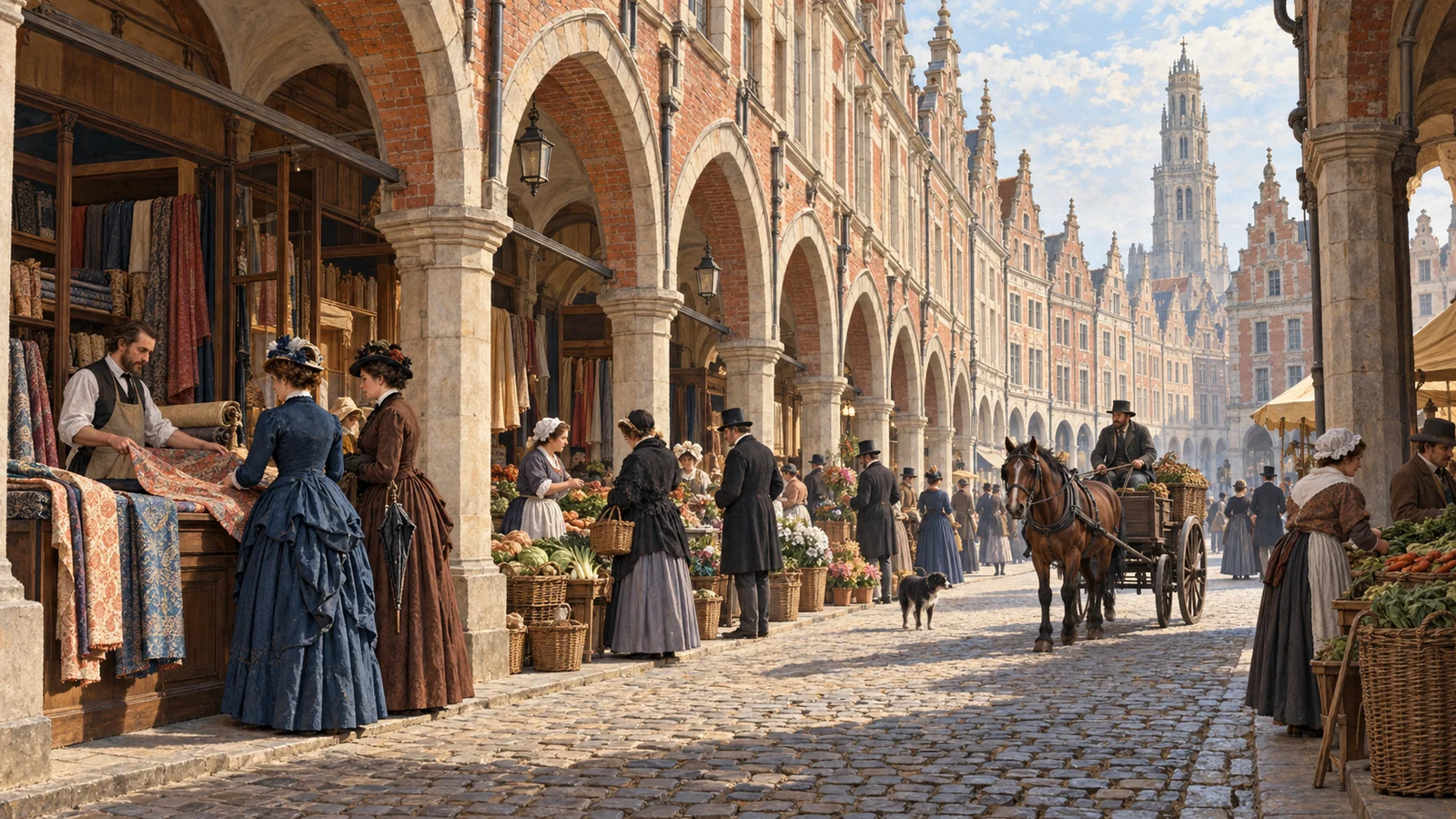
To the industrialisation of Lille was added, in the nineteenth century, the rise of the mining basin, which profoundly transformed the landscape and economy of the North of France. The exploitation of coal, an essential resource of industrialisation, gave birth to a vast mining basin extending over a large part of the region. This mining activity attracted a numerous population and created towns and workers' cities, transforming countrysides into densely populated industrial zones. The mining basin became one of the great centres of French industry, supplying coal to the factories and homes. This intensive industrialisation, founded on the mine and industry, durably marked the landscape and society of the North. It created a powerful industrial region, alongside the Lille metropolis, making the Nord and the Pas-de-Calais one of the great industrial hearths of the country. This development, of which the mining heritage of the region testifies today, contrasted with the situation of Arras. The town, situated in a rather agricultural region of the Artois, remained apart from this mining industrialisation. The mining basin developed above all in other parts of the department and the region, while Arras kept its administrative and commercial character. This difference reinforced the impression of a town in retreat compared to the great industrial and mining centres. To understand the rise of the mining basin allows one to grasp the scale of the industrialisation of the North and the contrast with the trajectory of Arras. While the region industrialised massively, around the mine and the factory, Arras followed a different way, that of a town of services and trade. This contrast between administrative Arras and the industrial and mining North is at the heart of the question of the relative eclipse that the town knew in the nineteenth century, in a region dominated by the power of industry and the mine.
Arras apart from great industry
Why did Arras remain apart from the great industry that was transforming the North? Several factors explain this trajectory. The town, first, did not have the resources that favoured industrialisation elsewhere, such as the coal of the mining basin. Situated in an agricultural region, it was more turned towards trade and activities linked to the land than towards heavy industry. Its administrative role, as capital, also oriented its economy towards services rather than industrial production. Moreover, the proximity of the powerful Lille metropolis and the mining basin concentrated industrial development in these zones, to the detriment of the less well-endowed neighbouring towns. Arras thus found itself in the shadow of these great centres, which captured the capital, activities and populations. The town kept its traditional character, that of an administrative and commercial city, without transforming itself into an industrial centre. This situation was not proper to Arras: numerous towns, for lack of resources or favourable conditions, remained apart from the industrialisation that was transforming certain regions. For Arras, this absence of great industry had consequences on its demographic and economic development, more measured than that of the industrial towns. To understand the reasons for this setting apart allows one to grasp the particular trajectory of the town. Far from being a choice, this situation resulted from geographic, economic and historical factors that oriented Arras towards a way different from that of the great industrial centres. The town, remained apart from great industry, followed its own development, marked by the continuity of its administrative and commercial role, in a region moreover profoundly transformed by industrialisation and mining exploitation.
| Arras | Lille and the mining basin |
|---|---|
| Administrative and commercial town | Industrial metropolis and mining basin |
| Agricultural and service economy | Textile, coal and heavy industry |
| Measured demographic growth | Strong growth and population density |
| Ancient heritage preserved | Landscape transformed by industry |
An administrative and commercial town
If Arras was not an industrial town, it nonetheless kept a real role and activity, founded on its administrative and commercial functions. As capital of the Pas-de-Calais, the town housed the prefecture and the departmental administrations, which made it a centre of decision and services. This administrative function structured the local economy and assured the town an important role in the region. Trade, for its part, remained an essential activity, Arras serving as a market and exchange centre for the products of the rich agricultural region around it. The fairs and markets animated the town, prolonging an ancient commercial tradition. Craft and activities linked to the transformation of agricultural products completed this economy. Arras was thus an active town, but according to a model different from that of the industrial cities. Its dynamism rested on services, trade and agriculture rather than on industry. This economy, more diversified and less spectacular than that of the great industrial centres, nonetheless assured the life and prosperity of the town. The administrative role, in particular, conferred on Arras a stability and an importance that compensated for the absence of great industry. The town was not an industrial centre, but it remained a leading administrative and commercial centre in the region. To understand this dimension allows one to nuance the image of an eclipsed town. Arras was not a city in decline, but an active town according to a different model, founded on its administrative and commercial functions. This specificity, far from being an absolute handicap, corresponded to the historical vocation of the town and assured it a role and a prosperity, though in a register different from that of the great industrial centres of the North.
The contrast of dynamics
The nineteenth century thus revealed a contrast of dynamics between Arras and the great industrial centres of the North. On one side, Lille and the mining basin knew an intense growth, carried by industry and the mine, with their train of demographic, urban and social transformations. On the other, Arras followed a more measured development, founded on its traditional functions. This contrast translated into demographic growth, the scale of activities and the respective economic importance of the towns. Lille, become a great metropolis, largely surpassed Arras in population and economic weight. The mining basin, with its booming workers' towns, also concentrated a considerable population and activity. Faced with these powerful dynamics, Arras could appear effaced, less important in the regional landscape. This contrast fed the image of an eclipsed town, relegated to the shadow of the great industrial centres. One must however nuance this impression: industrial development, if it brought growth and prosperity, was also accompanied by difficulties, such as workers' living conditions, pollution and the brutal transformations of the landscape. Arras, in remaining apart from this development, escaped some of these disadvantages. The contrast of dynamics therefore did not simply oppose a prosperous town to a town in decline, but two different models of development, each with its advantages and disadvantages. To understand this contrast allows one to grasp the place of Arras in the regional landscape of the nineteenth century. The town, less dynamic on the industrial plane, kept a role and an identity of its own, different from those of the great industrial centres, in a contrast that defined its particular situation within a region in full transformation.
A relative eclipse
The image of an Arras eclipsed by Lille and the mining basin deserves to be nuanced. Certainly, on the industrial and demographic plane, the town appeared effaced faced with the great centres of the North. But this eclipse was relative, and not an absolute decline. Arras indeed kept its administrative role, its commercial activity and its regional importance. The town did not collapse, but simply followed a different trajectory, less spectacular than that of the industrial cities. It is fitting to distinguish the relative eclipse, linked to the comparison with more dynamic neighbours, from the real decline, which would have meant a loss of vitality and importance. Now Arras did not know such a decline: it remained an active and important town, according to a different model. The impression of eclipse held above all to the comparison with the power of Lille and the mining basin, whose dynamism made Arras appear more modest. But related to itself, the town pursued its development and kept its functions. This nuance is essential to understand the situation of Arras in the nineteenth century. The town was not a city in decline, but a town eclipsed by more dynamic neighbours, while keeping its role and its identity. This relative eclipse, far from being a drama, corresponded to the own trajectory of an administrative and commercial town in an industrialising region. To understand this nuance allows one to cast a just look on the Arras of the nineteenth century, neither a town in full industrial growth, nor a city in decline, but a town following its own way, somewhat in the shadow of the great centres, but faithful to its vocation and its identity, in a regional context dominated by the power of industry and the mine.
The identity of Arras preserved
If Arras was eclipsed by Lille on the industrial plane, this situation also had a positive flip side: the preservation of its identity and its heritage. In remaining apart from the great industrialisation, the town escaped the brutal transformations that upheaved the landscapes of the industrial cities. Where industry radically transformed certain towns, Arras kept more of its ancient character and heritage. This relative setting apart from industry thus contributed to preserving the identity of the town, its architecture and its atmosphere. The Arras heritage, of which the famous arcaded squares around the Grand-Place of Arras notably testify, could thus be more preserved. This preservation, if it did not entirely compensate for the absence of industrial development, constitutes today a major asset for the town. Arras has indeed kept a remarkable heritage, which makes its renown and its appeal, where other towns, transformed by industry, have lost part of their ancient character. This perspective invites one to cast a nuanced look on the eclipse of the nineteenth century. What could appear as a lag or an inferiority reveals itself also, with hindsight, as the condition of a preservation. The town that did not know great industry is also the one that kept its identity and its heritage. To understand this positive flip side allows one to cast a balanced look on the trajectory of Arras. The relative eclipse of the town in the nineteenth century, far from being only a handicap, was also the condition of a preservation that today makes the value and beauty of the city, rich with a heritage that industrialisation could have compromised. This preserved identity is one of the great assets of contemporary Arras, a paradoxical legacy of a history made of eclipse as much as of fidelity to itself.