
The railway in Arras: how did the arrival of the train in 1846 transform the town?
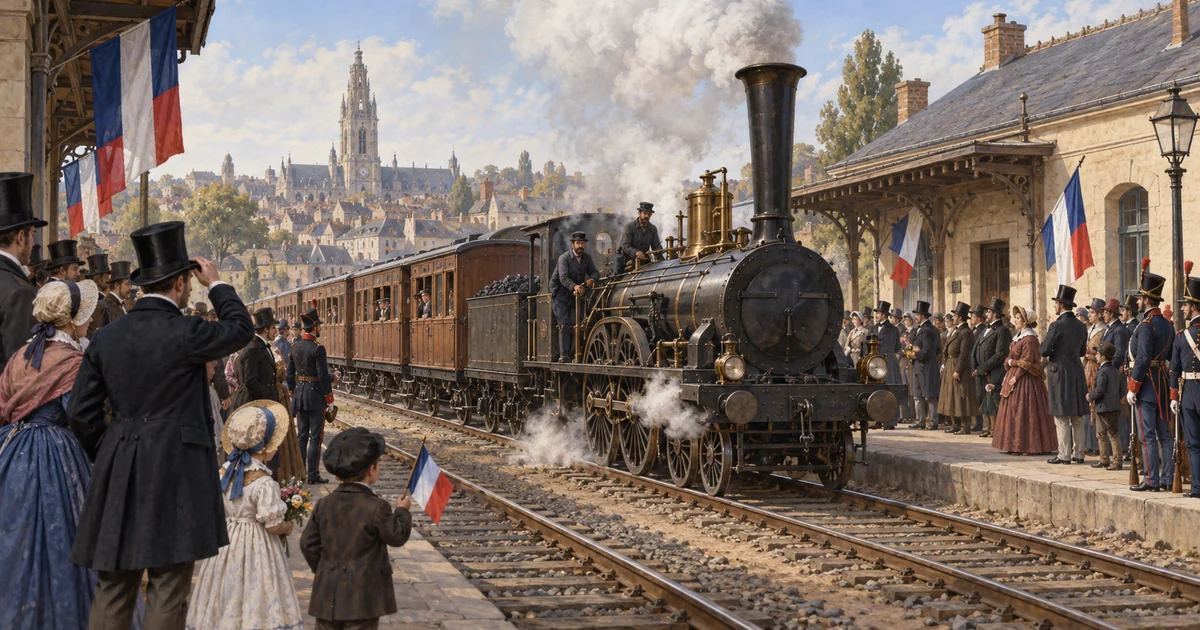
In 1846, an event durably transformed the life of Arras: the arrival of the railway. Linked to Paris and to Lille by the new line of the North, the town entered the age of rail, with all the consequences that this implied for its economy, its mobility and its development. The train, symbol of the progress and modernity of the nineteenth century, opened Arras onto the world and inscribed it in the great networks of communication that were then transforming France. A look back at the arrival of the railway in Arras and at the upheavals it brought for the town.
The railway revolution of the nineteenth century
The nineteenth century was that of the railway revolution, one of the most profound transformations of modern history. In a few decades, the railway upheaved transport, economy and society, reducing distances and linking together towns once separated by long and painful journeys. The train, faster, more regular and more economical than the earlier means of transport, revolutionised the movement of people and goods. In France, the development of the railway network accelerated from the 1840s, with the construction of the great lines linking Paris to the principal regions of the country. This expansion transformed the territory, favouring exchanges, trade and industry, and bringing the towns closer to the capital and to one another. The railway was perceived as the very symbol of progress, embodying the faith of the century in science, technique and the improvement of living conditions. Its development aroused an immense enthusiasm, but also considerable upheavals in the organisation of the territory and the economy. The towns served by rail benefited from a decisive advantage, inscribing themselves in the circuits of communication and exchange that structured modern France. Conversely, those that remained on the margins of the network risked marginalisation. The arrival of the railway was therefore a major stake for the towns, whose future could depend on their connection to the network. It is in this context of railway revolution that the train reached Arras, in 1846, inscribing the town in this great transformation. To understand the importance of rail in the nineteenth century allows one to grasp the significance of this event for Arras, called to benefit from the considerable advantages that railway service offered.
The arrival of the train in Arras in 1846
It is in 1846 that the railway reached Arras, with the opening of the line linking Paris to Lille. This great line of the North, one of the first of the French network, served Arras on its route, connecting the town to the capital and to the Lille metropolis. The arrival of the train constituted a major event, hailed as a considerable progress for the town and its region. Now linked by rail, Arras found itself a few hours from Paris, whereas previously the journey took much more time. This spectacular reduction of distances transformed the relationship of the town to the rest of the country. The Paris-Lille line, in serving Arras, inscribed it in a major axis of communication, linking the capital to the rich industrial region of the North. This position on a great line conferred on the town a strategic advantage, favouring exchanges and development. The opening of the line in 1846 thus marks an important date in the history of Arras, that of its entry into the railway age. The town, an ancient stronghold long turned in on itself, now opened onto the outside thanks to rail. This event belonged to the general movement of development of the French railway network, which was then transforming the country. For Arras, the arrival of the train represented a considerable chance, that of benefiting from the advantages of railway service and of inscribing itself in modernity. To understand the circumstances of the arrival of the railway in 1846 allows one to measure the importance of this event for the town. The train, in linking Arras to Paris and to Lille, opened a new era in the history of the city, that of the connected and modern town, integrated into the great networks of communication of the country.
The station, gateway to the modern town
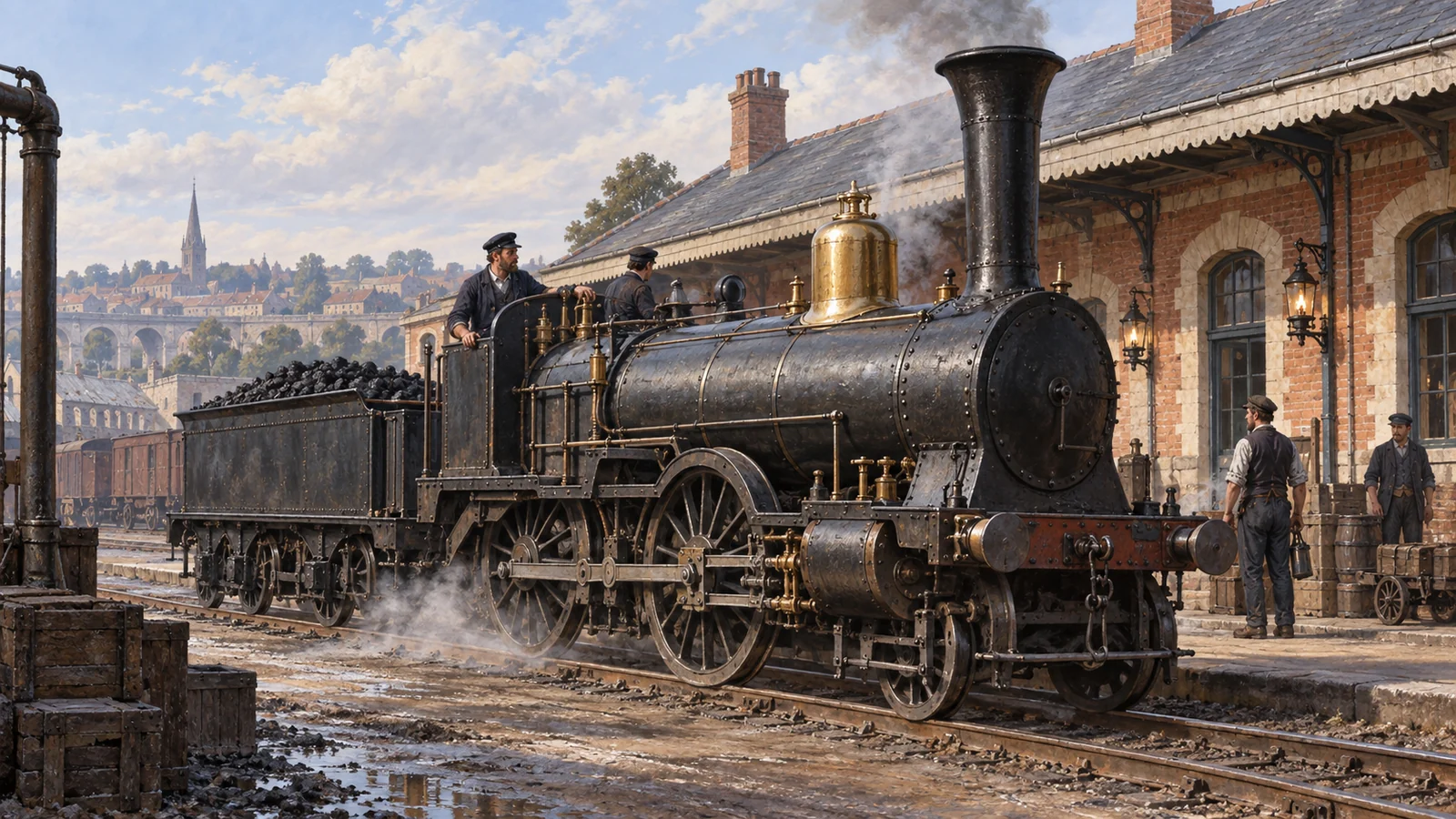
The arrival of the railway was accompanied by the construction of a station, which became the gateway to the modern town. The station, point of departure and arrival of the trains, constituted an essential facility, a symbol of the connection of the town to the railway network. It became a place of passage and animation, where travellers and goods converged. The station of Arras, like those of other towns, structured a new quarter and modified the urban geography, creating a hub of activity around the railway facility. This building, often conceived as a showcase of the town, welcomed the travellers and symbolised the modernity and openness of the city. The station thus became an important element of the urban landscape, a place of meeting between the town and the outside world. It facilitated movement, allowing the inhabitants to travel more easily and visitors to access the town. The station was also the arrival point of goods, contributing to supply and trade. Even today, one can discover the railway station of Arras, heir to this long railway history, which continues to assure the role of gateway to the town. The station remains an essential facility, linking Arras to the modern networks and symbolising the openness of the town onto the outside. To understand the role of the station allows one to grasp how the railway transformed the geography and urban life of Arras. The station, gateway to the modern town, embodies the inscription of Arras in the railway age and its openness onto the world, a role it has played since the arrival of the train and continues to assure today, in the service of travellers and of the town.
The Compagnie du Nord
The line that served Arras came under the Compagnie du Nord, one of the great railway companies that then shared the French network. This company, charged with the operation of the lines of the north of the country, played a major role in the development of the railway in the region. It operated notably the great line linking Paris to Lille and to the Belgian border, a strategic axis serving the rich industrial and mining regions of the North. The Compagnie du Nord, like the other great companies of the era, was a powerful enterprise, which built and operated the lines, managed the stations and assured the transport of travellers and goods. Its action contributed to the economic development of the region, by linking the towns, the industrial centres and the ports. For Arras, to be served by the Compagnie du Nord meant to inscribe itself in this structuring network, benefiting from the connections towards Paris, Lille and beyond. The network of the Compagnie du Nord gradually linked the whole region, creating a dense railway mesh that transformed exchanges and mobility. This organisation of railway transport, entrusted to great private companies, characterised the development of rail in France in the nineteenth century, before the later evolutions. To understand the role of the Compagnie du Nord allows one to grasp the framework in which the railway service of Arras was inscribed. The town thus benefited from its integration into a major network, operated by a powerful company, which linked it to the great centres of the country. This insertion into the network of the Compagnie du Nord was one of the factors of the modernisation and development of Arras in the nineteenth century, durably inscribing it in the circuits of communication and exchange of modern France.
An economic upheaval
The arrival of the railway brought a profound economic upheaval for Arras and its region. In linking the town to the great centres and facilitating the transport of goods, rail transformed the conditions of trade and industry. Products could now be conveyed more quickly, further and at lower cost, opening new outlets and facilitating exchanges. The agriculture of the rich Artesian region benefited from these new possibilities, able to sell its products to the urban and industrial markets. Local trade, whose animation was concentrated notably around the Grand-Place of Arras, profited from the improvement of connections and the facilitated influx of goods and visitors. The railway thus favoured the integration of Arras into the national economic circuits, stimulating activities and exchanges. This economic transformation belonged to the wider movement of modernisation that France knew in the nineteenth century. Rail was a powerful factor of development, linking the regions and favouring the circulation of goods and people. For Arras, access to the railway network represented a considerable asset, allowing it to take full part in this economic dynamic. Activities benefited from the openness permitted by the train, which brought the town closer to its markets and its suppliers. To understand the economic upheaval brought by the railway allows one to measure the importance of this event for the life of the town. The train was not only a means of transport: it was an engine of development, transforming the local economy and inscribing Arras in the economic modernity of the nineteenth century, with lasting consequences on the prosperity and dynamism of the city.
| Marker | Detail |
|---|---|
| 1846 | Arrival of the train in Arras |
| Line | Paris-Lille, great line of the North |
| Operator | The Compagnie du Nord |
| Effect | Trade, industry and mobility transformed |
Mobility and society
Beyond the economy, the railway transformed mobility and society. The train allowed people to travel more easily, faster and at lower cost, gradually democratising movement. What was previously a privilege or a long and costly undertaking became accessible to a greater number. The inhabitants of Arras could now go more easily to Paris, to Lille or to other towns, while visitors flowed in more easily. This new mobility modified the habits, relations and horizons of the populations. The train also favoured the circulation of information, mail and ideas, contributing to linking the territories and reducing isolation. Society, made more mobile, opened onto widened horizons. The railway transformed the relationship to time and space, reducing distances and accelerating exchanges. This revolution of mobility had profound consequences on daily life, mentalities and social organisation. It took part in the unification of the national territory and the bringing together of the regions. For Arras, access to the railway meant an openness onto the world, an insertion into the flows of people and exchanges that crossed the country. The town, once relatively isolated behind its ramparts, became a point of the network, connected to the great centres and open onto the outside. To understand the impact of rail on mobility and society allows one to grasp the scale of the transformation it brought. The railway did not only change the economy: it transformed the life of people, their movements, their relations and their vision of the world, inscribing Arras in a modernity made of openness and connection, characteristic of the great movement of transformation of the nineteenth century.
Rail and the modernisation of Arras
The arrival of the railway took full part in the modernisation of Arras in the nineteenth century. The train belonged to a wider movement of transformation of the town, which also saw, in the same period, the demolition of its ramparts and its openness onto the outside. These complementary transformations concurred to make Arras a modern, open and connected town. The town that tore down its walls, as the history of Émile Legrelle and the demolition of the ramparts recalls, was also the one that opened to the railway and the modern networks. Rail and the end of the fortifications proceeded from the same dynamic, that of modernisation and openness. Arras freed itself from its past as a closed and military town to embrace modernity, made of circulation, exchanges and connection. The railway, in linking the town to the great networks, completed this openness and inscribed Arras in modern France. This modernisation transformed the face and functioning of the town, which gained in accessibility, dynamism and openness. The train was one of the engines of this transformation, alongside the other urban evolutions of the era. To understand the place of rail in the modernisation of Arras allows one to grasp the coherence of the transformations that the town knew in the nineteenth century. Far from being an isolated event, the arrival of the railway belonged to an overall movement that made Arras a modern town. Rail, in opening the town onto the world, took part in this great transformation, making Arras a connected and dynamic city, inscribed in the modernity of its time and open onto the future.
The train in Arras today
More than a century and a half after the arrival of the first train, Arras remains a town well served by rail. The town, situated on a great line, benefits today from fast connections, notably thanks to high speed, which links it to Paris and the great towns in little time. This modern railway service prolongs the long history of rail in Arras, begun in 1846. The station, rebuilt in the twentieth century after the destructions of the wars, continues to assure its role of gateway to the town and point of connection to the networks. Arras thus remains a connected town, benefiting from the advantages of railway service for its inhabitants, its visitors and its economy. The train, today as yesterday, contributes to the openness and dynamism of the town, linking it to the great centres and facilitating exchanges. The continuity of this service, from the nineteenth century to our day, testifies to the lasting importance of rail in the life of Arras. The town, which was among the first served by the railway, remains faithful to this vocation of connected town. This permanence illustrates the structuring role of the railway in the development and openness of Arras, from its arrival in 1846 to the age of high speed. To understand the continuity of railway service allows one to measure the lasting importance of this heritage. The train, which transformed Arras in the nineteenth century, continues today to serve the town and its inhabitants, prolonging a history of more than a century and a half. From the line of the North of 1846 to the modern connections, the railway remains an essential element of the life of Arras, a symbol of its openness and its connection to the world, yesterday as today.