
Who was Commius, king of the Atrebates, at the origins of Arras?
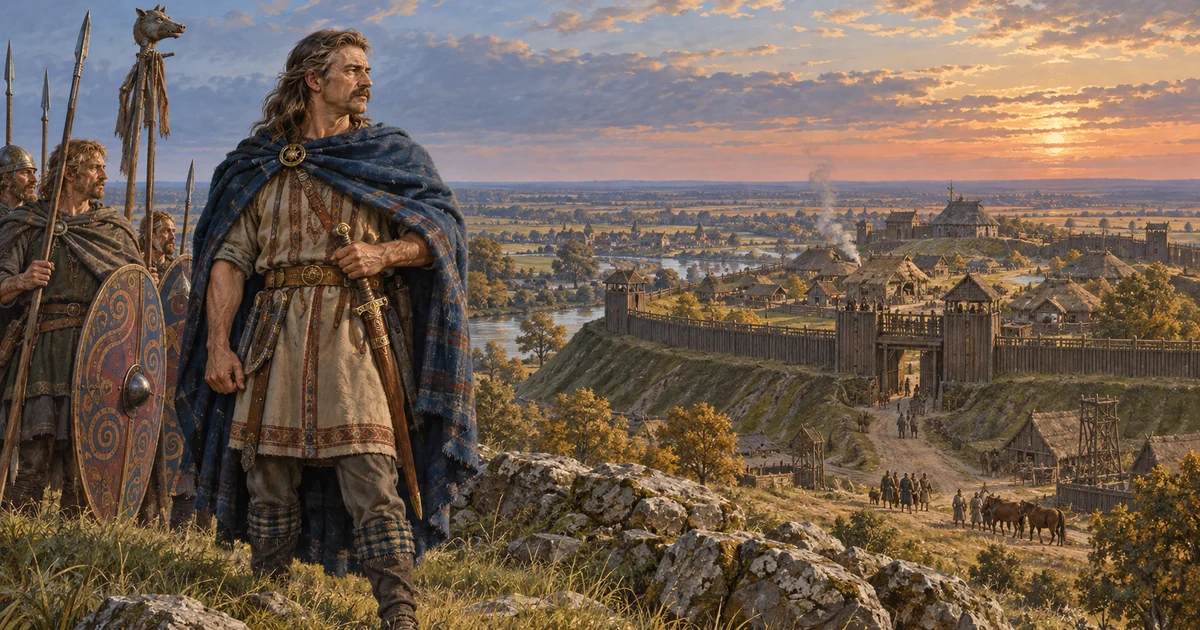
Commius, king of the Atrebates, is arguably the first historical figure whose name is tied to the area of Arras. Before the town was called Arras, before even Gallo-Roman Nemetacum, a Celtic people lived here, the Atrebates, and at their head a chief whom Julius Caesar himself knew, used, then fought. The story of Commius is read first in the pages of the Gallic War, completed by a few ancient authors and by the work of historians of Gaul such as Jean-Louis Brunaux. It tells the fate of a man who went from privileged ally of Rome to leader of Gaulish resistance, before an exile that may have taken him as far as Britain. A destiny that sheds light on the distant origins of the city.
The Atrebates and their land, at the origins of Arras
To understand Commius, one must first place his people. The Atrebates were one of the Belgic peoples, those Celtic tribes Caesar judged the bravest in Gaul because the farthest from Roman civilisation. Their territory roughly covered today's Artois, to which they gave their name, and their centre lay where the city would later rise. This territorial anchoring is the direct link with the town: as recalled by the history of Arras from prehistory to Nemetacum, the Gallo-Roman capital developed on this people's land. A hierarchical society, the Atrebates knew agriculture, metalworking and their own coinage, the sign of an already complex organisation. They were not the savages popular imagery long ascribed to the Gauls, but a structured community, part of exchange networks linking the continent to the nearby island of Britain. It is in this world, on the eve of the Roman conquest, that the figure of Commius emerges, an aristocrat whose authority reached beyond his own people and stretched, it is said, across the Channel.
Commius, a chief installed by Caesar
Commius's career begins with a paradox: this future hero of Gaulish resistance first owed his power to Rome. After the submission of the Belgae, around 57 BC, Caesar placed Commius at the head of the Atrebates, making him a client king tasked with guaranteeing his people's loyalty. The shrewd proconsul knew how to rely on devoted local chiefs to hold a conquered country without wearing out his legions. Commius was rewarded with exemption from tribute for his people and an extension of his authority, marks of rare trust. Caesar himself, in his commentaries, stresses the esteem he had for this man, whose courage and judgement he valued. This alliance was no minor matter: it made Commius a cog in Roman domination of northern Gaul, an intermediary between conqueror and populations. Here lies the whole ambiguity of his position, that of a native chief whose power rested, at least for a time, on the goodwill of the occupier. This initial dependence makes the reversal that followed all the more striking.
Caesar's envoy to Britain
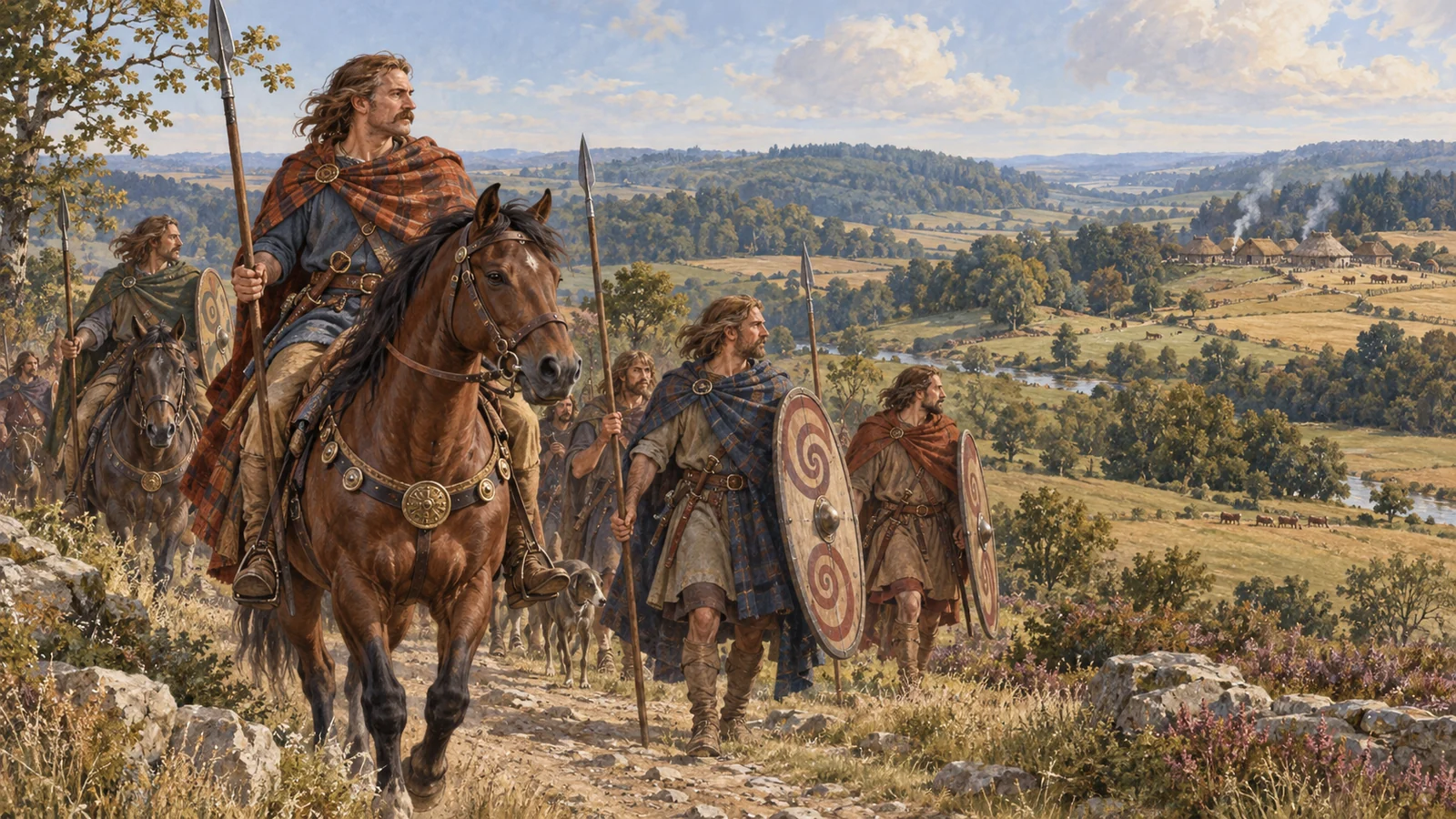
Caesar's trust took the form of a delicate mission. In 55 BC, as he prepared his first expedition to Britain, the proconsul sent Commius there as envoy to the peoples of the island. The choice was not random: the Atrebate chief enjoyed recognised influence there, a sign of the old links binding the two shores of the Channel. His mission was to rally the British tribes to Rome before the legions arrived. The venture failed quickly: barely landed, Commius was seized by the islanders, before being released once the Romans had won. The episode, reported by Caesar, shows this man's strategic importance, able to serve as a bridge between the continent and an island still mysterious to Rome. It also reveals how dense were the relations the Atrebates kept across the Channel, to the point that the same name, that of the Atrebates, is found on both sides of the strait. This insular dimension of Commius, as we shall see, will take on its full meaning at the end of his life. For now, he remained Caesar's man, a precious ally whose loyalty seemed assured.
The Atrebates in the war in Gaul
Commius's people had not, however, waited for their king to fight Rome. As early as 57 BC, the Atrebates were part of the great Belgic coalition crushed by Caesar in a famous clash, told in detail in the battle of the Sabis. This terrible shock, where the peoples of the North threw all their forces against the legions, ended in a bloody defeat and the submission of the vanquished. It was in the aftermath of this disaster that Caesar reorganised the region and entrusted the Atrebates to Commius. Yet the memory of that first resistance had not vanished, and it partly explains the chief's later switch. A people that had fought with such energy could not lastingly accept Roman tutelage, however cleverly disguised as alliance. Commius himself, as the conquest revealed its true face, must have measured how untenable his position was: to serve Rome was, in time, to betray his people's aspirations. Tensions rose, and the great revolt of 52 BC would give the Atrebate king the chance to change sides.
| Date | Event |
|---|---|
| 57 BC | Defeat of the Belgae; Caesar makes Commius king of the Atrebates |
| 55 BC | Commius, Caesar's envoy to the peoples of Britain |
| 52 BC | Commius joins the Gaulish revolt and the relief army at Alesia |
| After 51 BC | Hunted, surrenders and exiled; a Commios appears on British coins |
The turning point: Commius joins the revolt
In 52 BC, Gaul rose behind Vercingetorix. Commius, until then a faithful ally, made a decisive about-turn and rallied to the cause of Gaulish independence. The gesture was heavy with meaning: the man Caesar had made king turned against his benefactor, drawing the Atrebates into the general uprising. The reasons for this switch can be guessed more than read: weariness of Roman tutelage, solidarity with other peoples, personal ambition, perhaps also an offence suffered, for some ancient authors mention an assassination attempt plotted against him by Caesar's officers. Whatever the motives, this rallying made Commius one of the most prominent leaders of the revolt. His prestige and network of alliances made him a valuable ally for Vercingetorix, who sought to unite long-divided peoples. The Atrebate king then embodied a path many Gaulish aristocrats knew: first won over or coerced by Rome, then set against it when conquest turned to domination. This reversal led him straight to the most famous episode of the war, the siege of Alesia.
Alesia and the Atrebates of the relief army
When Vercingetorix found himself besieged in Alesia, Gaul made a final effort by raising an immense relief army. Caesar, in his account, lists the contingents and the chiefs appointed to command it: Commius appears in the front rank, alongside three other leaders. The Atrebates provided their share of warriors to this coalition, one of the largest Gaul ever assembled. The outcome is known: despite their numbers, the Gauls could not break the Roman lines, and the surrender of Vercingetorix sealed the defeat of independence. For Commius, however, Alesia was not the end. Unlike the Arvernian chief handed over to Caesar, the Atrebate king escaped the disaster and fought on. His place among the four generals of the relief army says enough about the rank he had reached in the hierarchy of the revolt, he, the former protégé of Rome turned one of the faces of resistance. This episode, etched in national memory, directly links the land of Arras to one of the founding moments of French history, when Gaul played, and lost, its freedom.
The hunt and the flight across the Channel
After Alesia, Commius did not lay down his arms. Taking refuge among his own, he still led actions against the Romans and became the object of a relentless hunt. Ancient authors report several attempts to kill him, including an ambush in which he was wounded, which is said to have fed his distrust and lasting hatred of Rome. Cornered, the Atrebate chief eventually negotiated his surrender, on condition, it is said, of never again appearing before a Roman. Then he chose exile and, according to the tradition reported notably by the author Frontinus, reached Britain by crossing the Channel in circumstances that became famous. This flight overseas closes the path of a man whose whole life played out between the two shores of the strait. It also recalls how old and solid the links between the Artois and the island were, since a chief defeated on the continent could hope to find refuge and perhaps rebuild power there. It is precisely on this point that the story of Commius meets one of the most interesting debates of recent historiography.
Commius on British coins: a debate among historians
Here the historian's caution is called for. Coins struck in Britain bear the name Commios, and a dynasty of kings in the south of the island claimed him as an ancestor. Many scholars have seen in this Commios the exiled Atrebate king, who is said to have founded across the Channel a kingdom prolonging the one he had lost on the continent, around a town the sources call Calleva of the Atrebates. Others urge nuance: the same name could have been borne by a son or a namesake, and the identification, appealing as it is, rests only on numismatic clues and rare mentions. Specialists of Gaul and ancient Britain, comparing texts and coins, continue to debate how much certainty this account deserves. To hold on to this debate, rather than settle it, is faithful to the historical method: ancient origins are often read through fragments, where legend readily mingles with fact. What remains certain is the existence of an Atrebate chief named Commius, a major actor of the Gallic War, and the deep link, real or dreamed, that bound his people to both shores of the Channel.
From Commius to the town of Arras
What remains of Commius on the pavements of Arras? Nothing visible, and yet a great deal. This Gaulish chief embodies the first named chapter of a history that never ceased, that of a territory, the Artois, whose very name comes from the Atrebates. After the turmoil of conquest, their country became Roman, and on the nearby hill Nemetacum rose, then, much later, around a Saint-Vaast Abbey destined for a great future, the medieval town of Arras. Making room for Commius is to recall that the city's history does not begin in the Middle Ages nor even in Roman times, but with a Celtic people and its king, caught in the great shift that brought Gaul into the Roman world. It is also to measure the continuity of a place inhabited for millennia, where each era left its layer. The visitor who walks today across the Baroque squares of Arras treads a soil that Commius and his people knew very differently, but which they were the first to bring into written history.