
General Barbot: how did he become the defender of Arras in 1914?
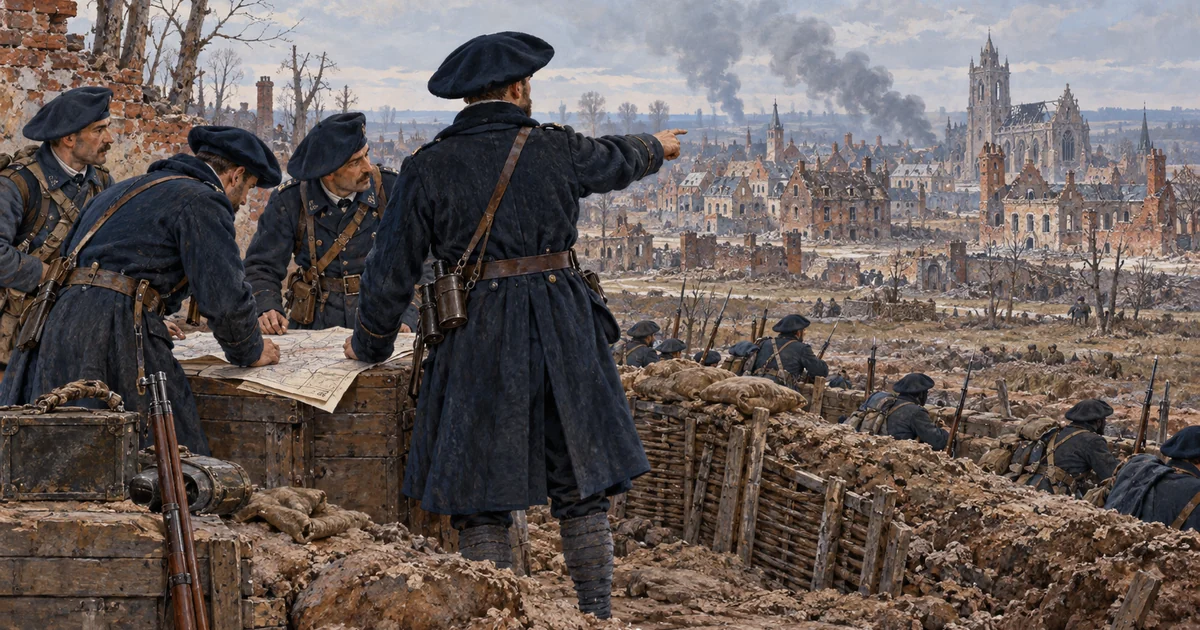
Among the figures of the First World War linked to Arras, that of General Barbot occupies a particular place. In the autumn of 1914, while the German army threatened the town, this energetic chief, beloved of his men, organised the defence of Arras and became, in the eyes of the population and the soldiers, the defender of the city. Fallen in combat in the spring of 1915, he entered the memory of Arras as a hero. A look back at General Barbot, his defence of Arras and the memory he left in the town he helped to save.
Arras in the Great War
The First World War placed Arras at the heart of the conflict. In the autumn of 1914, after the failure of the German offensive and during the phase known as the race to the sea, the front stabilised in the immediate vicinity of the town. Arras thus found itself in the front line, only a few kilometres from the enemy positions, exposed to bombardments and combats. This dramatic situation was to last for a large part of the war, making the town one of the martyr cities of the conflict. A former garrison town, whose military vocation was ancient as the history of the 33rd Infantry Regiment recalls, Arras became a strategic stake and a place of fierce combats. The proximity of the front exposed the town to destructions, and the bombardments were to gradually ravage it. The inhabitants had to live under the constant threat of shells, and a large part of the population ended up leaving the town. Arras, a prosperous city of the Belle Époque, thus found itself transformed into a front town, undergoing the ordeals of war. It is in this dramatic context that the defence of the town was played out in the autumn of 1914, a decisive moment when the enemy had to be prevented from seizing Arras. The threat was real, and the fall of the town would have had considerable consequences. The defence of Arras, at this critical moment, was therefore a major stake, to which the name of General Barbot remains attached. To understand the situation of Arras in the Great War allows one to grasp the importance of this defence. A front town, exposed and threatened, Arras had to be defended at all costs, and it is in this ordeal that the general who was to become its defender distinguished himself.
General Barbot
General Ernest Barbot was an officer of the French army who distinguished himself in the defence of Arras. A career soldier, he commanded troops engaged in the region at the moment when the front stabilised near the town. An energetic and determined man, he distinguished himself by his qualities as a chief and his courage. Barbot was not a staff officer far from the field: he was a chief close to his men, present in combat, which earned him their admiration and affection. His personality and his behaviour under fire made him a respected and popular figure. In the context of the defence of Arras, his qualities of command were essential. He knew how to organise the resistance and galvanise his troops, contributing to preventing the fall of the town. General Barbot embodied the type of the courageous chief close to his soldiers, whose example drew the men on. This figure of a beloved and respected chief explains in great part the place he occupies in the memory of Arras. He was not only a competent officer, but a man whose courage and devotion marked minds. His participation in the defence of Arras, at a critical moment of the war, made him the defender of the town in the collective memory. To understand who General Barbot was allows one to grasp why his memory has remained so alive at Arras. An energetic, courageous chief, beloved of his men, he embodied, in the ordeal of war, the defence of the threatened town. It is this figure, that of the defender of Arras, that memory has retained, making General Barbot one of the marking figures of the history of the town during the Great War.
The defence of Arras in 1914
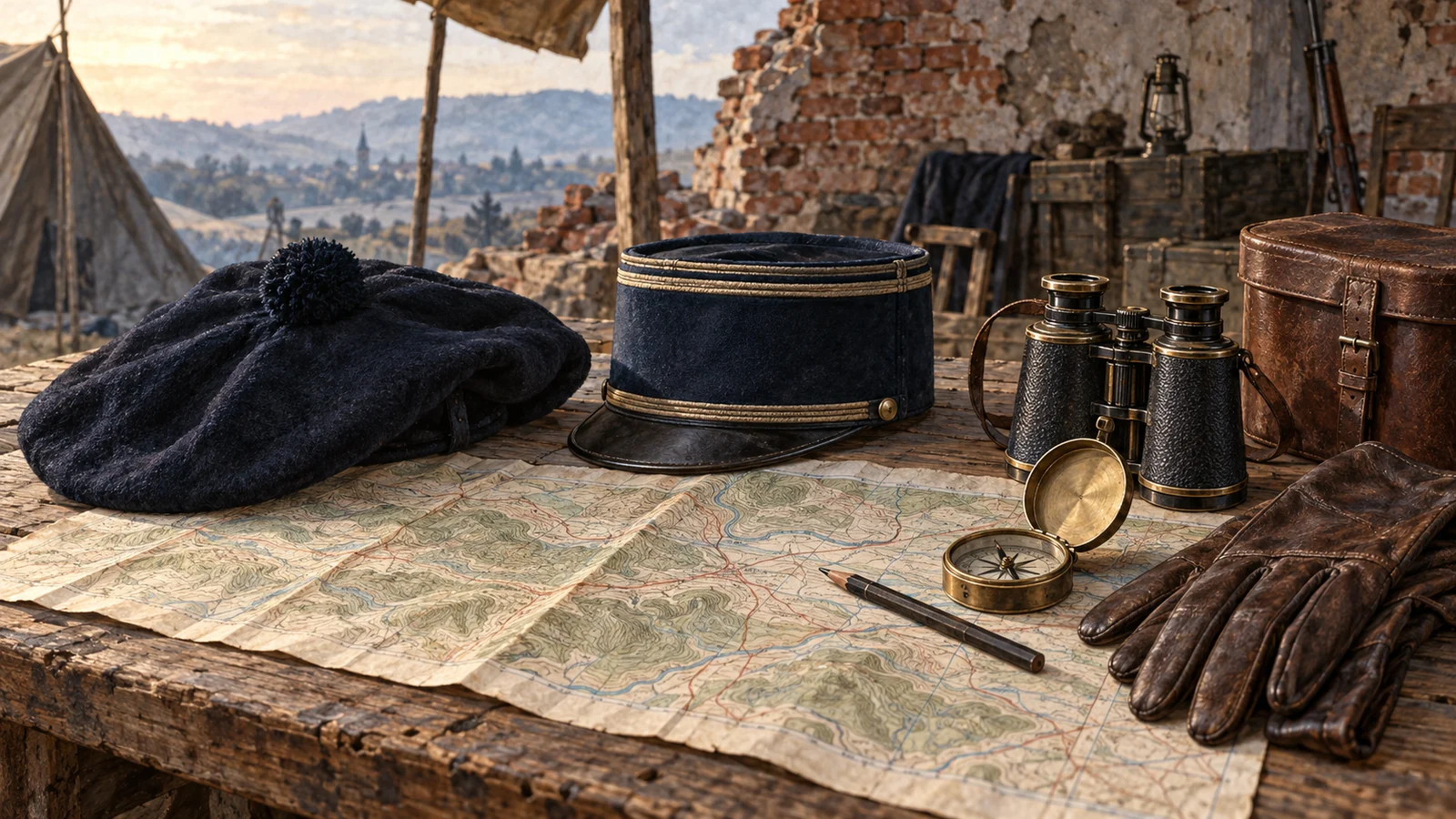
It is in the autumn of 1914 that General Barbot distinguished himself in the defence of Arras. While the German army threatened to seize the town, he organised the resistance and contributed decisively to preventing its fall. This moment was critical: the capture of Arras would have constituted an important success for the enemy and would have had considerable strategic consequences. Faced with this threat, the defence of the town imposed itself as an imperious necessity. General Barbot, at the head of his troops, played a determining role in this defence. He knew how to organise the resistance, hold the positions and repel the assaults, contributing to saving the town. This victorious defence, in a moment of great peril, made Barbot the defender of Arras. The town, threatened to fall into enemy hands, was preserved thanks to the resistance organised under his command. This episode struck minds and earned the general an immense popularity with the population and the soldiers. The defence of Arras in 1914 thus constitutes a strong moment of the history of the town during the war, that when the threatened city was saved. The role of General Barbot in this defence explains the recognition of which he was the object and the place he occupies in the memory of Arras. To understand the importance of this defence allows one to grasp the significance of Barbot's action. In preventing the fall of Arras at a critical moment, he rendered a considerable service to the town and to the French cause. The defence of Arras of 1914 thus remains the founding episode of the legend of the defender of the town, the one who, in the ordeal, knew how to preserve the city threatened by the enemy advance.
A popular hero
The defence of Arras made General Barbot a veritable popular hero. His action, at a critical moment, earned him the admiration and recognition of the population and the soldiers. In the eyes of the people of Arras, he was the man who had saved their town, the defender who had preserved it from enemy occupation. This recognition was doubled by the affection his men bore him, won over by his courage and his closeness. Barbot was not a distant chief: he shared the dangers of his soldiers, which reinforced their attachment. This popularity, both with the military and the civilian population, made him a beloved and respected figure. General Barbot embodied the hero of the war, the courageous and devoted chief who defended the town and led his men. His figure answered the need for heroes and examples in a context of war and ordeals. The population, tried by the conflict and the threat weighing on the town, found in him a reassuring and admirable figure. This dimension of popular hero explains the scale of the memory he left. Barbot was not only a competent general: he was a beloved hero, whose memory went beyond the strictly military framework to touch the population as a whole. To understand this popular dimension allows one to grasp the particular place of Barbot in the memory of Arras. Hero of the defence of the town, chief beloved of his men and admired figure of the population, he embodied, in the ordeal of war, courage and devotion. It is this image of popular hero that explains why his memory has remained so present in the memory of the town he defended.
| Marker | Detail |
|---|---|
| The general | Ernest Barbot, a courageous and beloved chief |
| Autumn 1914 | The defence of threatened Arras |
| His reputation | The defender of Arras, a popular hero |
| May 1915 | Fallen in combat in the Artois |
The Battle of Artois and the death of Barbot
The destiny of General Barbot was sealed in the spring of 1915, during the combats of the Battle of Artois. This great offensive, conducted in the region to the north of Arras, aimed to break through the enemy lines in a sector marked by particularly murderous combats, notably around the heights that dominated the plain. It is in these combats that General Barbot met his death, falling on the field of honour in May 1915. His disappearance, when he had become the defender of Arras and a popular hero, struck minds and grieved the town and the army. Barbot died as he had lived, in combat, at the head of his men, faithful to his image of a courageous chief close to his soldiers. His death in combat, in the terrible battles of the Artois, added to his legend, making him a hero fallen for the defence of the region. The combats of the Artois, in which he perished, counted among the bloodiest of the war, in a sector where many soldiers rest today, as the Vimy memorial testifies, not far from the places where Barbot met his death. The disappearance of the general, in these combats, marked the end of a path devoted to the defence of the town and the region. His death on the field of honour consecrated his figure as a hero and reinforced the memory he left. To understand the circumstances of the death of Barbot allows one to grasp the tragic and heroic dimension of his destiny. Fallen in combat after having defended Arras, he entered definitively into legend, making him one of the most moving figures of the history of the town during the Great War, that of a chief who died for the defence of the region he had known how to protect.
A chief beloved of his men
What particularly distinguished General Barbot is the link that united him to his soldiers. A chief close to his men, present in combat and sharing their dangers, he aroused their admiration and affection. This closeness, rare among senior officers, made him a beloved chief, whose example drew the troops on. The soldiers saw in him not a distant officer, but a chief who fought at their side and cared about their fate. This human quality, as much as his military skills, explains the attachment they bore him. A chief beloved of his men obtained from them a devotion and a commitment superior, which, in the terrible conditions of the war, was of great importance. Barbot knew how to galvanise his troops and lead them into combat, strong in the bond of trust that united him to them. This human dimension of his command contributed to his effectiveness and his legend. The general was not only respected for his military qualities, but beloved for his courage and his closeness. This attachment of the soldiers to their chief is one of the marking traits of the figure of Barbot. It recalls that command, in war, does not rest only on authority, but also on example and the human bond. To understand this dimension allows one to grasp what made the strength and popularity of Barbot. A courageous chief close to his men, he embodied a type of command founded on example and devotion. It is this figure of a beloved chief, as much as that of the defender of Arras, that explains the place he occupies in memory, that of a general respected for his skills and beloved for his humanity.
The memory of the defender of Arras
The memory of General Barbot, defender of Arras, was perpetuated after his death, honouring the one who had defended the town and had fallen in combat. A monument was raised to his memory, a testimony of the recognition of the town and the army towards the general. This monument, like other places of memory, recalls the memory of Barbot and his role in the defence of Arras. The town, which he had helped to save, thus honoured the memory of its defender. This memory belongs to the wider memory of the Great War, which deeply marked Arras and its region. The numerous military cemeteries and memorials of the region, like the Faubourg d'Amiens military cemetery, testify to the scale of the sacrifice consented during the conflict. The memory of Barbot belongs to this memory of the war and the sacrifice, as that of a chief fallen for the defence of the town and the region. To honour his memory is to remember his action and his sacrifice, but also to pay homage to all those who fought and fell during the war. The figure of Barbot, defender of Arras, has thus become a symbol, that of courage and devotion in the service of the town. To understand the memory of Barbot allows one to grasp the place he occupies in the memory of Arras. Defender of the town and hero fallen in combat, he is honoured as one of the marking figures of the Great War at Arras. His memory, maintained by the monuments and the recollection, perpetuates the homage to the one who defended the town in the ordeal, making General Barbot an emblematic figure of the history of Arras during the conflict.
Barbot in the memory of Arras
Even today, General Barbot remains present in the memory of Arras, as the defender of the town during the Great War. His figure, associated with the defence of Arras and his sacrifice, is part of the collective memory of the city. He embodies, in the history of Arras during the conflict, courage and devotion, that of a chief who defended the town and fell in combat. This memory belongs to the wider memory of the First World War, which so deeply marked Arras and its region. The town, a martyr city of the conflict, keeps the memory of the ordeals endured and of the figures who, like Barbot, distinguished themselves in its defence. To rediscover General Barbot is to illuminate a marking episode of the history of Arras during the war, that of the defence of the threatened town. It is also to pay homage to a figure of courage and devotion, whose sacrifice deserves to be known and honoured. The memory of Barbot invites one to remember what Arras was during the Great War: a front town, exposed and threatened, defended at the cost of considerable sacrifices. The figure of the defender of Arras sums up, by itself, this ordeal and this courage. To understand the place of Barbot in the memory of Arras allows one to better grasp the memory of the town during the war. A heroic defender and beloved figure, General Barbot remains attached to the history of Arras, as the one who, in one of the most critical moments of the conflict, helped to save the town. His memory, maintained through the generations, perpetuates the memory of a hero of the Great War, inseparable from the history of Arras and its ordeal during the conflict.