
The 33rd Infantry Regiment of Arras: where did Pétain and de Gaulle cross paths?
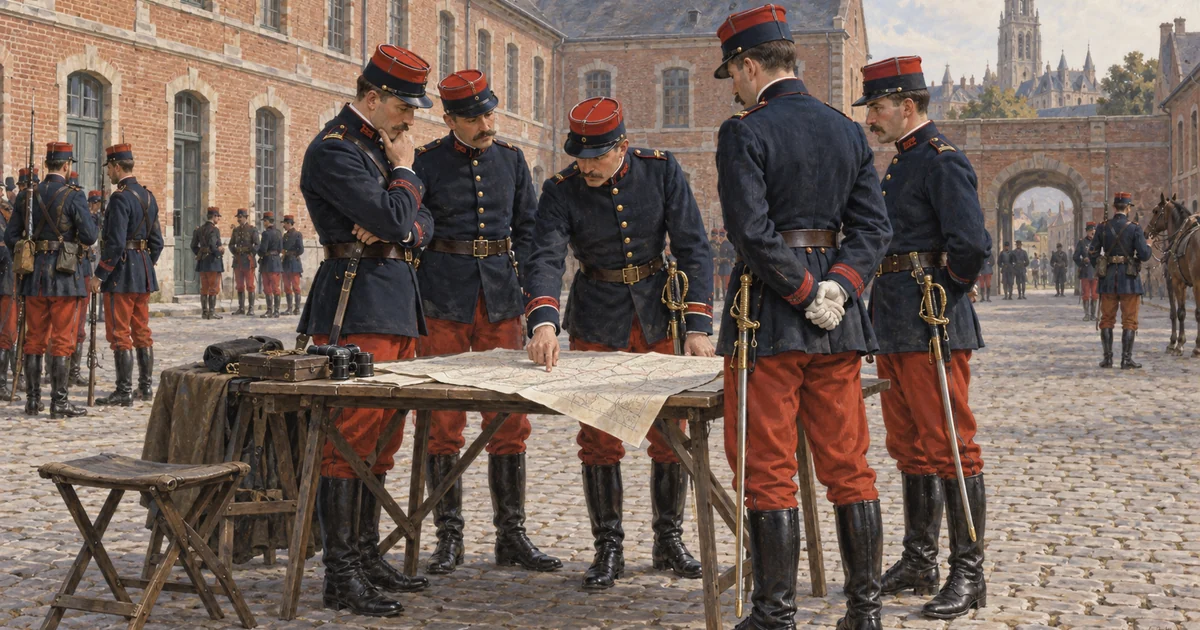
Before the First World War, Arras was a garrison town, and its 33rd Infantry Regiment saw pass through its ranks two men who were to mark the history of France: Colonel Philippe Pétain, who commanded it, and a young second lieutenant fresh out of Saint-Cyr, Charles de Gaulle. The future marshal and the future leader of Free France thus rubbed shoulders at Arras, in the years preceding the war. This meeting, charged with meaning in the light of history, belongs to the military past of the town. A look back at the 33rd Infantry Regiment of Arras and at these two destinies that crossed there.
Arras, a garrison town
Arras had, for a long time, a military vocation. A former stronghold, endowed with a citadel and long girdled with ramparts, the town traditionally accommodated troops and played the role of a garrison. This military presence, inherited from its past as a frontier town and place of war, marked the life of the city. The barracks housed the regiments, and the population was accustomed to the neighbourhood of soldiers, to the parades and to garrison life. This vocation went back to the era when Arras, a frontier town of the kingdom, had been fortified to assure defence, notably in the wake of the work of Vauban and the citadel. Even after the demolition of the urban ramparts in the nineteenth century, the town kept its military function, the citadel remaining and the barracks accommodating the troops. On the eve of the First World War, Arras was therefore a garrison town, where units of the French army were stationed. The 33rd Infantry Regiment was one of these units, anchored in the town and taking part in its life. This military presence was part of the identity of Arras, a town where the army held an important place. Garrison life set the rhythm of the daily routine, and the military were a component of the local population and society. To understand this vocation of garrison town allows one to grasp the framework in which the 33rd Infantry Regiment was inscribed. Arras, by its history and its position, was a military town, where the presence of the army was ancient and natural. It is in this framework that the 33rd Infantry Regiment held garrison, and it is there that the destinies of two men called to play a major role in the history of France crossed, in the years that preceded the outbreak of the Great War.
The 33rd Infantry Regiment
The 33rd Infantry Regiment was one of the units of the French army that held garrison at Arras before the First World War. Like the other regiments, it was composed of soldiers and officers, framed according to military hierarchy, and took part in the life of the garrison town. The regiment assured the instruction of the soldiers, the exercises and the military preparation, in the context of a France which, faced with international tensions, maintained a numerous army. On the eve of the war, the French army was preparing for an eventual conflict, and regiments like the 33rd Infantry constituted the basic units of this army. The 33rd Infantry Regiment of Arras belonged to this military organisation, as an infantry unit destined to fight in case of war. Its presence at Arras made the town one of the garrisons of the French army, taking part in the national defence device. The regiment, by its numbers and its activities, held an important place in local life. What particularly distinguishes the 33rd Infantry Regiment in history is that it counted among its cadres, in the years preceding the war, two men called to an exceptional destiny: Philippe Pétain, who commanded it, and Charles de Gaulle, who served there as a young officer. This coincidence confers on the regiment a particular place in memory, as the unit where these two figures crossed. To understand what the 33rd Infantry Regiment was allows one to grasp the context of this meeting. An ordinary unit of the French army holding garrison at Arras, the regiment became, by the presence of these two men, a place of memory linked to the history of France, in the years that preceded the Great War.
Colonel Pétain at Arras
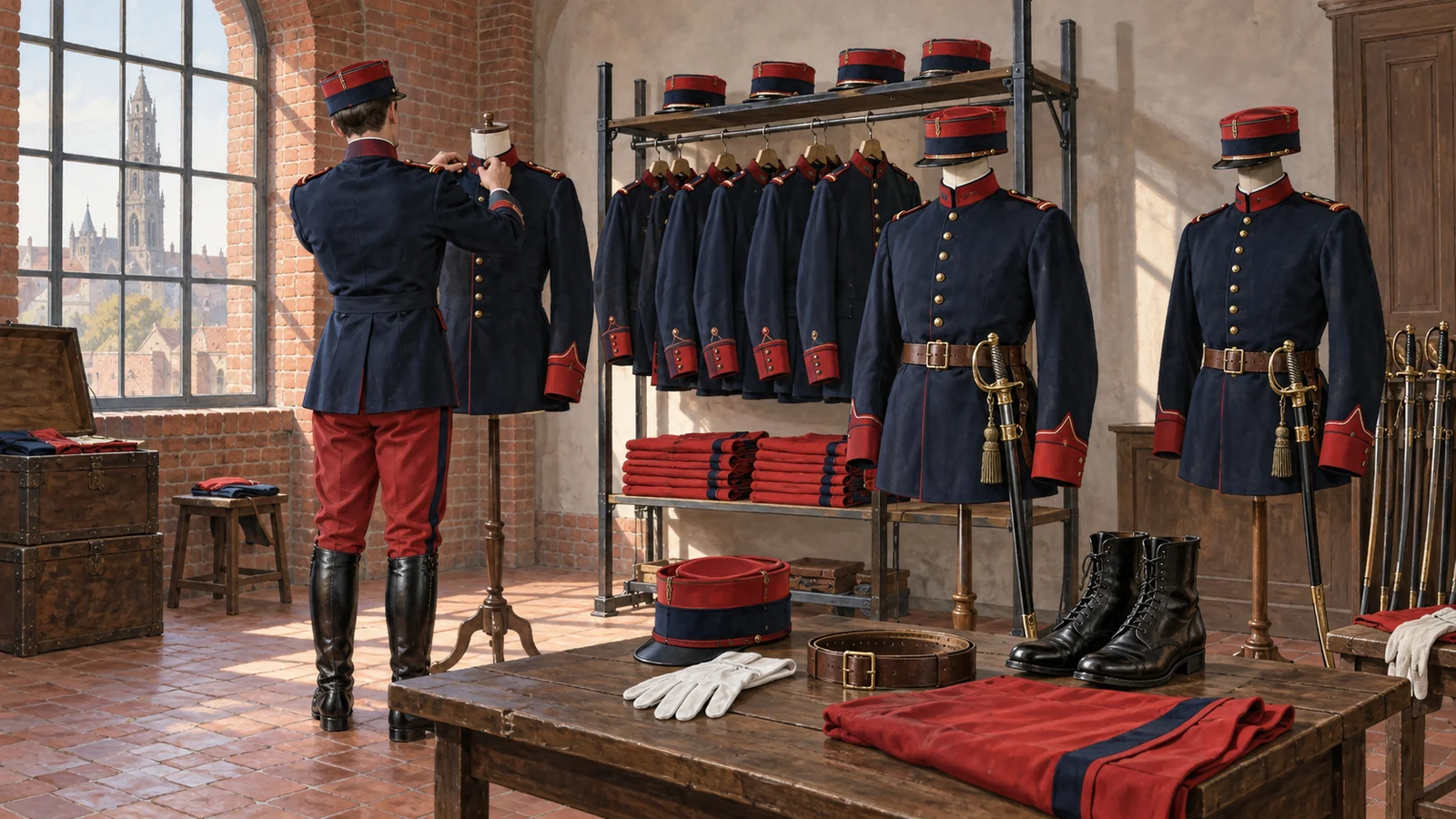
In the years preceding the First World War, Colonel Philippe Pétain commanded the 33rd Infantry Regiment at Arras. A career officer, Pétain was then an experienced soldier, at the head of the regiment stationed in the town. He was not yet the figure that history would retain: neither the victor of Verdun, nor, later, the head of the French State under the Occupation, whose action would earn him condemnation at the Liberation. At Arras, he was the colonel commanding the 33rd Infantry Regiment, exercising his functions as head of the corps. His command at Arras belonged to a military career that was to know, with the First World War, a decisive turning point. It is indeed the war that revealed Pétain and carried him to the forefront, notably during the Battle of Verdun. But before that, at Arras, he was a colonel among others, at the head of his regiment. His passage at Arras has remained in memory because of what he became afterwards and the presence, under his orders, of the young de Gaulle. The command of Pétain at Arras thus became, retrospectively, a significant episode, that where the future marshal rubbed shoulders with the future leader of Free France. One must guard against all anachronism: at the time, Pétain was only a senior officer commanding a regiment, and nothing yet foretold the contrasting destinies that would be his and those of his young subordinate. To understand the presence of Pétain at Arras, as colonel of the 33rd Infantry Regiment, allows one to situate this episode in the path of a man whose history was to be as glorious at first as tragic and controversial afterwards.
The young de Gaulle, second lieutenant
It is at Arras, within the 33rd Infantry Regiment, that the young Charles de Gaulle began his military career. Fresh out of the military school of Saint-Cyr, the young second lieutenant joined the regiment in 1912, thus serving under the orders of Colonel Pétain. He was then only a young beginning officer, at the start of a career that was to lead him, many years later, to an exceptional destiny. At Arras, de Gaulle made his first steps, learning the military profession and the command of men. This Arras period constitutes the starting point of his career, the moment when the future general and leader of Free France began as a young infantry officer. The choice of the 33rd Infantry Regiment, and therefore of Arras, was not trivial: de Gaulle had wished to serve under the orders of Pétain, whose military qualities he then admired. This period was therefore formative, both on the professional plane and on that of relations with his chief. The young de Gaulle, at Arras, learned his profession and formed himself in contact with an experienced officer. These Arras beginnings, often unknown, are nonetheless important in the path of the man of 18 June. They recall that the future leader of Free France was first a young second lieutenant, making his first steps in a garrison town. To understand the beginnings of de Gaulle at Arras allows one to grasp the origin of his career and the link that unites him to the town. Arras was indeed the place of his military beginnings, as the history of the relations between Charles de Gaulle and Arras recalls, a link that marked the beginning of his long path.
Two destinies that cross
The meeting of Pétain and de Gaulle at the 33rd Infantry Regiment of Arras is charged with meaning in the light of history. These two men, whose destinies were to be so contrasting, rubbed shoulders in this garrison town, one as colonel, the other as young second lieutenant. At the time, a relationship of respect and esteem united the young officer to his chief, de Gaulle admiring the military qualities of Pétain. This relationship, made of the deference of the subordinate and the attention of the superior, belonged to the framework of military hierarchy. Nothing, then, foretold the radical divergence that was, decades later, to oppose the two men. Their meeting at Arras has thus become, with the hindsight of history, an episode of considerable symbolic significance. It gathered, in the same unit and the same town, two major figures of the history of France, whose paths were first to cross, then to diverge dramatically. The future marshal, hero of the First World War then head of the French State under the Occupation, and the future general, leader of Free France and resolute adversary of collaboration, thus began side by side at Arras. This initial proximity makes the later divergence all the more striking. To understand this meeting allows one to grasp the historical dimension of the Arras episode. The 33rd Infantry Regiment of Arras was the place where, before the war, two men called to embody, in the darkest hours of the history of France, opposite choices, crossed. This initial meeting, in a garrison town, takes on all its meaning in the light of what these two men became and the opposition that, later, deeply separated them.
| Figure | At Arras and after |
|---|---|
| Philippe Pétain | Colonel of the 33rd RI, then marshal and head of the French State |
| Charles de Gaulle | Second lieutenant in the 33rd RI, then leader of Free France |
| The link | A young officer under the orders of his colonel |
| The sequel | Destinies that diverge radically |
The eve of the Great War
The passage of Pétain and de Gaulle at the 33rd Infantry Regiment of Arras was situated on the eve of the First World War. In 1914, the outbreak of the conflict was to upheave the destiny of the regiment, the town and the two men. The 33rd Infantry Regiment, like all the units of the French army, was engaged in the war from its outbreak. The general mobilisation sent the soldiers to combat, and the regiment took part in the military operations. Arras, a garrison town, soon found itself at the heart of the war, close to the front that stabilised in the region. The town was to know, during the conflict, considerable destructions, becoming one of the martyr cities of the Great War. For Pétain and de Gaulle, the war marked a decisive turning point. Pétain distinguished himself in the conflict, notably at Verdun, and knew a rise that carried him to the summit of military hierarchy. De Gaulle, for his part, fought, was wounded and taken prisoner, before pursuing a career that would lead him, during the following conflict, to an exceptional destiny. The eve of the Great War, at Arras, was therefore the prelude to major upheavals, for the regiment as for the two men. This Arras period, prior to the war, appears retrospectively as a suspended moment, before the tipping into the conflict. To understand the context of the eve of the war allows one to situate the Arras episode in the chronology of events. The passage of Pétain and de Gaulle at Arras shortly preceded the outbreak of the First World War, which was to transform their destinies and that of the town, engaged in one of the most murderous conflicts of history.
Paths that diverge
If Pétain and de Gaulle rubbed shoulders at Arras in a relationship of respect, their paths were subsequently to diverge radically. The First World War revealed Pétain, who became a national hero, notably as victor of Verdun, before acceding to the dignity of marshal of France. De Gaulle pursued his military career, developing innovative ideas on modern warfare. But it is during the Second World War that their destinies diverged in a decisive and tragic manner. In 1940, faced with defeat, Pétain, become head of the French State, chose the armistice and collaboration with Germany, a policy that would earn him condemnation at the Liberation. De Gaulle, on the contrary, refused the defeat and the armistice, launched from London his appeal to continue the fight and became the leader of Free France and of the Resistance. Thus, the two men who had rubbed shoulders at Arras found themselves, decades later, in opposite camps, embodying radically contrary choices in the face of the ordeal of the Occupation. This divergence, one of the most dramatic of the history of France, opposes the former chief to his former subordinate, collaboration to Resistance. The contrast between the initial proximity, at Arras, and the later opposition, confers on the Arras episode a tragic significance. To understand this divergence allows one to measure the distance that finally separated these two men, united at Arras then opposed in the darkest hours. The meeting of the 33rd Infantry Regiment thus takes on all its meaning in the light of this divergence, recalling that history sometimes reserves striking reversals, making of two men first close irreconcilable adversaries.
The military memory of Arras
The memory of the 33rd Infantry Regiment and of the passage of Pétain and de Gaulle belongs to the military memory of Arras. A garrison town, the city keeps the trace of its military past, of which this regiment and these two figures constitute a marking episode. The link between de Gaulle and Arras, in particular, has remained alive, the town remembering having welcomed the military beginnings of the future leader of Free France. This link belongs to the memory of the town and is part of its historical heritage. Arras, which saw so many figures and events mark its history, thus keeps the memory of this meeting at the 33rd Infantry Regiment. The memory of this period invites one to reflect on the contrasting destinies of Pétain and de Gaulle, of which the town was the common starting point. It also recalls the military vocation of Arras, a garrison town where the troops were stationed. This memory is anchored in the places and heritage of the town, a former stronghold of which the citadel of Arras still testifies, a symbol of its military past. To remember the 33rd Infantry Regiment and the passage of these two men is to illuminate a significant episode of the history of Arras and of France. It is also to recall that the town, by its military vocation, was the theatre of the meeting of two major figures, before history separated them. The military memory of Arras, rich with this garrison past, thus keeps the memory of this episode, which unites local history to the great national history. To rediscover this page allows one to better understand the link between Arras and these two figures, and the place of the town in the military history of France, on the eve of the great conflicts of the twentieth century.