
The reconstruction of Arras: how did the town reborn identically after 1918?
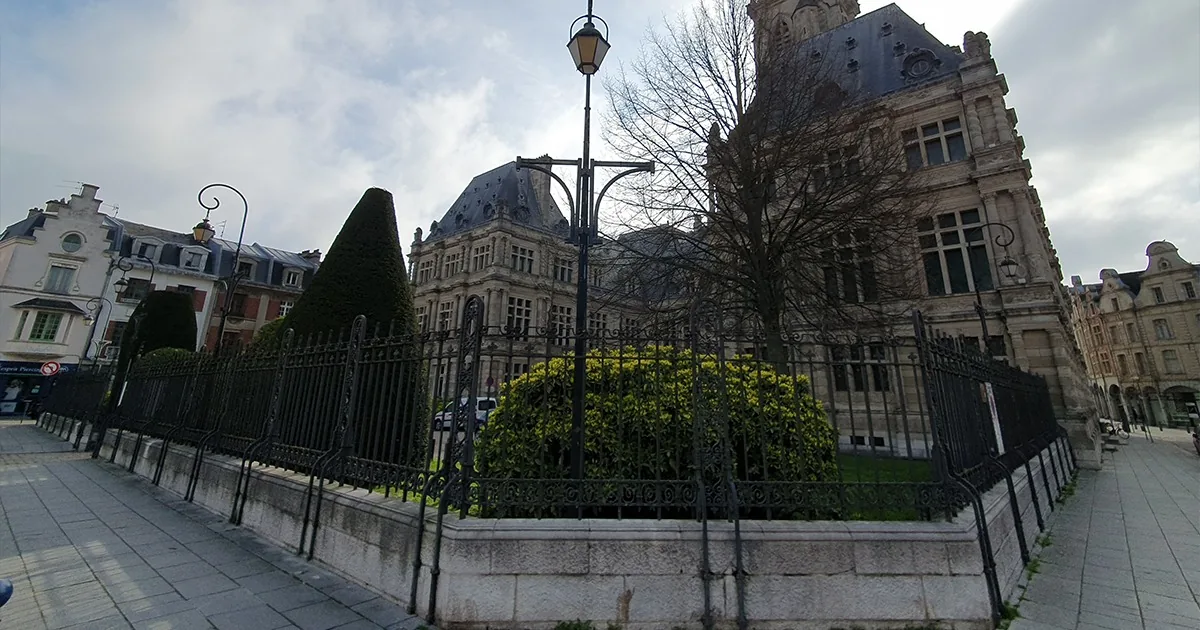
At the end of the First World War, Arras was no more than a field of ruins. Faced with this disaster, the town made a decisive choice: to rebuild identically, recovering the pre-war face rather than modernising. Under the leadership of architects like Pierre Paquet, the famous arcaded squares, the belfry and the town hall were reborn from their ashes, faithful to their original appearance. This reconstruction, one of the most remarkable of the post-war, allowed Arras to recover its identity and its heritage. A look back at this great worksite that made the town reborn from its ruins.
A town to raise again
At the end of the war, Arras found itself facing an immense challenge: to raise a town in ruins. The conflict had left the city largely destroyed, as the history of Arras under the shells recalls. The houses, the monuments, the infrastructures: a considerable part of the heritage and the built environment had been annihilated by the bombardments. The town, once prosperous and animated, was no more than a landscape of desolation. To rebuild such a town represented a colossal task, to the measure of the scale of the destructions. Everything had to be raised again: the dwellings to rehouse the population, the shops and activities to revive the economy, the monuments and heritage to recover the identity of the city. This worksite, which was to extend over years, mobilised considerable means and energies. The reconstruction of Arras belonged to the vast effort of reconstruction of the devastated regions of the north of France, ravaged by the war. Numerous towns and villages had to be raised again, in an unprecedented enterprise. For Arras, the stake was to make the town reborn, to raise it from its ruins and to give it back life. This reconstruction posed fundamental questions on the way to rebuild: should one rebuild identically or modernise? To understand the scale of the challenge allows one to grasp the stake of the reconstruction. A largely destroyed town, Arras had to raise everything again, in a considerable worksite. This immense task, to the measure of the destructions of the war, was to mobilise the energies for years and determine the face of modern Arras. To raise the town from its ruins: such was the challenge that faced Arras at the end of the Great War, the starting point of a reconstruction that was to durably mark the city.
Rebuild identically or modernise?
The reconstruction of Arras posed a fundamental question: should one rebuild identically or modernise the town? This dilemma faced all the destroyed towns, called to rise again. Two options opposed each other. The first consisted in rebuilding identically, recovering the pre-war face and heritage, in order to preserve the identity and history of the town. The second consisted in taking advantage of the reconstruction to modernise the city, by rethinking the urbanism and architecture according to the new conceptions. Each option had its partisans and its arguments. To rebuild identically allowed one to preserve the soul of the town, its heritage and its identity, but could seem backward-looking. To modernise offered the occasion to create a new town, more functional, but at the risk of losing the character and heritage of the city. This debate, which touched on the very identity of the town, was crucial for the future of Arras. The choice that would be made would determine the face of the reconstructed town, between fidelity to the past and modernity. For Arras, whose architectural heritage, notably its famous squares, made its renown and identity, the question was particularly sensitive. To lose this heritage would have meant losing a part of the soul of the town. To understand this dilemma allows one to grasp the stake of the reconstruction. Between fidelity to the past and modernity, the choice engaged the identity and future of the town. This debate, common to the destroyed towns, took on at Arras a particular dimension, because of the richness of its heritage. The decision that would be taken was to determine the face of reconstructed Arras, and it is the choice of fidelity to the pre-war heritage that was, finally, to prevail, preserving the identity of the city.
Pierre Paquet, architect of the reconstruction
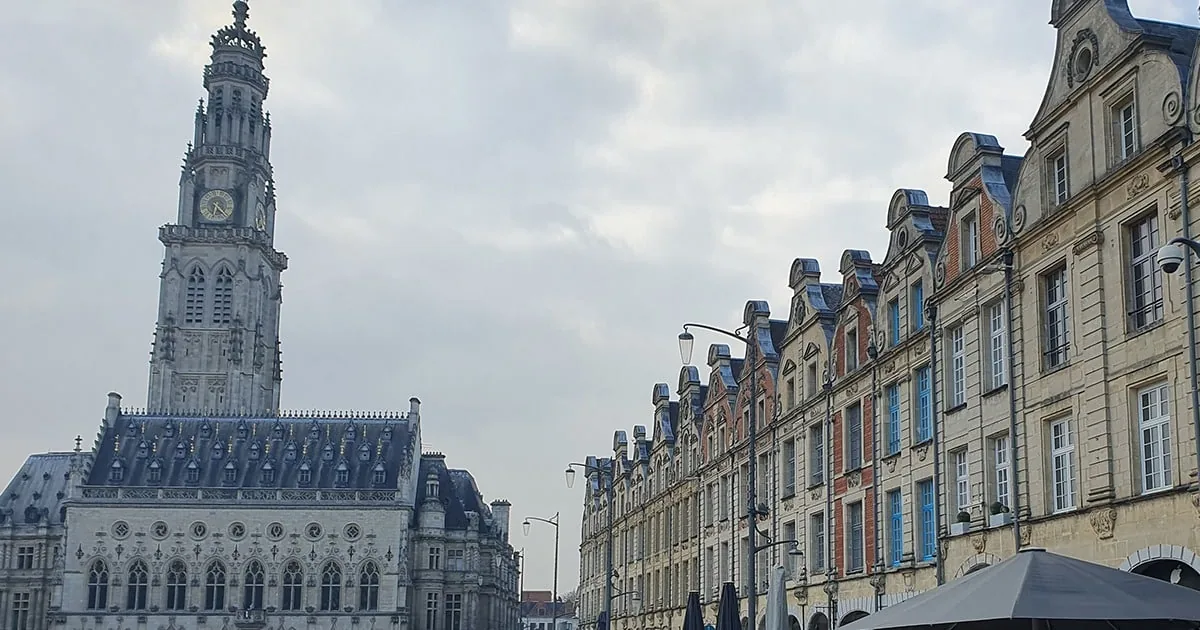
Among the figures who presided over the reconstruction of Arras, the architect Pierre Paquet played an important role. An architect specialised in historic monuments, he was one of the artisans of the rebirth of the Arras heritage after the war. His intervention concerned notably the emblematic monuments of the town, whose reconstruction faithful to the original appearance constituted a major stake. The role of such an architect was essential: it was a matter of rebuilding destroyed monuments while respecting their character and their history, a demanding work that combined technical competence and heritage sensibility. To rebuild identically a vanished monument supposed knowing its appearance, having documents and mastering the techniques allowing it to be reborn faithfully. The architects of the reconstruction, like Pierre Paquet, bore this responsibility, seeing to it that the recovered heritage was worthy of the original. Their work allowed Arras to recover its monuments and its architectural identity. The choice to rebuild identically, applied to the monuments and squares, rested on the know-how of these architects, capable of making the destroyed heritage reborn. The figure of Pierre Paquet illustrates the role of these men of art in the reconstruction of the devastated towns. To understand their role allows one to grasp how the identical reconstruction could be carried out. To make destroyed monuments reborn, faithfully to their original appearance, demanded competence and devotion. The architects of the reconstruction, of whom Pierre Paquet was a marking figure at Arras, bore this requirement, allowing the town to recover its heritage. Their work, in the service of fidelity to the past, was decisive in the success of the reconstruction and in the preservation of the identity of Arras.
The squares recovered
The jewel of the reconstruction of Arras was the rebirth of its famous arcaded squares. The Grand-Place and the Petite Place, today the Place des Héros, with their characteristic facades, had been gravely damaged by the bombardments. Their identical reconstruction constituted a major stake, so much did these squares make the renown and identity of the town. The choice was made to rebuild them faithfully, recovering their arcaded facades and their original character. This meticulous work allowed these exceptional architectural ensembles to be reborn, preserving one of the most remarkable heritages of the town. The recovered squares, faithful to their pre-war appearance, gave back to Arras its face and its soul. This identical reconstruction of the squares is one of the great successes of the post-war, allowing a unique heritage to be preserved. Today, the visitors who admire the Grand-Place of Arras contemplate the fruit of this faithful reconstruction, which knew how to make the destroyed facades reborn. The squares, historic heart and symbol of the town, thus recovered their splendour, as if the war had not taken place. This success illustrates the relevance of the choice to rebuild identically, which allowed an irreplaceable heritage to be saved. To understand the rebirth of the squares allows one to grasp the importance of the reconstruction for the identity of Arras. Rebuilt faithfully, the famous squares recovered their face and their character, preserving one of the most precious heritages of the town. This rebirth, the fruit of the choice of the identical, today makes the beauty and renown of Arras, whose squares, resuscitated after the war, remain one of the jewels of the regional heritage.
The belfry and town hall rebuilt
Among the emblematic monuments rebuilt figure the belfry and the town hall, symbols of the town gravely damaged during the war. The belfry, whose fall under the shells had been one of the symbols of the destruction of Arras, was rebuilt identically, recovering its characteristic silhouette that dominates the town. The town hall, gravely damaged too, was also raised again, faithful to its original appearance. The reconstruction of these emblematic monuments took on a considerable symbolic significance: it meant the rebirth of the town and the restoration of its symbols. The belfry, in particular, symbol of the communal liberties and the identity of Arras, recovered its place at the heart of the city. Its reconstruction erased the wound of its fall and asserted the rebirth of the town. The town hall, seat of municipal power, also recovered its appearance and its function. These rebuilt monuments, faithful to their original, gave back to Arras its symbols and its face. Today, one can admire the belfry and the town hall, fruits of this faithful reconstruction, which have recovered their former splendour. The rebirth of these monuments illustrates the success of the identical reconstruction, which allowed the emblematic heritage of the town to be saved. To understand the reconstruction of these monuments allows one to grasp the symbolic significance of the reconstruction. The belfry and the town hall, symbols of the town, recovered their appearance and their function, asserting the rebirth of Arras. This faithful reconstruction, applied to the emblematic monuments, allowed the town to recover its symbols and its identity, making the rebirth of the belfry and the town hall one of the great successes of the reconstruction of Arras.
| Marker | Detail |
|---|---|
| The challenge | To raise a largely destroyed town |
| The choice | To rebuild identically, faithful to the past |
| The squares | The arcaded facades faithfully rebuilt |
| The monuments | The belfry and the town hall raised again |
War damages and the financing
The reconstruction of Arras, like that of the other devastated regions, was made possible by the system of war damages. After the conflict, the State set up a device for compensating the damages suffered during the war, in order to finance the reconstruction of the destroyed towns and villages. This system allowed the considerable financial means necessary for a worksite of such scale to be mobilised. To rebuild a largely destroyed town indeed represented an enormous cost, which only public aid could cover. The war damages thus constituted the principal means of financing the reconstruction, allowing the towns and inhabitants to raise their destroyed goods again. This device, set up on a national scale, was to the measure of the scale of the destructions in the devastated regions. It illustrated the national solidarity towards the regions that had suffered the ravages of the war. For Arras, the war damages were essential, allowing the reconstruction of the houses, monuments and infrastructures to be financed. Without this financing, the reconstruction could not have been carried out. The system of war damages belonged to the national effort of reconstruction of the devastated regions, one of the great enterprises of the post-war. To understand the financing of the reconstruction allows one to grasp how such a worksite could be realised. The war damages, in compensating the destructions, allowed the necessary means to be mobilised. This device, essential to the reconstruction of Arras and the devastated regions, illustrated the national solidarity and made possible the rebirth of the destroyed towns. Thanks to this financing, Arras could raise its ruins and recover its heritage, in a worksite supported by the national effort of reconstruction.
An exemplary reconstruction
The reconstruction of Arras is considered exemplary, both by its scale and by its success. Conducted over several years, it allowed a largely destroyed town to be raised again and to be given back its face and its identity. The choice to rebuild identically, applied to the emblematic heritage of the town, was a success, preserving the squares, the monuments and the character of the city. This faithful reconstruction, which could have seemed difficult, even impossible, was carried out thanks to the know-how of the architects, the means mobilised and the will to preserve the identity of the town. The result is remarkable: Arras recovered its heritage and its face, as if the war had not taken place. This success makes the reconstruction of Arras an example of faithful reconstruction, respectful of the heritage and identity of a town. It illustrates that it was possible, despite the scale of the destructions, to make a town reborn in respect of its heritage. The exemplary reconstruction of Arras contrasts with other more modernising reconstructions, which made the choice to create new towns. At Arras, fidelity to the past prevailed, preserving an irreplaceable heritage. This success, hailed, makes the reconstruction of Arras a model. To understand the exemplary character of the reconstruction allows one to grasp its significance. Conducted with success, in respect of the heritage, the reconstruction of Arras allowed the town to be reborn faithful to itself. This success, remarkable by its scale and its fidelity, makes the reconstruction of Arras an example of the rebirth of a destroyed town, preserving its identity and its heritage, and giving back to the city its pre-war face.
Today's Arras, heir to the reconstruction
The Arras one admires today is largely the heir to the reconstruction of the post-war. The famous squares, the belfry, the town hall and a large part of the heritage one contemplates are the fruit of this great worksite, which made the town reborn from its ruins. This reality, often unknown to visitors, is essential to understand the town. What appears as an ancient heritage is in fact, for a large part, a faithful reconstruction, conducted after the destruction of the war. This identical reconstruction was so successful that the town seems to have crossed the centuries intact, whereas it was in reality raised again from its ruins. This feat illustrates the quality of the reconstruction and the fidelity with which the heritage was restored. Today's Arras thus testifies to the success of this choice, that of preserving the identity and heritage of the town. The people of Arras and visitors benefit from this fidelity to the past, which allowed an exceptional heritage to be saved. To understand that current Arras is the heir to the reconstruction allows one to fully appreciate the town and its history. Behind the beauty of the squares and monuments hides the history of a reconstruction, that of a town that knew how to be reborn from its ruins in respect of its heritage. This history, that of the identical reconstruction, is an integral part of the identity of Arras. The town of today, with its recovered heritage, is the living testimony of this success, that of a faithful reconstruction that allowed Arras to be reborn, preserving for future generations one of the most remarkable heritages of the region, resuscitated after the ordeal of the Great War.