
Cambrai: visiting the town of art and history of the Cambrésis near Arras
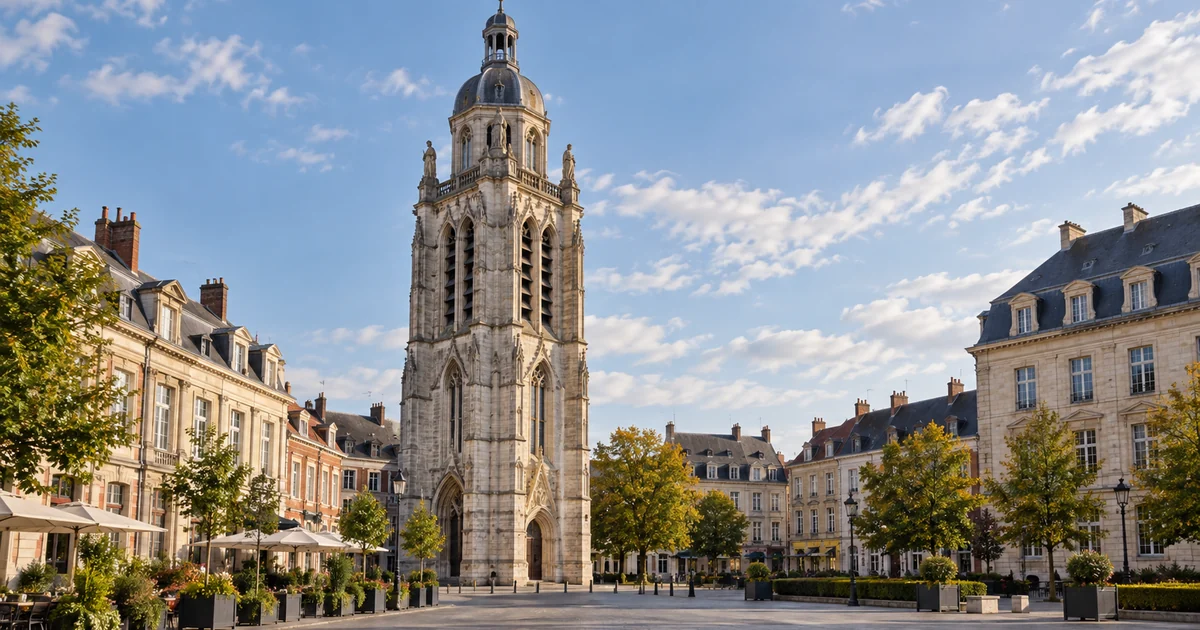
To the east of Arras, on the edges of the Nord and the Cambrésis, Cambrai unfolds a rich heritage and a singular history. Famous for its bêtises, these emblematic sweets, the town also possesses a cathedral sheltering the tomb of Fénelon, a belfry, medieval gates and a memory marked by the Great War, including the famous tank battle of 1917. Between gourmandise, heritage and history, Cambrai offers a complete escapade, to be discovered from Arras. Let us go to meet this town of art and history of the Cambrésis.
Cambrai, a town of art and history
Cambrai, located in the department of the Nord, is a town of art and history with a rich heritage, the historic heart of the Cambrésis. A former episcopal town and an important place, it retains the traces of a long past, between religious edifices, civil monuments and vestiges of fortifications. The town, like Douai or Arras, is among the towns of character of the Nord, rich in belfries and heritage: the visit of the Douai belfry, in a neighbouring town, illustrates this tradition of belfries that marks the urban landscape of the region. Cambrai distinguishes itself by the diversity of its heritage, which testifies to its importance through the centuries. The town, human-sized, lends itself to discovery on foot, along its streets, its squares and its monuments. Its history, marked by religion, commerce and conflicts, can be read in its stones and its edifices. Cambrai also offers a gourmand dimension, with its famous speciality, and a memory linked to the First World War. This richness and this diversity make Cambrai an attractive destination, a stone's throw from Arras. To discover Cambrai is to explore a town with a varied heritage, between history, art and traditions. This town of the Cambrésis is worth the detour for the richness of its treasures. A town of art and history, Cambrai offers a complete and fascinating discovery.
The bêtise de Cambrai
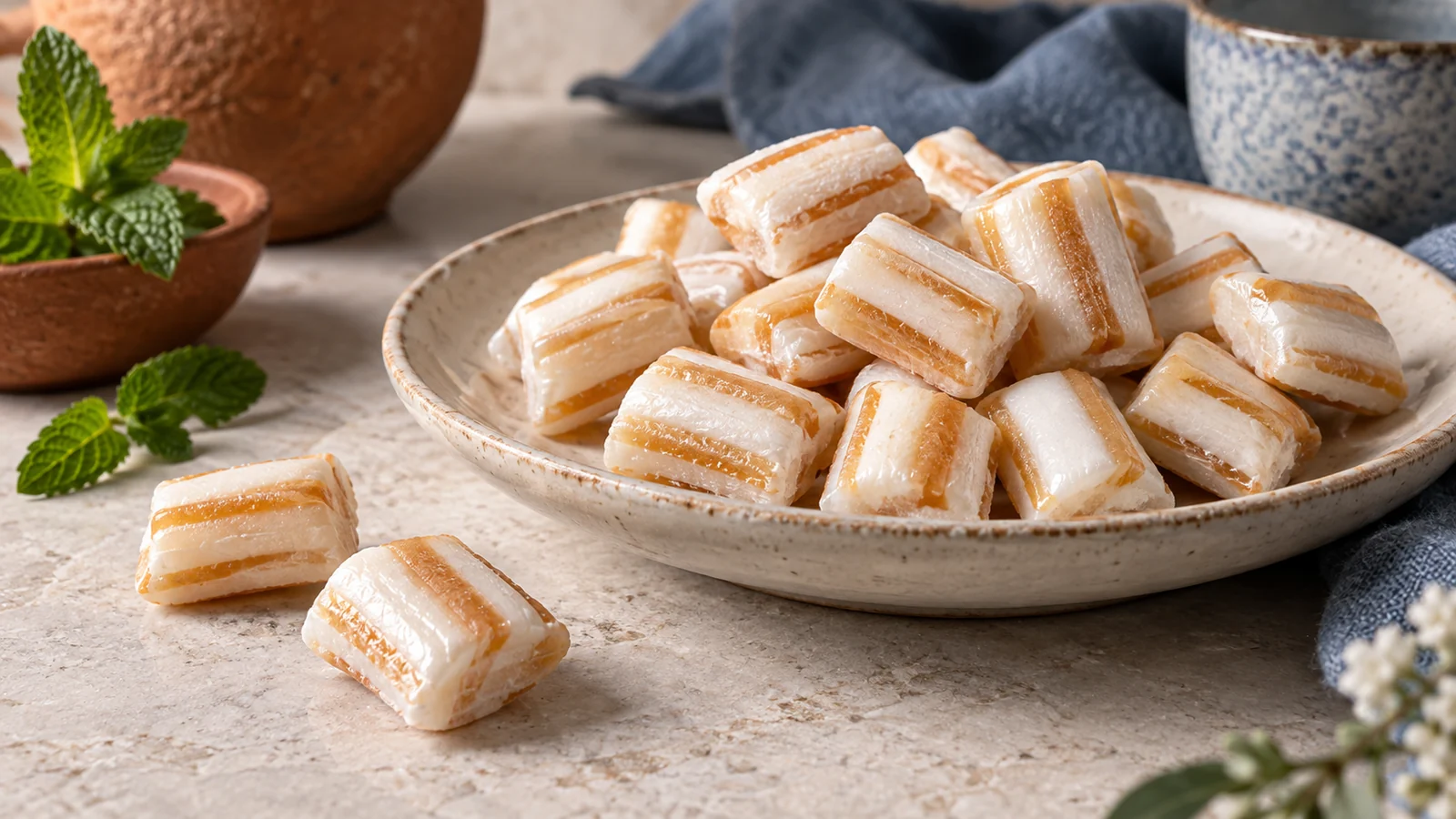
The bêtise de Cambrai is doubtless what makes the gourmand renown of the town, far beyond its borders. This emblematic sweet, traditionally flavoured with mint and striped with a thread of caramel, is inseparable from the identity of Cambrai. According to tradition, the bêtise was born from a manufacturing error, an apprentice's blunder transformed into a success, which would explain its mischievous name (bêtise meaning silly mistake). This story, passed on for a long time, adds to the charm of the speciality, which has become a symbol of the town. Today, the bêtise also comes in other flavours, like lemon, raspberry, apple or violet, broadening the palette of this traditional sweet. Made by confectioners of the town, the bêtise de Cambrai perpetuates an artisanal know-how and a gourmand tradition. It constitutes a must for visitors, who often leave with a box of these sweets as a souvenir. The bêtise, by its history and its taste, embodies the art of living and the gourmandise of Cambrai. To taste or offer bêtises is to taste a piece of the identity of the town. This speciality, at once savoury and charged with history, is part of the gourmand heritage of the Nord. The bêtise de Cambrai, a sweet emblem of the town, adds a touch of sweetness to its discovery. This sweet, known far beyond the region, makes the pride of Cambrai.
The cathedral and Fénelon
The cathedral of Notre-Dame de Grâce is one of the jewels of the religious heritage of Cambrai. This edifice, dating back to the eighteenth century, distinguishes itself by its decoration, with notably baroque trompe-l'oeil and a venerated icon, Notre-Dame de Grâce, the object of an ancient devotion. But the cathedral is above all famous for sheltering the tomb of Fénelon, the illustrious archbishop of Cambrai. François de Salignac de La Mothe-Fénelon, a writer and man of the Church, was archbishop of the town at the turn of the seventeenth and eighteenth centuries, and left a lasting imprint, to the point of being nicknamed the Swan of Cambrai. His tomb, in the cathedral, recalls the link between the town and this great figure of literature and spirituality. The cathedral, by its architecture, its decoration and this tomb, tells the artistic and spiritual history of Cambrai. Its visit offers a plunge into the religious past of the town and into the memory of Fénelon. The edifice, charged with history and art, constitutes a not-to-be-missed monument of the discovery of Cambrai. The link with Fénelon adds a literary and historical dimension to the visit. To discover the cathedral and the tomb of Fénelon is to approach a great figure of history and to admire a fine edifice. The cathedral of Notre-Dame de Grâce thus remains a major place of the heritage of Cambrai.
| Site | To discover |
|---|---|
| The bêtise | The emblematic sweet of the town |
| The cathedral | Notre-Dame de Grâce and Fénelon's tomb |
| The belfry | Symbol of urban heritage |
| The 1917 battle | A tank battle of the Great War |
The belfry and the monuments
Cambrai possesses a rich monumental heritage, of which the belfry is one of the symbols. A vestige of a former church, the belfry dominates the town and is part of the tradition of the belfries of the Nord, these emblematic civic towers of the region. It testifies to the past of the town and to its attachment to communal liberties. Beyond the belfry, Cambrai has other remarkable monuments, like the town hall, an edifice representative of municipal power, and the church of Saint-Géry, which shelters notable works of art. These monuments, spread across the centre, mark out the discovery of the town and testify to its history. The architecture of Cambrai, between religious edifices, public buildings and ancient houses, offers a varied and interesting heritage. To stroll in the town allows one to discover these different monuments, each carrier of a part of the history of Cambrai. The built heritage of the town, rich and diverse, invites an attentive visit. The belfry, in particular, offers a landmark and a strong symbol of the urban identity. To discover the monuments of Cambrai is to walk through the witnesses of its past and its richness. This heritage, between religion and civil life, makes Cambrai a town of art and history. The monuments of the town, from the belfry to the town hall, constitute not-to-be-missed stages of the visit.
The gates and the fortifications
Cambrai retains vestiges of its former fortifications, witnesses of its past as a stronghold. Among them, the Porte de Paris and the Porte Notre-Dame are among the rare testimonies of the ramparts that once girded the town. The Porte de Paris, notably, protected the southern entrance of the town and was rebuilt in the Middle Ages, in a style characteristic of the defensive architecture of the era. These monumental gates, which subsist today, recall the strategic and military importance of Cambrai through the centuries. They constitute precious vestiges, illustrating the history of the fortifications of the town, today largely disappeared. To stroll near these gates is to imagine the enclosed town of yesteryear, protected by its walls. These monuments, at once historical and picturesque, mark out the discovery of the heritage of Cambrai. The medieval gates testify to the defensive role of the town and to its urban evolution. They offer a glimpse of the military architecture and the history of the town. To discover these gates and vestiges is to understand the fortified past of Cambrai. This defensive heritage, preserved, adds to the historical richness of the town. The gates and fortifications of Cambrai thus constitute precious witnesses of its history.
The battle of Cambrai of 1917
Cambrai is associated with a major episode of the First World War: the battle of Cambrai of 1917. This battle remained famous as one of the first great battles where tanks were employed massively, marking a turning point in military history. In November 1917, an important British offensive engaged a large number of tanks, in an attempt at a breakthrough on the front. This massive use of armour, new on this scale, inaugurated a new era in the conduct of war. The battle, harsh and costly, is part of the context of the fighting that ravaged the region during the conflict, like that of the Artois: the Vimy memorial commemorates, not far from there, another striking episode of the Great War in 1917. Today, the memory of the battle of Cambrai is maintained, notably around vestiges and dedicated places, which recall this episode and the pioneering role of the tanks. To understand the battle of Cambrai allows one to grasp an important page of military history and of the memory of the region. This episode, by its innovative character and its extent, marks the history of the town. The memory of 1917 adds a strong historical dimension to the discovery of Cambrai. To discover this history is to understand the role of the town in the Great War. The battle of Cambrai of 1917 is thus part of the memory of the territory.
Strolling in Cambrai
To stroll in Cambrai allows one to discover, along the streets, the richness and diversity of its heritage. The town centre, with its squares, its monuments and its ancient houses, invites one to walk and to discover. From the cathedral to the belfry, by way of the medieval gates and the civil edifices, the town offers many points of interest to explore on foot. The squares and the shopping streets animate the centre, between heritage and everyday life. The stroll also allows one to discover the confectioners and shops where one finds the famous bêtise, for a gourmand break. Cambrai, human-sized, ideally lends itself to this discovery at the rhythm of walking, without imposed itinerary. To take the time to stroll is to appreciate the atmosphere of the town and to discover its treasures, sometimes hidden. The monuments, the squares and the streets offer varied perspectives, between history and contemporary life. The town, rich in its heritage, rewards the attentive walker with the diversity of its discoveries. To stroll in Cambrai is to taste the art of living of a town of the Nord, between heritage and gourmandise. This walk, free and pleasant, reveals the charms of the town. To discover Cambrai along the stroll offers a rich and pleasant experience. The town, by its richness and its atmosphere, appeals to lovers of heritage and discovery.
Discovering Cambrai from Arras
Cambrai constitutes an ideal escapade from Arras, for a day of discovery in the Nord. Located at a reasonable distance from the Arras town, it is easily accessible and offers a rich and varied heritage. Arras, by its central position in the region, constitutes an excellent starting point to explore the towns and treasures of the surroundings: Arras between metropolises and European borders illustrates this privileged situation, which puts many destinations within reach of a visit. An excursion to Cambrai allows one to complete the discovery of Arras with that of another town of art and history, with its own riches. The proximity of the two towns invites one to combine their visit, for a stay rich in heritage in the Hauts-de-France. Cambrai, with its bêtise, its cathedral and its memory of the Great War, offers a discovery different from and complementary to that of Arras. From the Arras town, the excursion is easy and rewards the visitor with the diversity of the treasures of Cambrai. To explore the surroundings of Arras is thus to open oneself to the richness of the regional heritage. Cambrai figures among the not-to-be-missed destinations during a stay in the region. This escapade, between gourmandise and history, ideally prolongs the discovery of Arras. To set off to discover Cambrai from Arras is thus an invitation to explore the treasures of the Cambrésis.