
The Art Deco heritage of Arras: where to see the facades of the reconstruction?
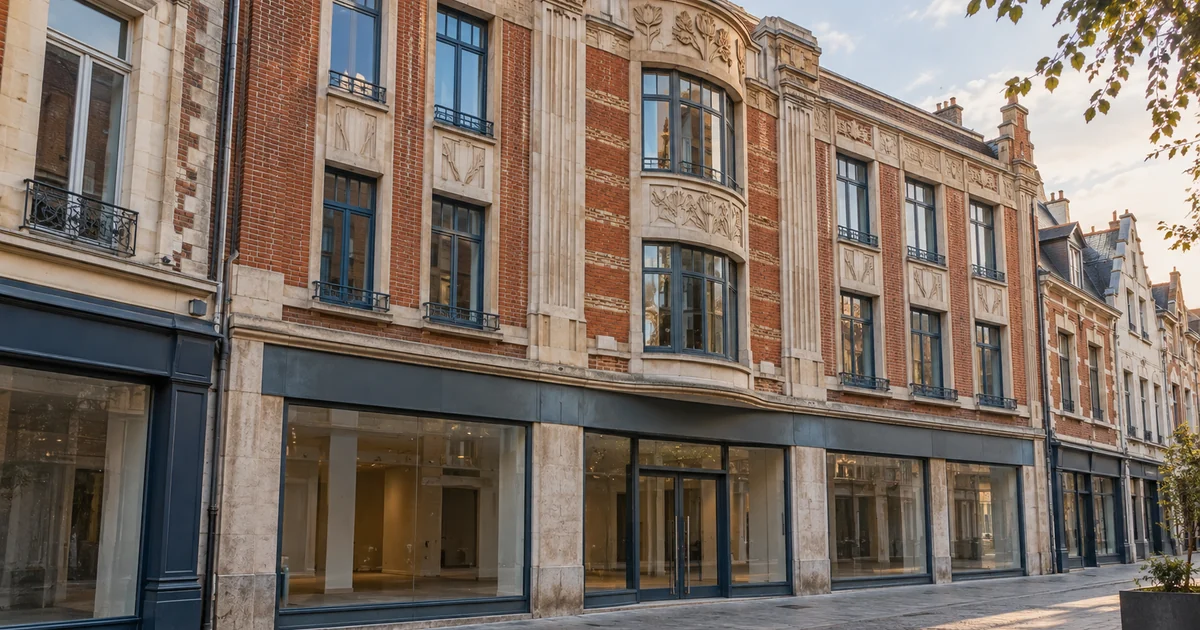
Behind its famous baroque squares, Arras hides another architectural face: that of Art Deco. Rebuilt after the destructions of the First World War, the town was in part rebuilt in the style of its time, marked by geometry, baskets of flowers and ironwork. This heritage of the twentieth century, more discreet than the medieval monuments, reveals itself along the streets, on the facades of the buildings and houses. To discover the Arras Art Deco is to learn to raise one's eyes and to spot the details of a style born in the interwar period, which is today the object of a renewed heritage interest.
A town to rebuild after the war
To understand Art Deco in Arras, one must first remember the reconstruction that followed the First World War. Bombed during four years, the town came out of the conflict largely destroyed, its squares, its houses and its monuments reduced to ruins. Everything then had to be rebuilt, in a vast worksite that occupied the years 1920 and 1930. This work of reconstruction made architectural choices that still shape the face of the town today. For the emblematic squares, the choice was that of reconstruction identically, in order to recover the Flemish baroque décor that made the renown of Arras: this chapter of history is developed in the reconstruction of Arras identically, which tells how the town recovered its pre-war appearance. But elsewhere, in the streets and the districts, the reconstruction was done in the style of the time, that of Art Deco, which was then imposing itself throughout France. Thus, the rebuilt town juxtaposes two faces: the old one, of the squares rebuilt identically, and the modern one for its time, of the Art Deco buildings. This duality makes all the richness of the Arras heritage, where the distant past rubs shoulders with the interwar period. To understand this context of reconstruction allows one to grasp why Arras possesses an Art Deco heritage, the fruit of a necessity, that of rebuilding a wounded town. The Arras Art Deco is therefore inseparable from this history, that of a town that had to be reborn from its ruins and that did so in the style of its time.
Art Deco, style of the reconstruction
Art Deco imposed itself in Arras, as elsewhere, as the dominant style of the reconstruction of the years 1920 and 1930. Born in the euphoria of the recovered peace, this architectural and decorative movement took over from Art Nouveau, of which it constituted in a way a response. Where Art Nouveau favoured curves and supple plant motifs, Art Deco asserted order, rigour and geometry. Adopted and adapted by everyone, it lent itself to the constructions of the post-war period, offering a style at once modern and elegant. In Arras, the reconstruction made wide use of this vocabulary, on the facades of the buildings and houses erected to replace the destroyed buildings. The Arras Art Deco is therefore not an isolated phenomenon, but the local expression of a national and international movement, which marked the architecture of the interwar period. This style, which coexisted with Flemish regionalism and with the beginnings of the modern movement, gave the rebuilt town a part of its face. To understand Art Deco as the style of the reconstruction allows one to situate the Arras heritage in its historical and artistic context. This movement, which celebrated the return to peace and modernity, left Arras an architectural heritage today rediscovered. The style of the reconstruction, made of geometry and elegance, thus takes part in the identity of the town, alongside its older heritage.
The characteristics of the style
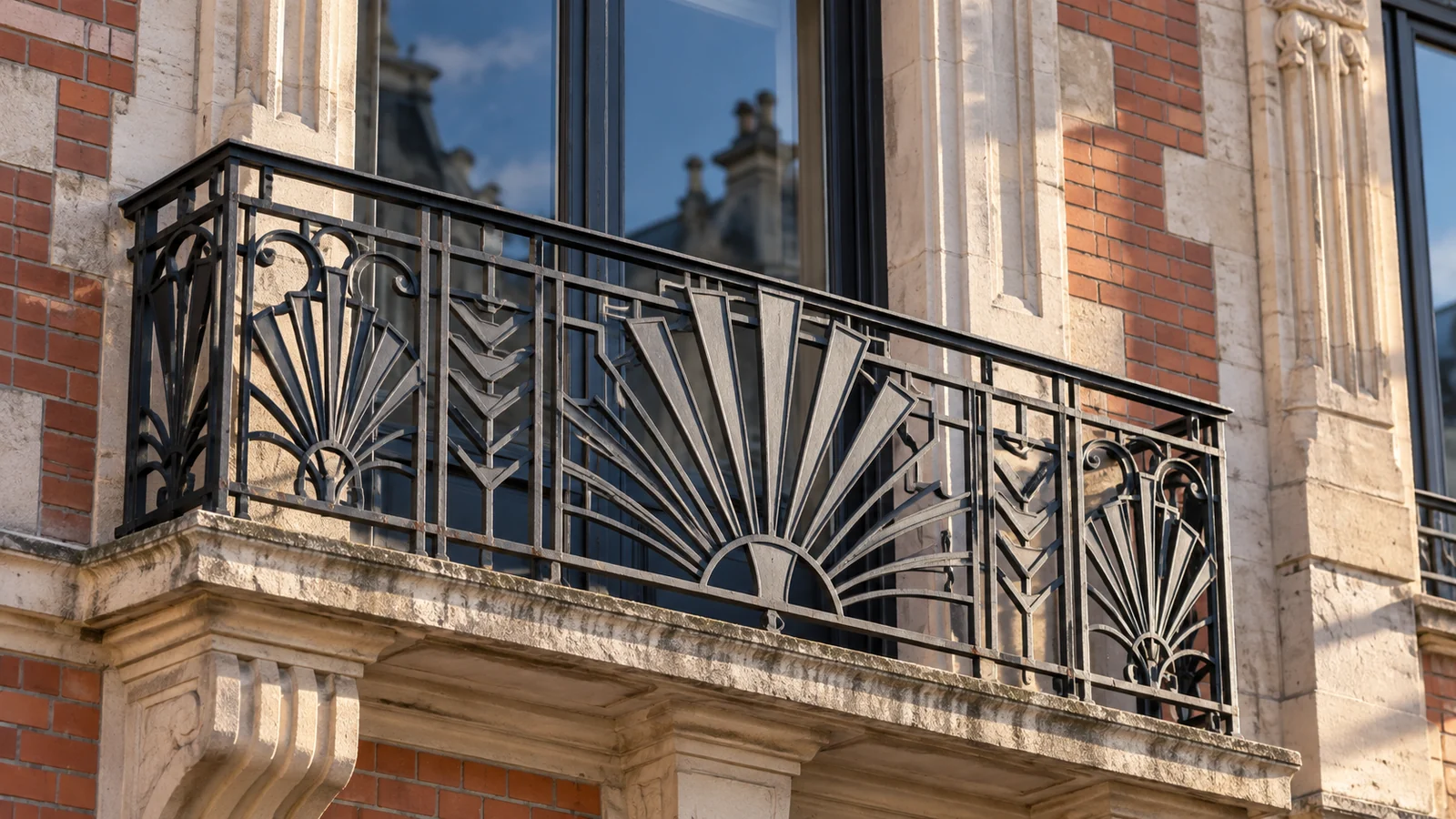
The Art Deco style possesses recognisable characteristics, which allow one to spot it on the Arras facades. Geometry is queen there: straight lines, angular forms, ordered and symmetrical compositions structure the facades. To this geometric order are added typical decorative motifs, of which the most emblematic is the basket or the vase of flowers, which one finds in mosaics, in sculpted bas-reliefs or in ironwork. These floral elements, stylised and geometrised, adorn the pediments, the gables and the balconies, bringing a decorative touch to the rigour of the lines. The ironwork, notably, offers a privileged field of expression for Art Deco, with grilles, balconies and railings with geometric and floral motifs. The materials, like brick and stone, are put to work with care, playing on contrasts and plays of colour. The Arras Art Deco is thus characterised by this alliance of geometry and décor, of order and ornament. To know how to spot these characteristics allows one to discover, along the streets, the numerous facades that bear the mark of this style. To raise one's eyes towards the gables, to observe the ironwork and the mosaics, is to learn to read the Art Deco heritage of the town. These details, often discreet, reveal the richness of a style that knew how to combine the modernity of its time and the taste for ornament. To understand the characteristics of Art Deco is to give oneself the keys to appreciate its Arras manifestations.
Facades to discover
The discovery of the Arras Art Deco passes through the observation of precise facades, scattered in the streets of the town. The rue Saint-Aubert thus offers several remarkable examples: at number 44, a building with geometric forms deploys its three storeys rhythmed by fluted columns, while at number 13, a facade with geometric décors is adorned with a vase of flowers on the gable, mixing the Art Deco vocabulary with a regionalist touch with its stepped gable of Flemish inspiration. The rue Pasteur also preserves a testimony of the era, with a former establishment linked to the automobile, dated to the end of the 1920s, which bears the mark of the style. These examples, among others, show how Art Deco inscribed itself in the Arras urban fabric, on income buildings, houses and buildings for commercial use. Each of these facades tells a part of the history of the reconstruction and of the taste of the interwar period. To spot them demands an attentive eye, for these buildings often blend into the alignment of the streets, without signalling themselves by their monumentality. It is precisely this that makes the charm of this discovery: to unearth, at the turn of a street, a geometric facade, a wrought ironwork or a basket of flowers in mosaic. These facades, modest or more ambitious, form together a diffuse heritage, spread across the town. To set off to discover them is to walk Arras with a fresh eye, attentive to the details of the architecture of the twentieth century. These testimonies of Art Deco deserve to be known, for they are part of the heritage of the town in the same way as its older monuments.
| Element | What it reveals |
|---|---|
| Geometry | Straight lines and ordered compositions |
| Baskets of flowers | Mosaics, bas-reliefs and ironwork |
| The rue Saint-Aubert | Several remarkable Art Deco facades |
| The context | The reconstruction of the 1920s-1930s |
Art Deco and Flemish regionalism
In Arras, Art Deco did not reign alone: it coexisted with Flemish regionalism, in a dialogue that gives the rebuilt town all its singularity. Regionalism drew on the repertoire of Flemish and baroque architecture, taking up elements like the crow-stepped gable or the scrolled gable, characteristic of the old houses of the region. This style expressed itself notably in the reconstruction identically of the great squares, where the baroque décor of before the war had to be recovered. The Grand'Place and its baroque houses illustrates this choice of fidelity to the past, with its facades rebuilt in the Flemish style. But in the rest of the town, Art Deco and regionalism often intertwined, as on those facades where a Flemish stepped gable crowns an Art Deco geometric décor. This encounter of styles, far from being a contradiction, testifies to the way in which the architects of the reconstruction knew how to marry the modernity of their time and the attachment to the local heritage. The result is a rich and varied urban landscape, where the old and the modern answer each other. To understand this coexistence allows one to appreciate the subtlety of the Arras heritage, where Art Deco dialogues with Flemish regionalism. This alliance of styles makes all the originality of the rebuilt town, between fidelity to the past and affirmation of modernity. To discover Art Deco in Arras is thus also to understand how it inscribes itself in a vaster architectural ensemble, marked by the diversity of the styles of the reconstruction.
A recorded and valued heritage
Long unrecognised, the Art Deco heritage of Arras is today the object of a growing interest and valorisation. A recording of the Art Deco heritage of the town has been undertaken within the framework of the general inventory of cultural heritage, in order to identify, document and make known these facades and buildings. This work of inventory testifies to a coming to awareness: the architecture of the interwar period, long considered banal, is henceforth recognised as a heritage in its own right, worthy of being studied and protected. On the regional scale, events devoted to Art Deco, like the Printemps de l'Art déco in the Hauts-de-France, contribute to making this heritage known to the general public, through visits, exhibitions and events. Arras inscribes itself in this regional dynamic of valorisation, alongside other towns of the North marked by the reconstruction and Art Deco. This recognition allows one to cast a fresh eye on the streets and facades of the town, by revealing a heritage that one did not always notice. It also encourages owners and communities to preserve these buildings, whose value is henceforth better understood. The Arras Art Deco heritage, recorded and valued, thus gains in visibility and recognition. This valorisation invites everyone to rediscover the town from the angle of the architecture of the twentieth century, by paying attention to these testimonies of the reconstruction. The Art Deco heritage, long discreet, thus takes its full place in the heritage richness of Arras.
Strolling to discover Art Deco
The best way to discover the Arras Art Deco is to stroll in the town, with an attentive eye on the facades and details. Unlike the great monuments, which impose themselves on the gaze, Art Deco often hides in the alignment of the streets, revealing its treasures to those who know how to look for them. A walk in streets like the rue Saint-Aubert or the rue Pasteur allows one to spot several characteristic facades, between geometry, ironwork and floral motifs. This discovery can be integrated into a broader visit of the town, in complement to the must-see monuments: to situate Art Deco within the whole of the Arras heritage, the must-see monuments of Arras offer a panorama of the riches of the town, from the belfry to the squares. To stroll to discover Art Deco is thus to add a dimension to the visit of Arras, by taking an interest in a more discreet but just as fascinating heritage. This walk, free and without imposed itinerary, invites one to raise one's eyes, to observe the gables and balconies, to spot the mosaics and bas-reliefs. It allows one to cast a fresh eye on the town, by discovering an often neglected aspect of its architecture. To take the time to stroll in search of Art Deco is to live an original experience of discovery, far from the beaten track. This way of walking the town reveals the richness of a heritage that one can learn to see. The Arras Art Deco, unveiled along the stroll, thus offers a new reason to walk the streets of Arras.
A twentieth-century heritage to preserve
The Art Deco heritage of Arras reminds us that the history of the town does not stop at the Middle Ages nor at the baroque era, but continues into the twentieth century. These facades, these buildings and these houses of the interwar period testify to an era and a know-how, that of the architects and artisans of the reconstruction. To preserve them is to recognise the value of this recent heritage, long neglected in favour of the older monuments. The recognition of which Art Deco is today the object, through inventories and events of valorisation, contributes to this preservation. It invites one to consider these buildings not as simple ordinary constructions, but as witnesses of a history, that of the town that was reborn from its ruins. Each Art Deco facade tells this rebirth, this moment when Arras had to rebuild itself while asserting the modernity of its time. To pass on this heritage to future generations supposes knowing it, documenting it and protecting it. It is also to learn to look at it, to appreciate its qualities and to understand its meaning. The Arras Art Deco, heritage of the twentieth century, thus deserves all the attention that one pays to the older riches of the town. To preserve it and make it known is to enrich the narrative of the Arras heritage, by integrating into it this chapter of the reconstruction and of the interwar period. This heritage, discreet but precious, is an integral part of the architectural identity of the town.