History of Arras in France
-
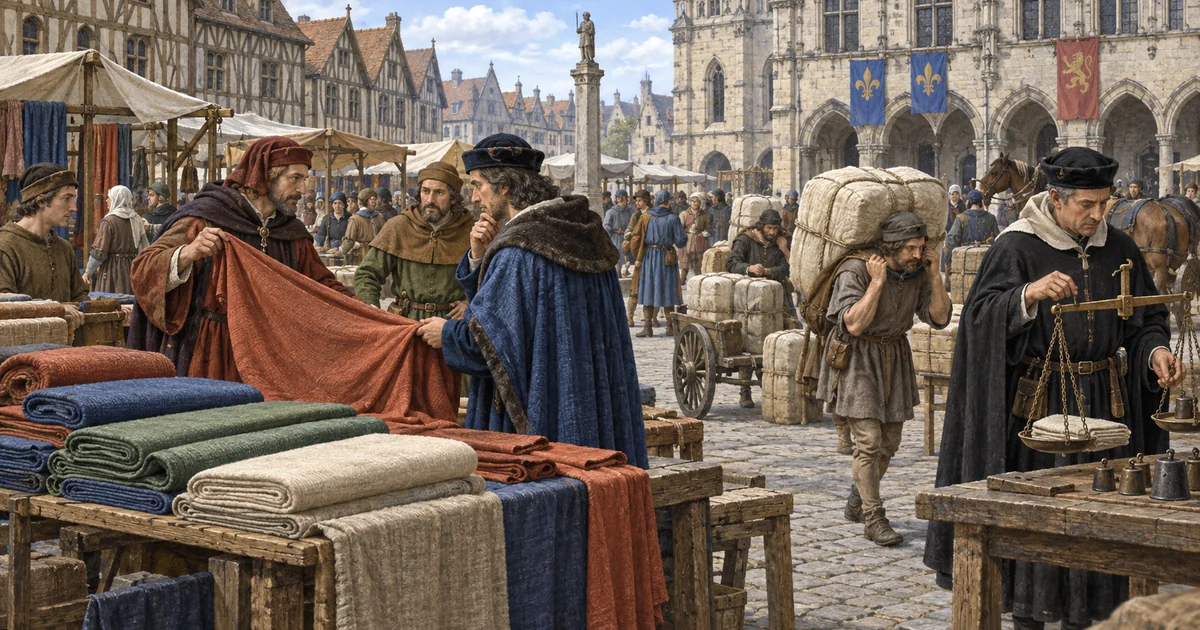
The drapery of Arras: how did cloth make the town's fortune?
The drapery of Arras, a woollen-cloth industry, made the medieval fortune of the town: wool, the trades, the fairs, the bourgeoisie and the decline of textiles.
-
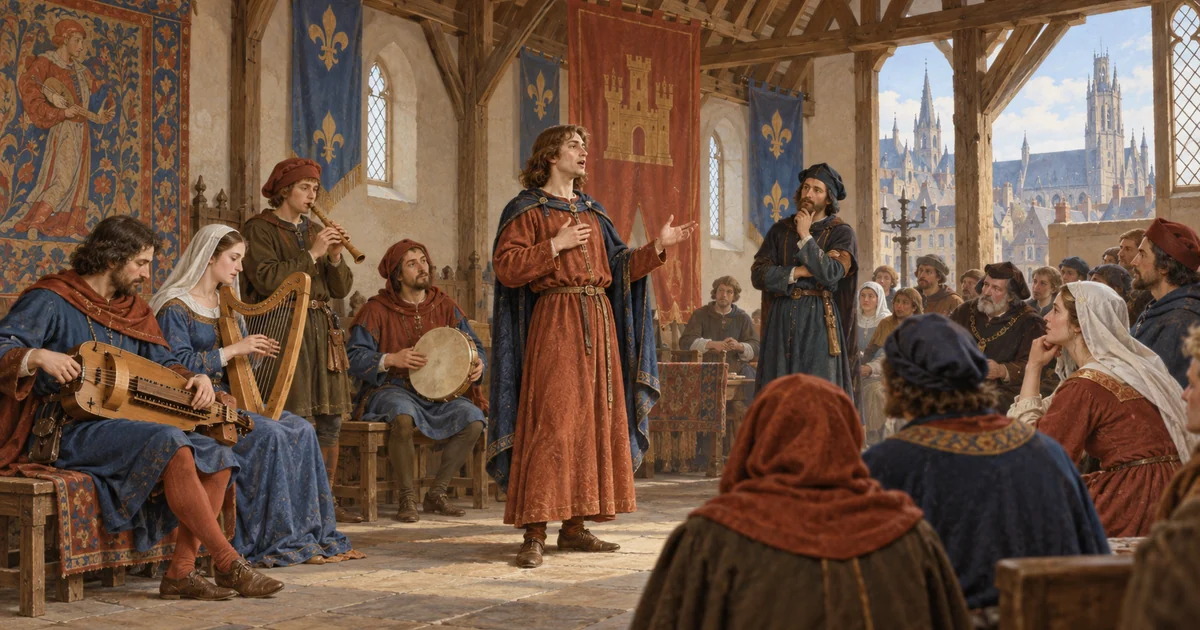
The Puy of Arras: why was the town the capital of the trouveres?
In the 13th century, the Puy of Arras and its confraternity of jongleurs and burghers made the town the capital of the trouveres: poetry contests, great names and patronage.
-
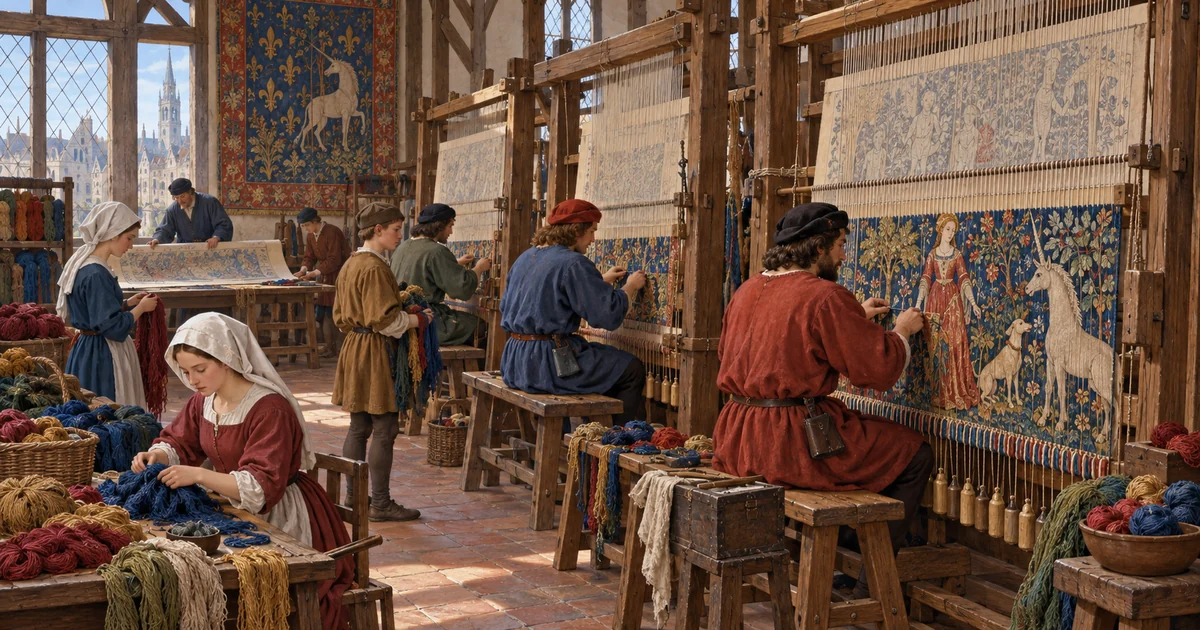
The tapestries of Arras: why did 'arras' mean the hanging?
In the 14th-15th centuries, the tapestries of Arras were so famous that the word arras meant the hanging in Europe: peak, princely courts, workshops and decline.
-
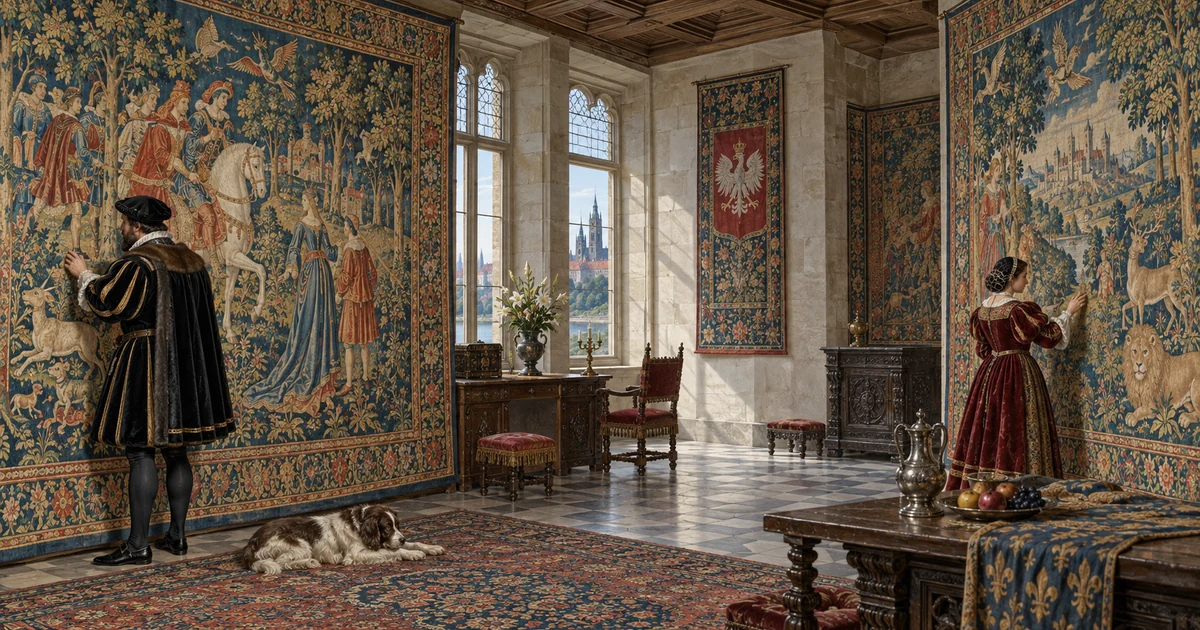
The arras of Wawel: why do the tapestries of Krakow bear the name of Arras?
At Wawel castle in Krakow, the royal tapestries are called arrasy, from the name of Arras: the treasure of Sigismund Augustus, the Flemish workshops and the legacy of a name.
-
The communal charter of 1163: how did Arras win its autonomy?
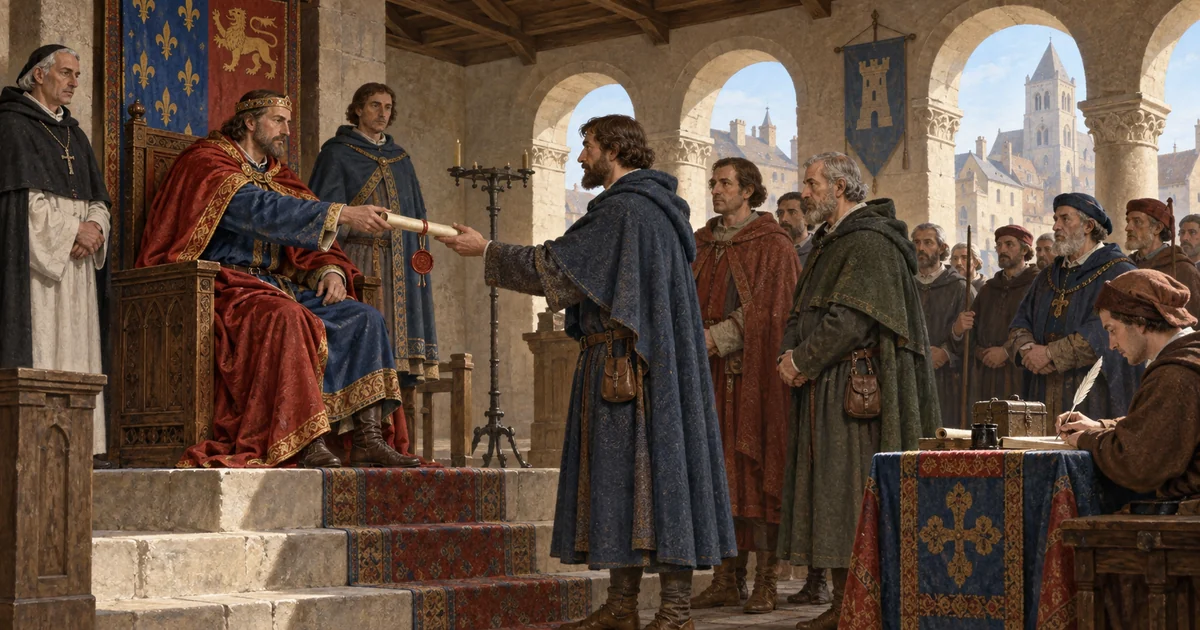
Around 1163, the communal charter recognised the liberties of Arras: the Flemish communal movement, the aldermen, the belfry and the power of the bourgeoisie.
-
The Synod of Arras of 1025: how did the Church judge heresy?
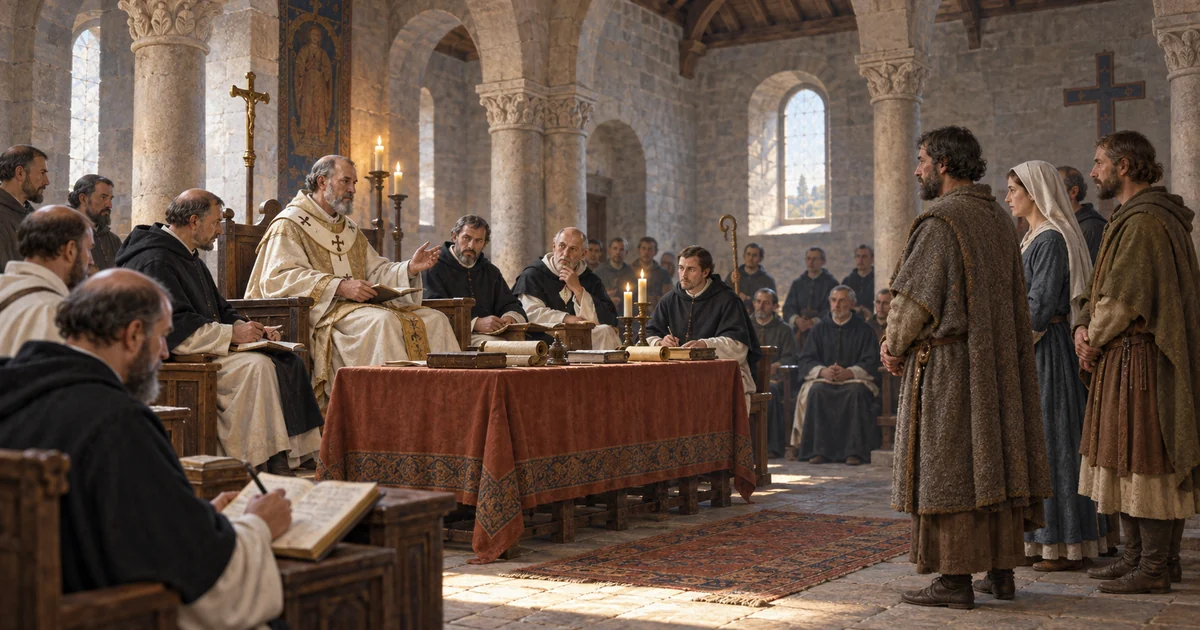
In 1025, the Synod of Arras judged a group of heretics: Gerard of Cambrai, the Acts of the synod and one of the earliest documents on medieval dissent.
-
The miracle of the Holy Candle: what was the burning sickness?
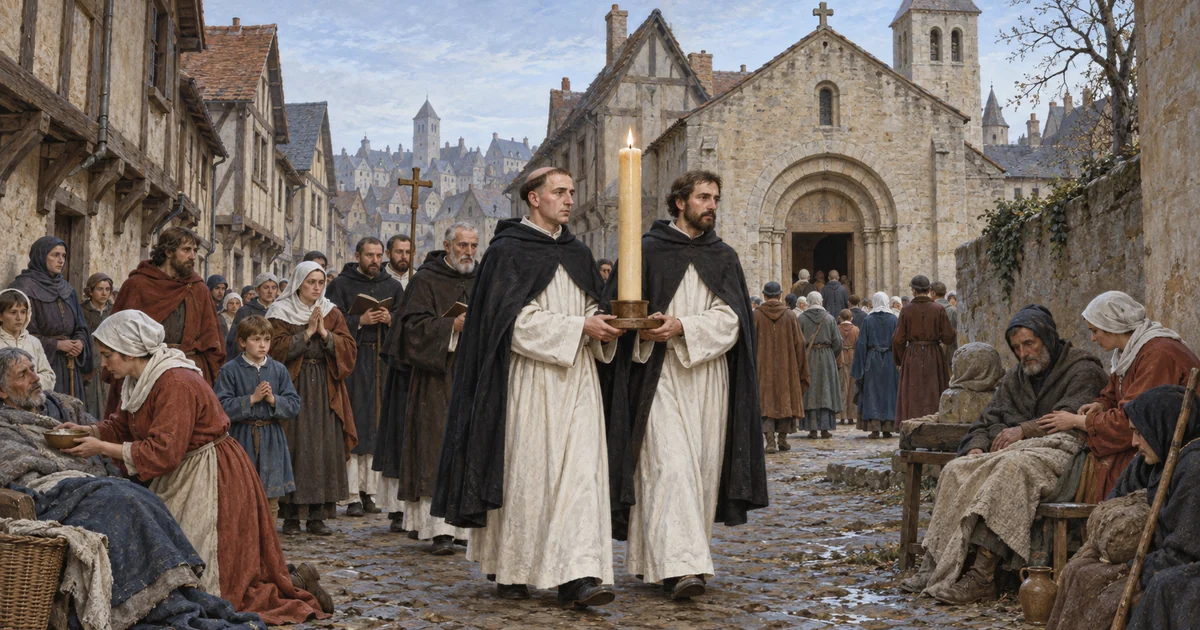
In 1105, the burning sickness struck Arras: the account of the miracle of the Holy Candle, the reality of ergotism and the confraternity of Our Lady of the Ardents.
-
The counts of Flanders: how did Arras become a Flemish castellany?
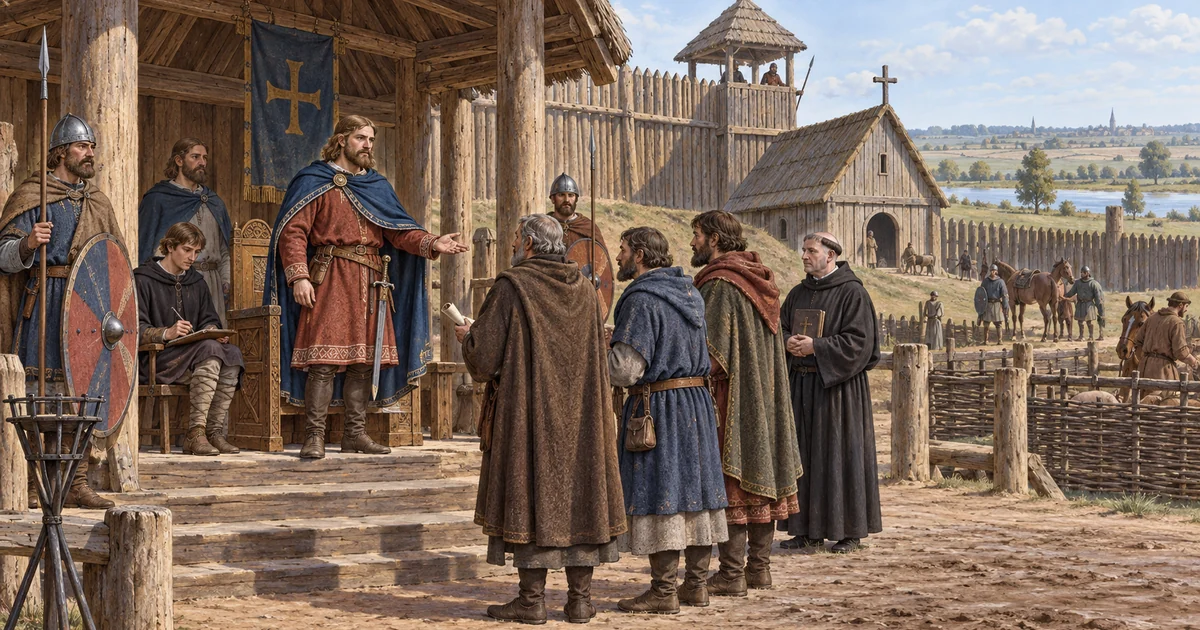
From the Treaty of Verdun to the Norse invasions: how Arras became for three centuries a castellany of the counts of Flanders, between City and abbey.
-
Attila and the invasions: how did Nemetacum, ancient Arras, end?
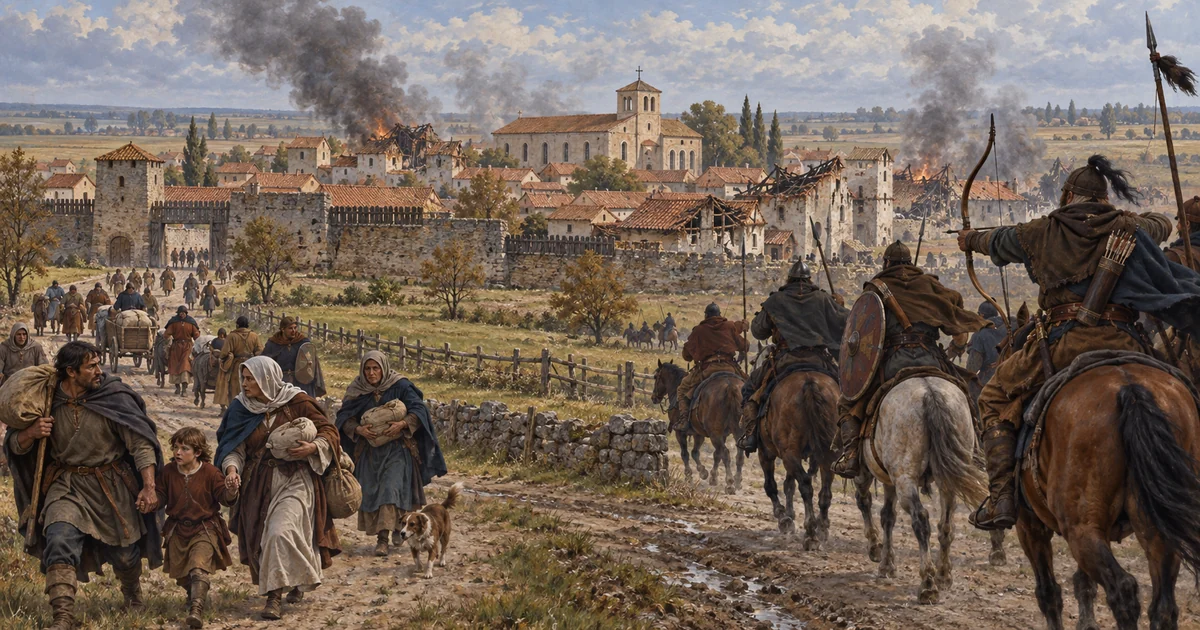
The great 5th-century invasions, the destruction of Nemetacum, the arrival of the Franks and Attila's passage: the end of the ancient city of Arras.
-
Saint Vaast, first bishop of Arras: what does the bear legend say?
Saint Vaast, first bishop of Arras around 500: the re-evangelisation of a ruined town, the legend of the bear and the origin of the first name Gaston.
-
The Beaurains hoard, what Gallo-Roman gold was found near Arras?
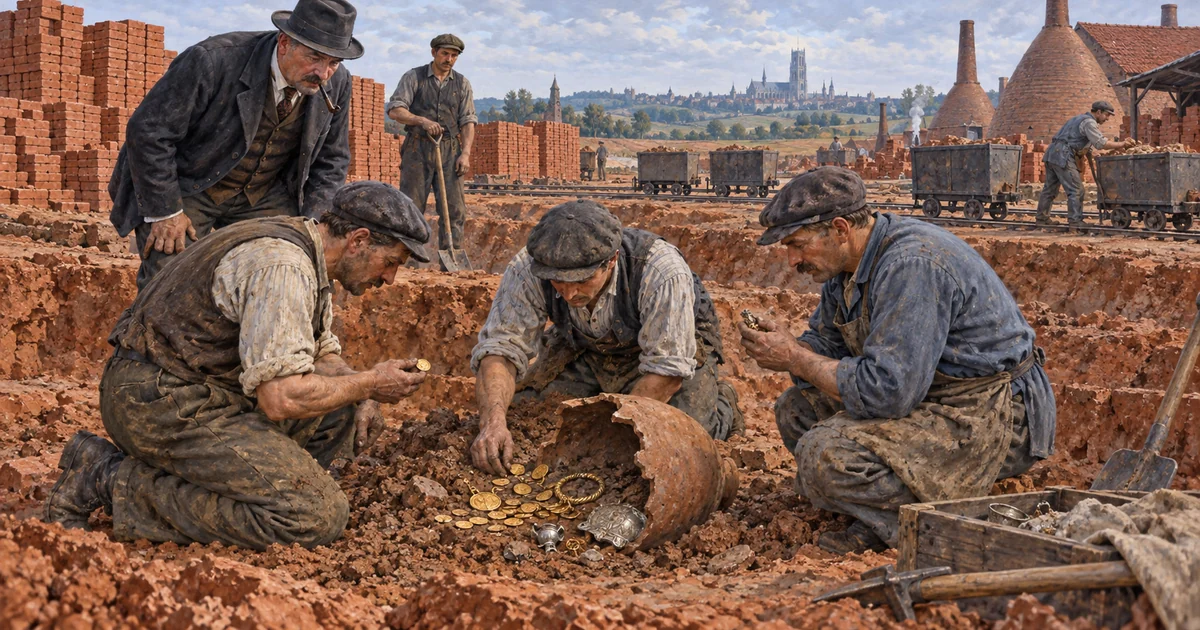
The Beaurains hoard, found near Arras in 1922: gold coins, imperial medallions and the Arras Medallion, the oldest image of London.
-
Who were the Atrebates, the Celtic people of the Artois?
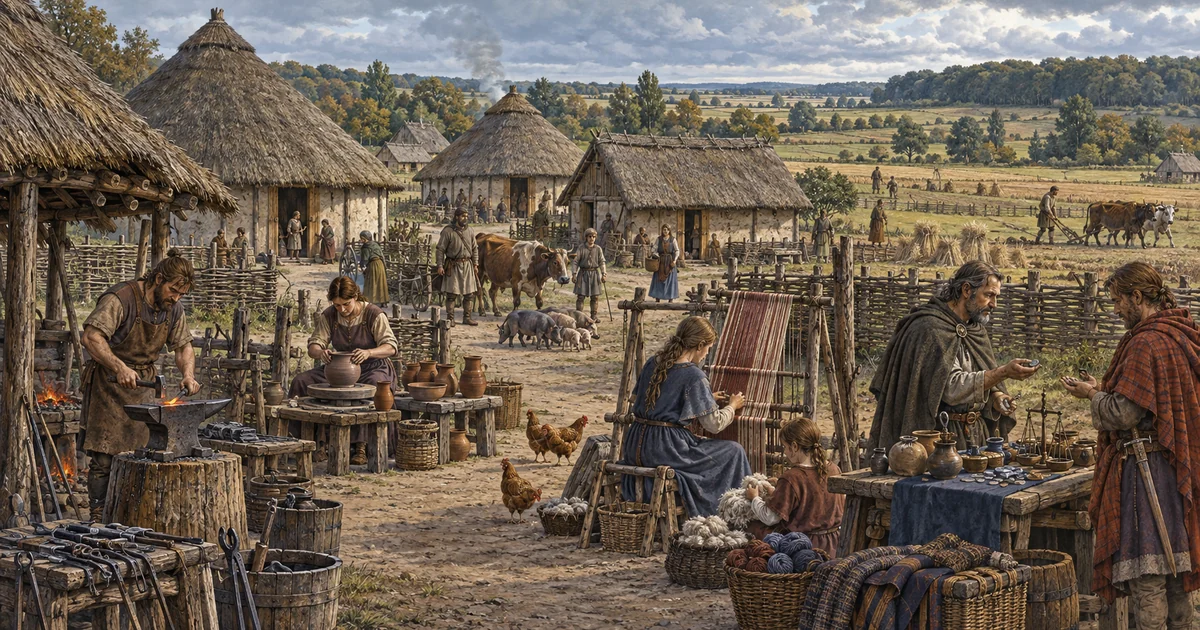
The Atrebates, the Celtic people who gave the Artois its name: society, economy, coinage, druids and cross-Channel links, at the roots of Arras.