
The coat of arms of Arras: what do the lion, the Artois escutcheon and the rats mean?
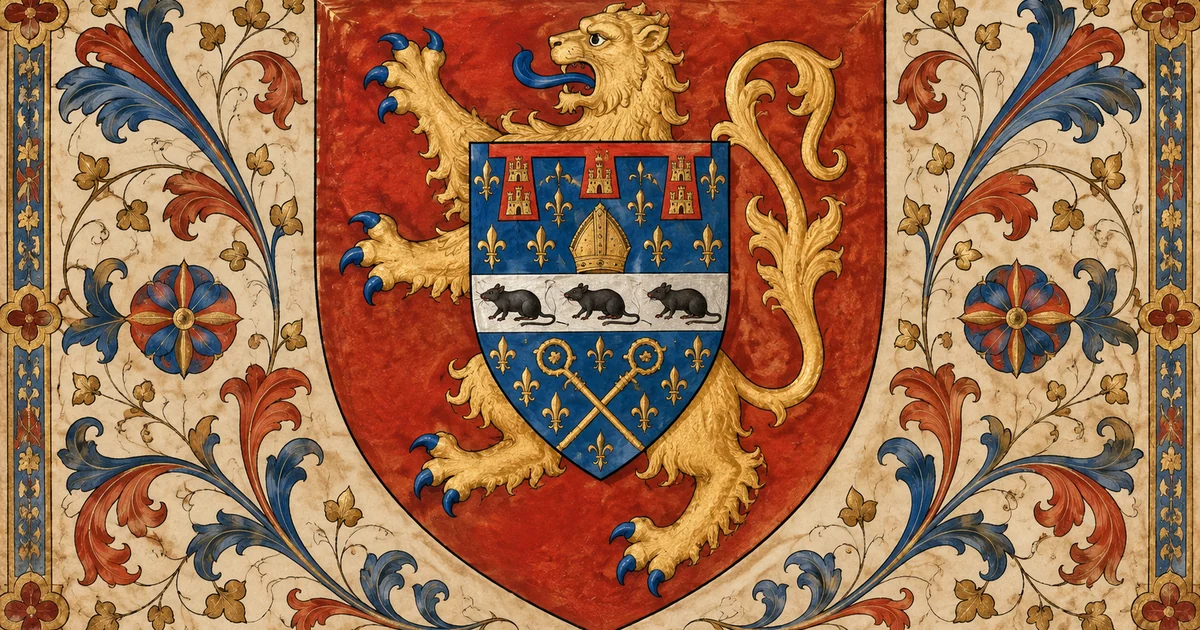
The coat of arms of Arras gathers several symbols charged with history: a golden lion, the escutcheon of the counts of Artois and, in tradition, the famous rats that made the reputation of the town. Between official heraldry and folklore, between the lion that dominates the belfry and the rebus that plays on the name of the city, the arms of Arras tell a rich and sometimes amusing story. A look back at the coat of arms of Arras, its symbols and the legends that surround it, from the lion to the rats by way of the rebus of the name.
The coat of arms of a city
Like most ancient towns, Arras possesses a coat of arms, a set of heraldic symbols that represent the city. The arms of a town are not simple ornaments: they condense its history, its identity and its belonging. Since the Middle Ages, towns, like noble families, adopted arms to represent themselves and to assert their identity. The coat of arms of Arras belongs to this heraldic tradition, bearing the symbols associated with the town and its history. To understand a coat of arms is to read the symbols that compose it, each bearing a meaning. The colours, the figures, the heraldic charges tell a story, that of the town and its attachments. The coat of arms of Arras, with its different elements, thus testifies to the history of the city, its belonging to the Artois and the symbols that are its own. Heraldry, the science of coats of arms, obeys precise rules, with its vocabulary and its conventions. The coat of arms of Arras respects these rules, while bearing the particular symbols of the town. To discover the coat of arms of Arras is therefore to discover a part of the identity and history of the city, condensed in its arms. To understand what a coat of arms is allows one to grasp the meaning of the arms of Arras. A set of heraldic symbols representing the town, the coat of arms condenses its history and its identity. The arms of Arras, with their different elements, testify to the history of the city and the symbols associated with it. To discover this coat of arms is to explore a part of the identity of Arras, inscribed in heraldry and charged with history, between official symbols and popular traditions that make the richness and originality of the arms of the town.
The golden lion
The principal element of the modern coat of arms of Arras is the golden lion. The official arms of the town are blazoned, in the heraldic language, as a golden lion on a field of gules, that is to say a golden lion on a red field. The lion, a classic heraldic figure, traditionally symbolises strength, courage and power. Its presence on the coat of arms of Arras confers on the arms of the town a noble and proud dimension. The golden lion on a red field thus constitutes the central and most visible element of the coat of arms of Arras. This figure of the lion, majestic, represents the town and asserts its identity. The choice of the lion, an emblematic animal associated with power and royalty, is not trivial: it inscribes Arras in the heraldic tradition of the great cities. The golden lion of the coat of arms is also to be compared with the lion that, in another form, dominates the belfry of the town, making this animal a recurrent symbol of the identity of Arras. The golden lion thus constitutes the heart of the modern coat of arms of Arras, its principal figure and its strongest symbol. To understand the place of the golden lion allows one to grasp the modern coat of arms of Arras. The principal figure of the arms, the golden lion on a red field symbolises strength and asserts the identity of the town. This classic heraldic figure, noble and proud, constitutes the heart of the coat of arms of Arras. The lion, found also at the summit of the belfry, is thus one of the strongest symbols of the identity of Arras, present on its coat of arms as on its most emblematic monument, in a recurrence that underlines its importance for the town.
The escutcheon of Artois
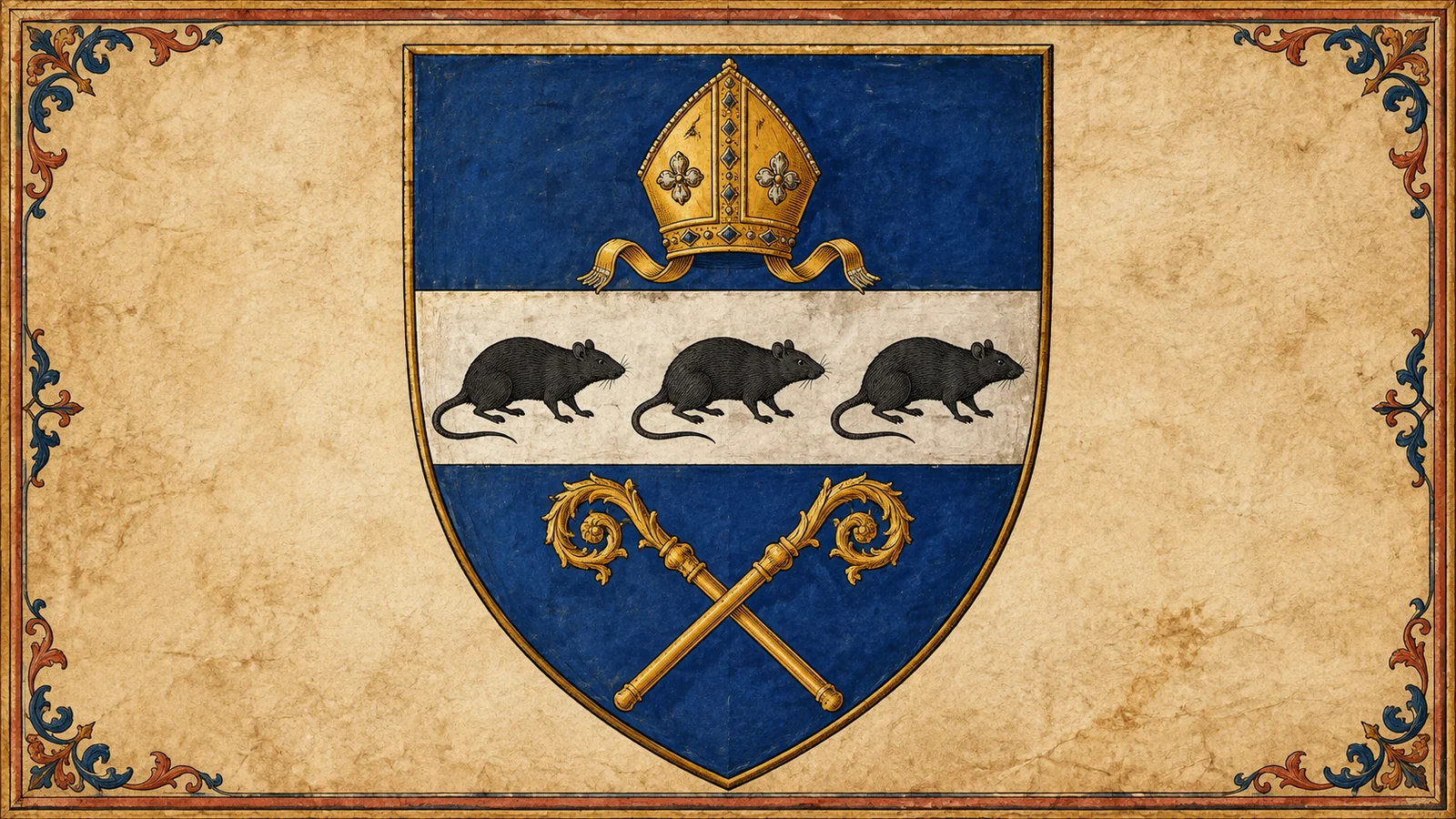
The coat of arms of Arras also bears, at its heart, an escutcheon that recalls the belonging of the town to the Artois. This escutcheon, charged with golden fleurs-de-lis on an azure field with a lambel, corresponds to the arms of the counts of Artois. The fleurs-de-lis, symbol of French royalty, associated with the lambel, a heraldic piece in the form of a bar with pendants, formed the arms of the house of Artois, born of the royal family of France. The presence of this escutcheon on the coat of arms of Arras recalls the history of the town and its place within the Artois, of which it was the capital. It testifies to the belonging of the city to this province and to the lineage of the counts who governed it, as the history of the counts of Artois recalls. This escutcheon thus inscribes the coat of arms of Arras in the history of the Artois and its counts. It adds to the arms of the town a historical dimension, recalling its belonging to this province and its past. The presence of the fleurs-de-lis, a royal symbol, also testifies to the links of the Artois with French royalty, the house of Artois being born of the royal family. The escutcheon of Artois, at the heart of the coat of arms, thus condenses a part of the history of the town and its province. To understand the presence of the escutcheon of Artois allows one to grasp the historical dimension of the coat of arms. Charged with the arms of the counts of Artois, fleurs-de-lis and lambel, it recalls the belonging of Arras to this province of which it was the capital. This escutcheon inscribes the coat of arms in the history of the Artois and its counts, adding to the arms a historical depth. It testifies to the past of the town and its links with the province and royalty, making the coat of arms of Arras a condensation of the history of the city and the Artois.
The rats of Arras
The most curious and most famous symbol associated with Arras is doubtless that of the rats. In tradition, the rats are attached to the town, to the point of having become one of its popular emblems. This association finds its origin in ancient heraldry and in a play on words on the name of the town. The historian d'Hozier, at the end of the seventeenth century, had thus proposed for Arras arms comprising three rats. If this coat of arms with rats does not correspond to the current official arms, dominated by the lion, it testifies to the antiquity of the association between Arras and the rats. This association, between heraldry and folklore, makes the rats a popular symbol of the town, often evoked with humour. The rats of Arras have thus become a curiosity, a folkloric emblem attached to the city. Far from being pejorative, this association is today claimed with a touch of humour, as an original trait of the identity of Arras. The rats are part of the symbolic heritage of the town, alongside the lion and the escutcheon of Artois. This presence of the rats, between heraldic history and popular tradition, adds to the coat of arms of Arras an original and amusing dimension. To understand the association between Arras and the rats allows one to grasp this original aspect of the identity of the town. Attached to the city in tradition, the rats find their origin in ancient heraldry, with the coat of arms proposed by d'Hozier, and in a play on words on the name of the town. Become a popular emblem, claimed with humour, the rats are part of the symbolic heritage of Arras, alongside the lion. This curiosity, between history and folklore, makes the rats one of the most original and most famous symbols of the town.
| Symbol | Meaning |
|---|---|
| The golden lion | Principal figure of the arms, on a red field |
| The escutcheon of Artois | Fleurs-de-lis and lambel, arms of the counts |
| The rats | Popular emblem, rebus on the name Arras |
| The lion of the belfry | The lion at the summit of the emblematic monument |
The rebus of the name
The association of the rats with Arras is explained, according to tradition, by a rebus playing on the name of the town. A rebus is a game that consists in representing words or sounds by images. In the case of Arras, tradition relates that the name of the town could be evoked by the image of a rat followed by another element, playing on the sonorities of the name. This type of visual play on words was prized in former times, and many towns had rebuses on their name. For Arras, the rebus of the rat would thus be at the origin of the association between the town and this animal. This play on the name, between the sonorities and the image, illustrates the ancient taste for rebuses and plays on words. One must take this explanation as a tradition, a popular game attached to the name of the town, rather than as a historical certainty. The rebus of the rat, whether it is at the origin of the association or accompanied it, is part of the folklore of Arras. It illustrates the way in which the name of a town could give rise to games and symbols. This rebus, amusing and original, adds to the charm of the symbols of Arras. To understand the rebus of the name allows one to grasp the traditional origin of the association between Arras and the rats. A visual play on words on the name of the town, the rebus of the rat would be at the origin of this popular emblem, in tradition. This play on the sonorities and the image, prized in former times, illustrates the taste for rebuses. Attached to the folklore of Arras, the rebus of the rat, which must be taken as a tradition, adds to the charm and originality of the symbols of the town, explaining in an amusing way the association between Arras and the rats.
The lion, from the coat of arms to the belfry
The lion, figure of the coat of arms, is found also at the summit of the belfry of Arras, which makes it a recurrent symbol of the town. The belfry, an emblematic monument of the city, is indeed surmounted by a lion, a figure that dominates the town. This presence of the lion, both on the coat of arms and on the belfry, underlines the importance of this animal as a symbol of Arras. The lion, associated with strength and pride, represents the town both in its arms and on its most famous monument. This recurrence is not fortuitous: it testifies to the attachment of the town to this symbol. The lion of the belfry, like that of the coat of arms, embodies the identity of Arras. One can moreover admire this lion by discovering the belfry and the town hall, where it dominates the city from the top of the monument. The presence of the lion, from the coat of arms to the belfry, makes this animal one of the strongest and most visible symbols of Arras. It links the arms of the town to its emblematic monument, in a symbolic coherence that underlines the identity of Arras. The lion is thus omnipresent, on the coat of arms as on the belfry, asserting the pride and identity of the city. To understand the presence of the lion, from the coat of arms to the belfry, allows one to grasp the coherence of the symbols of Arras. A figure of the arms, the lion is found at the summit of the belfry, an emblematic monument, which makes it a recurrent symbol of the town. This presence, both on the coat of arms and on the belfry, underlines the importance of the lion as a symbol of Arras. Linking the arms to the most famous monument, the lion embodies the identity of Arras, present everywhere as the strongest and most visible symbol of the city.
The decorations of the town
Beyond its heraldic symbols, the coat of arms of Arras also bears decorations, testimonies of the ordeals crossed by the town. Arras was indeed awarded the Legion of Honour, in recognition of the sufferings endured during the First World War, when the town was largely destroyed. This distinction, granted to the martyr town, honours the sacrifice and resistance of the people of Arras during the conflict. Arras also bears the Croix de guerre, another military distinction linked to the wars of the twentieth century. These decorations, associated with the coat of arms, recall the ordeals suffered by the town and the recognition that was granted to it. They testify to the martyrdom of Arras during the wars, notably the First World War, as the history of Arras under the shells recalls. These distinctions, which adorn the coat of arms, honour the town for its sacrifice and its resistance. They add to the arms a memorial dimension, recalling the ordeals of the twentieth century. The decorations of Arras thus testify to its recent history, marked by the wars and the sufferings, but also by the recognition and the honour. To understand the decorations of the town allows one to grasp this dimension of the coat of arms. The Legion of Honour and the Croix de guerre, associated with the arms, honour Arras for the ordeals endured during the wars, notably the First World War. These distinctions recall the martyrdom and resistance of the town, adding to the coat of arms a memorial dimension. They testify to the recent history of Arras, a martyr town honoured for its sacrifice, whose decorations, adorning the coat of arms, perpetuate the memory of the ordeals and the recognition granted to the city.
A coat of arms charged with history
The coat of arms of Arras is thus a veritable condensation of the history of the town. The golden lion, a figure of strength and pride, the escutcheon of the counts of Artois, recalling the belonging to the province, the rats of tradition, a popular emblem linked to the rebus of the name, and the decorations honouring the ordeals of the wars: each element tells a part of the history of Arras. To read the coat of arms is to travel through the history of the town, from its belonging to the Artois to its martyrdom during the wars, by way of the traditions and the folklore. This symbolic richness makes the coat of arms of Arras much more than a simple emblem: a veritable summary of the identity and history of the city. The arms thus condense, in their symbols, the past and the identity of Arras. They testify to the richness of the history of the town, between official heraldry and popular traditions. The coat of arms of Arras, with its different elements, offers a symbolic reading of the history of the city, accessible to whoever knows how to decipher its symbols. This dimension makes the coat of arms a heritage in its own right, a witness of the identity of Arras. To understand the coat of arms as a condensation of history allows one to appreciate all its richness. The lion, the escutcheon of Artois, the rats and the decorations tell, each, a part of the history of Arras, from its belonging to the Artois to its war ordeals. This symbolic richness makes the coat of arms a veritable summary of the identity and history of the town. A heritage in its own right, the coat of arms of Arras condenses the past of the city in its symbols, offering, to whoever knows how to read them, a plunge into the history and identity of a town rich in its past, between the lion, the Artois and the famous rats.