
Bavay and Bagacum: discovering the ancient Gallo-Roman forum near Arras
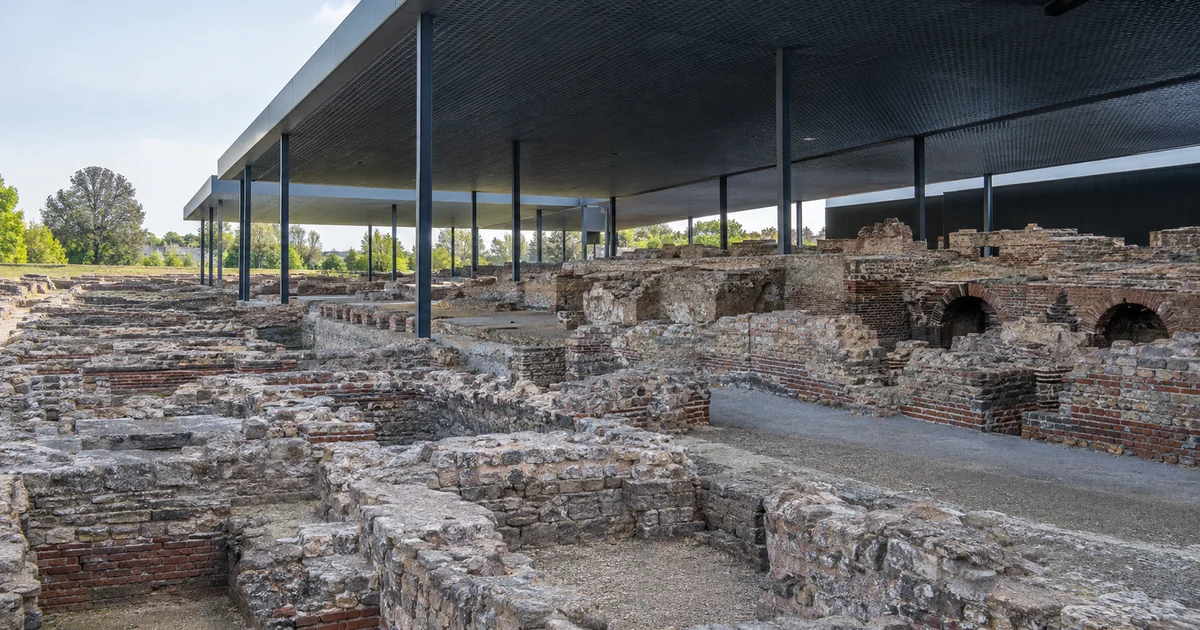
In the heart of the Avesnois, in the Nord, the small town of Bavay shelters an exceptional archaeological treasure: the vestiges of ancient Bagacum, the capital of the Nervii in the Gallo-Roman era. Its forum, one of the vastest of the Roman world, its cryptoportico and its archaeological museum make it a major site for whoever is interested in Antiquity. A former crossroads of Roman roads, Bavay testifies to the grandeur of a vanished town. Let us set off to discover this remarkable ancient site, to be explored from Arras.
Bavay, ancient Bagacum
Bavay, today a small town of the department of the Nord, was in Antiquity an important Gallo-Roman town, known under the name of Bagacum. This town was the capital of the town of the Nervii, a Gallic people of the region, which made it a political and administrative centre of the first rank. Under Roman domination, Bagacum developed and adorned itself with monuments testifying to its wealth and its status. The ancient town, prosperous during the first centuries of our era, then knew the decline that struck the Roman Empire, before sinking largely into oblivion. It is only through archaeological excavations that the grandeur of Bagacum was rediscovered, revealing the extent of the ancient town. Today, Bavay retains the vestiges of this prestigious past, which make its renown and its heritage interest. The town, human-sized, thus offers a striking contrast between its current modesty and its past grandeur. To discover Bavay is to go back in time to the Gallo-Roman era, to meet a vanished town. To understand the past of Bagacum allows one to grasp the importance of the archaeological site. Bavay, ancient Bagacum, thus constitutes a precious testimony of the Roman presence in the North of France. This site, charged with history, invites one to explore a little-known page of regional Antiquity.
The ancient forum, a Gallo-Roman jewel
The ancient forum of Bavay constitutes the heart of the archaeological site and one of its most remarkable elements. This vast monumental ensemble, which stretched over several hectares, was the centre of the public, political and religious life of the ancient town. Built between the first and the second century of our era, in several phases, it was among the most important forums of the Roman world. Its vestiges, today cleared, allow one to grasp the organisation and the extent of this heart of the town, with its squares, its porticoes and its edifices. The forum of Bavay figures among the great heritage sites of the Hauts-de-France, alongside the major cultural institutions of the region: the Louvre-Lens illustrates, in another register, the heritage and cultural richness of the Hauts-de-France, of which Bavay constitutes an ancient jewel. In the late era of Antiquity, the forum was transformed into a defensive work, testifying to the upheavals of the end of the Empire. These vestiges, exceptional by their extent and their state, make Bavay a major archaeological site. To discover the forum is to plunge into the urbanism and the life of a Gallo-Roman town. This ancient jewel, preserved and valued, constitutes the main attraction of Bavay. The ancient forum thus remains the most spectacular testimony of the grandeur of Bagacum.
The cryptoportico and the vestiges
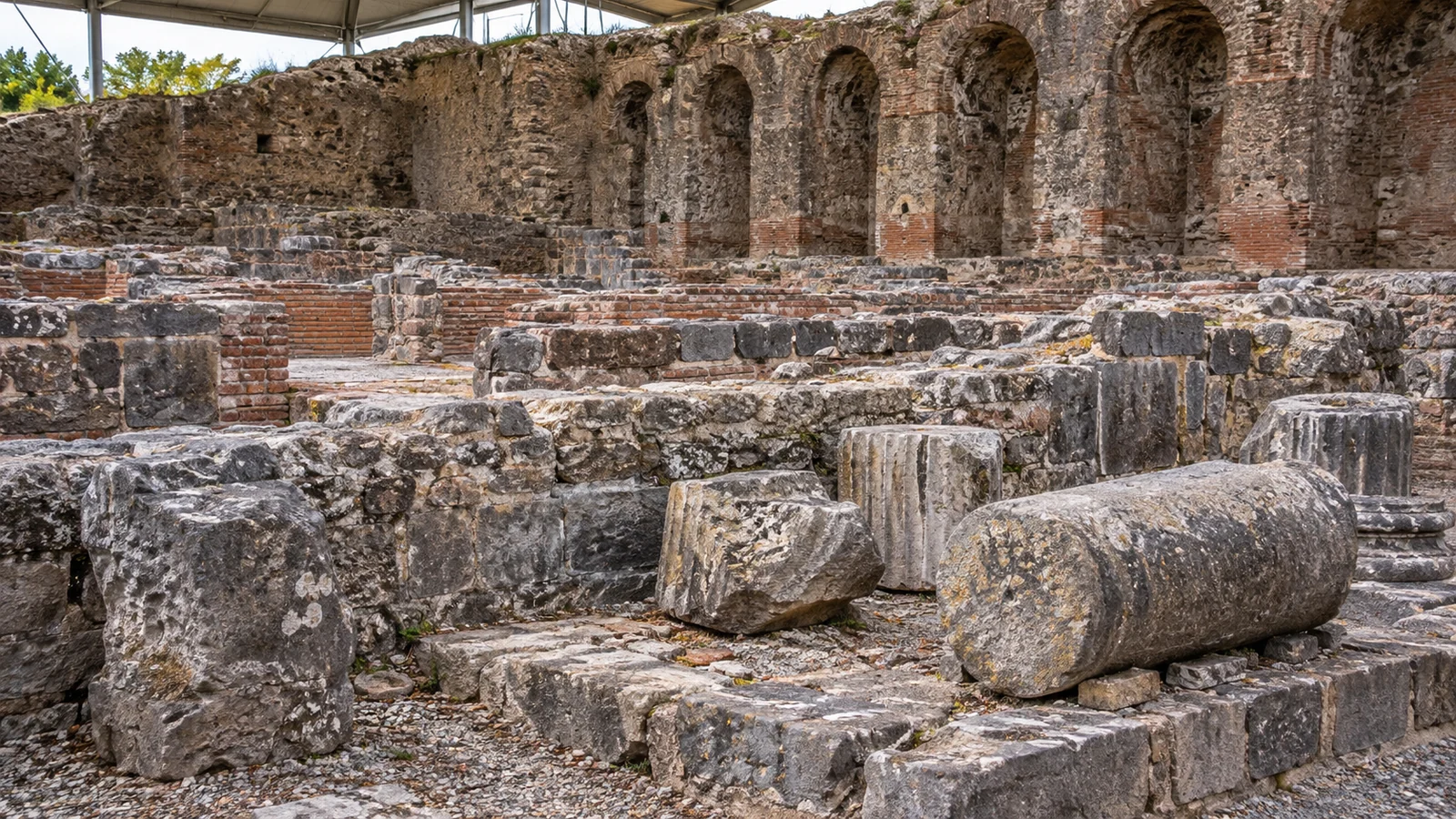
Among the vestiges of Bavay, the cryptoportico occupies a particular place, testifying to the refinement of ancient architecture. This cryptoportico, an underground gallery that supported and served the forum, was brought to light at the beginning of the twentieth century, during the archaeological excavations. This discovery, with that of other vestiges like baths, revealed the extent and the sophistication of the installations of the ancient town. The town was indeed endowed with elaborate facilities, including a water-supply system that brought water from a source located several kilometres away, illustrating the technical mastery of the Romans. To protect the cryptoportico and the vestiges from bad weather, a vast cover has been laid out on the site, allowing their conservation and their enhancement. These vestiges, underground and monumental, offer a striking plunge into ancient architecture and engineering. The cryptoportico, in particular, allows one to walk through the galleries that structured the forum, in a unique atmosphere. To discover these vestiges is to approach as closely as possible the reality of the ancient town and its facilities. These elements, preserved and accessible, considerably enrich the visit of the site. The cryptoportico and the vestiges of Bavay testify to the know-how and the grandeur of the Gallo-Roman town. These archaeological discoveries make Bavay an exceptional site, to be explored with attention.
Bavay, a crossroads of Roman roads
The grandeur of Bagacum also held to its position as a crossroads, at the intersection of several Roman roads. The ancient town was indeed an important road junction, from which departed several great axes linking Bavay to other towns of Roman Gaul. These roads, traced with the rigour characteristic of Roman engineers, made Bavay a point of convergence and an essential relay of the ancient road network. Tradition has kept the memory of these roads, often designated under the name of chaussées Brunehaut, an appellation attached to former roads of the region. This strategic position, at the crossroads of the roads, explains in part the importance and the prosperity of Bagacum during Antiquity. The network of roads allowed exchanges, commerce and travel, making the town an active and connected centre. This dimension of a road crossroads adds to the understanding of the role and the influence of the ancient town. Today, the memory of these Roman roads testifies to the organisation of the territory in the Gallo-Roman era. To understand the position of Bavay within the ancient road network allows one to grasp its importance. This role of crossroads, essential, is part of the history of Bagacum. Bavay, a point of departure of Roman roads, thus illustrates the organisation of Roman Gaul and the place of the town in this network.
| Element | To discover |
|---|---|
| Bagacum | Ancient capital of the Nervii |
| The forum | One of the vastest of the Roman world |
| The cryptoportico | Underground gallery of the forum |
| The museum | Gallo-Roman archaeological collections |
The archaeological museum
To accompany the discovery of the vestiges, Bavay has an archaeological museum, which presents the collections resulting from the excavations. This museum, whose origins go back to the beginning of the twentieth century, preserves and exhibits hundreds of ancient objects, witnesses of daily life and of the wealth of Bagacum. Ceramics, everyday objects, architectural elements and various discoveries are presented there, offering light on the ancient town and its inhabitants. The museum, renovated and enriched over time, offers a modern museography, which enhances the collections and tells the history of the site. The visit of the museum ideally completes that of the vestiges, by offering the context and the keys to understanding the ancient town. The exhibited objects bring the past to life, allowing one to imagine life at Bagacum during Antiquity. The museum thus constitutes an essential element of the discovery of the site, between vestiges and collections. It allows visitors, young and old, to be introduced to archaeology and Gallo-Roman history. To discover the museum is to deepen one's knowledge of Bagacum and its era. These collections, preciously preserved, testify to the richness of the ancient heritage of Bavay. The archaeological museum of Bavay thus remains a not-to-be-missed place to understand and appreciate the site.
Bavay and the Avesnois
Bavay is part of the territory of the Avesnois, a region of the south of the department of the Nord, rich in nature and heritage. This green region, made of groves, forests and rivers, offers a pleasant setting that completes the discovery of the ancient site. The Avesnois, with its preserved landscapes and its villages of character, constitutes a destination of charm, to be explored beyond Bavay. The territory also has other towns and sites of interest, which allow one to prolong the visit in the region. Not far away, other towns of the Nord offer a rich heritage to discover: Cambrai, a town of art and history, constitutes another possible stage for whoever explores this part of the region. To combine the discovery of Bavay and the Avesnois allows one to appreciate the diversity of the heritage and the landscapes of the Nord. The region, between ancient history and nature, offers multiple possibilities of exploration. Bavay, with its archaeological site, constitutes an ideal point of entry to discover the Avesnois and its riches. This territorial dimension adds to the interest of a visit to Bavay. To explore the Avesnois is to open oneself to an authentic territory, between heritage and countryside. Bavay and the Avesnois thus offer a complete escapade, mixing ancient history and the discovery of nature.
Living Roman history at Bavay
Bavay does not content itself with preserving vestiges: the site offers to live and to bring back to life Roman history. Throughout the year, events, visits and activities allow one to discover life in the Gallo-Roman era in a living and playful way. Historical reconstructions, workshops and events bring Antiquity back to life, plunging visitors into the daily life of Bagacum. These activities, suited to all publics, make history accessible and attractive, notably for families and children. They allow one to understand, in a concrete and immersive way, the life of the inhabitants of the ancient town. The site, dynamic, thus offers a discovery that goes beyond the simple visit of the vestiges. These events make Bavay a living place, where the ancient past comes back to life for the duration of an activity. To take part in these events, or to attend a reconstruction, offers a memorable and enriching experience. To live Roman history at Bavay is to grasp Antiquity differently, with pleasure and curiosity. This living approach to heritage appeals to visitors and enhances the site. To inquire about the programming allows one to make the most of these activities. Bavay thus offers a discovery of Roman history at once instructive and entertaining.
Discovering Bavay from Arras
Bavay constitutes an original escapade from Arras, for lovers of history and archaeology. Located in the east of the department of the Nord, the site is accessible for a day of discovery, to meet Gallo-Roman Antiquity. Arras, by its position in the Hauts-de-France, constitutes a starting point to explore the treasures of the region, down to the most ancient: Arras between metropolises and European borders illustrates this situation, which puts many destinations within reach of a visit. An excursion to Bavay allows one to complete the discovery of Arras with that of an exceptional ancient site, unique in the region. The forum, the museum and the activities offer a fascinating plunge into Roman history, different from the usual discoveries. From Arras, the excursion demands a little road, but rewards the visitor with the richness and the originality of the site. To explore the Hauts-de-France from Arras is to go back in time, from Gallo-Roman Antiquity to more recent eras. Bavay, with its forum and its ancient past, figures among the destinations that stand out by their singularity. This escapade, to meet Bagacum, ideally prolongs the discovery of the regional heritage. To set off to discover Bavay from Arras is thus an invitation to explore the ancient roots of the North of France.