
Saint-Omer and the Audomarois marsh: an escapade near Arras
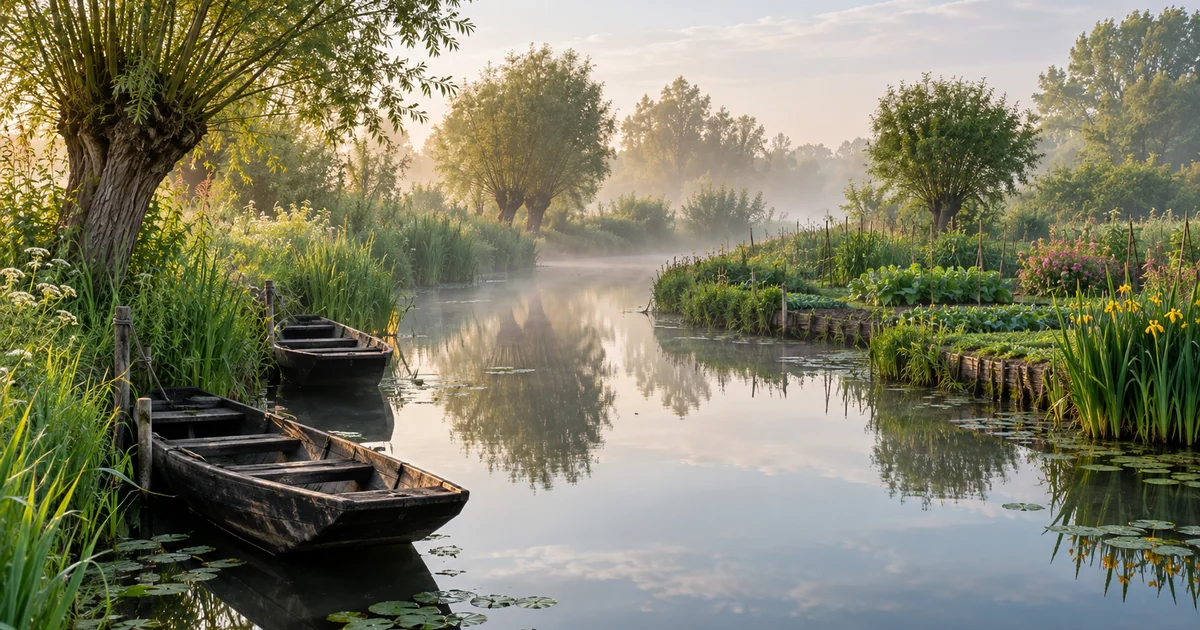
About fifty kilometres from Arras, Saint-Omer unfolds a remarkable heritage, between ancient stones and water landscapes. A town of art and history, it possesses an imposing Gothic cathedral, the romantic ruins of an abbey, a library with priceless treasures and, at its gates, one of the most singular landscapes of the region: the Audomarois marsh. A former stronghold and religious centre, Saint-Omer offers a rich and varied escapade, to be discovered from Arras. Let us go to meet this town and its marsh, between heritage, nature and memory.
Saint-Omer, a town of art and water
Saint-Omer, a sub-prefecture of the Pas-de-Calais, is a town of art and history with a rich heritage, marked by the presence of water. Founded around an abbey in the early Middle Ages, the town owes its name to Saint Omer, a bishop who evangelised the region. Over the centuries, Saint-Omer became an important religious centre and a stronghold, which explains the richness of its monumental heritage. The town also distinguishes itself by its environment, dominated by the Audomarois marsh, a vast wetland that stretches at its gates. This duality, between built heritage and water landscapes, makes all the originality of Saint-Omer. The town, located on the edges of the Pas-de-Calais, near the hinterland of the Opal Coast, is part of a territory of nature and discovery: to explore this coastline and its surroundings, discover the Opal Coast presents the places and landscapes of this remarkable region. Saint-Omer, with its heritage and its marsh, offers a complete destination, combining culture and nature. The town lends itself to strolling, between monuments, gardens and waterside. To discover Saint-Omer is to plunge into the history of a religious and military town, while opening oneself to a unique landscape. This town of art and water, close to Arras, is worth the detour for the diversity of its riches.
The cathedral of Notre-Dame
The cathedral of Notre-Dame of Saint-Omer is one of the jewels of the town's heritage, a masterpiece of Gothic art. Built between the end of the twelfth century and the sixteenth century, it testifies to the religious importance of Saint-Omer, a former episcopal seat. Its Gothic architecture, its imposing proportions and its ornamental richness make it one of the most beautiful religious edifices of the region. Inside, the cathedral conceals many treasures, including an astronomical clock dating back to the sixteenth century and a monumental great organ, remarkable for its extent. These elements, among many others, make the visit of the cathedral a highlight of the discovery of Saint-Omer. The edifice, charged with history and art, invites contemplation and admiration, between Gothic vaults, works of art and ancient furnishings. The cathedral testifies to the prestigious religious past of the town, which was an important centre of ecclesiastical life. Its conservation and its richness make it a not-to-be-missed monument, the heart of the heritage of Saint-Omer. To visit the cathedral is to admire a Gothic masterpiece and to understand the historical importance of the town. Its treasures, from the clock to the organ, add to the interest of the discovery. The cathedral of Notre-Dame of Saint-Omer thus remains one of the major monuments of the town and the region.
Saint-Bertin abbey and the heritage
Among the treasures of Saint-Omer figure the ruins of Saint-Bertin abbey, romantic vestiges of a powerful monastery. Founded in the seventh century, this abbey played a major role in the religious and cultural history of the region, before being largely destroyed over the eras. Today, its ruins, standing in a landscaped setting, offer a moving testimony of its past grandeur and a prized place of walking. These vestiges, at once historical and picturesque, recall the importance of Saint-Omer as a monastic centre. Beyond the abbey, the town retains a rich heritage, with its monuments, its ancient houses and its squares. The public garden, laid out on former ramparts, offers a vast space of greenery, with its gardens, its arboretum and its perspectives, inviting relaxation. This varied heritage, between religious edifices, vestiges and green spaces, makes the richness of Saint-Omer. To stroll in the town allows one to discover these different elements, witnesses of its history. Saint-Bertin abbey, with its evocative ruins, constitutes one of the most striking places of this discovery. The heritage of Saint-Omer, rich and diverse, invites an attentive visit. To discover the abbey and the other treasures of the town is to grasp the depth of its history. This heritage, between stones and gardens, makes Saint-Omer a town of certain charm.
| Site | To discover |
|---|---|
| Notre-Dame cathedral | A Gothic masterpiece and its treasures |
| Saint-Bertin abbey | Romantic ruins of a monastery |
| The library | Gutenberg Bible and incunabula |
| The Audomarois marsh | Wetland and traditional boats |
The library and its treasures
Saint-Omer shelters an exceptional library, whose collections are among the most precious in France. Heir notably to the holdings of Saint-Bertin abbey and former establishments, it preserves a written heritage of remarkable richness. Among its treasures figures a volume of the famous Gutenberg Bible, one of the first printed works, of which only a small number of copies survive in the world. The library also possesses an important collection of incunabula, these books printed at the very beginnings of printing, as well as many manuscripts. It moreover revealed, a few years ago, the presence of a precious collection of the works of Shakespeare among its collections, a discovery that caused a sensation. These treasures make the library of Saint-Omer an exceptional place, prized by lovers of ancient books and researchers. The richness of these collections testifies to the intellectual and religious past of the town, as well as to the importance of the conservation of written heritage. To discover the library and its treasures offers a fascinating plunge into the history of the book and knowledge. These collections, preserved and valued, constitute a heritage of inestimable value. The library of Saint-Omer, by its treasures, adds a unique dimension to the discovery of the town. To visit this place is to approach rare works, witnesses of the history of the written word. The library, with its Gutenberg Bible and its incunabula, is thus one of the little-known jewels of Saint-Omer.
The Audomarois marsh
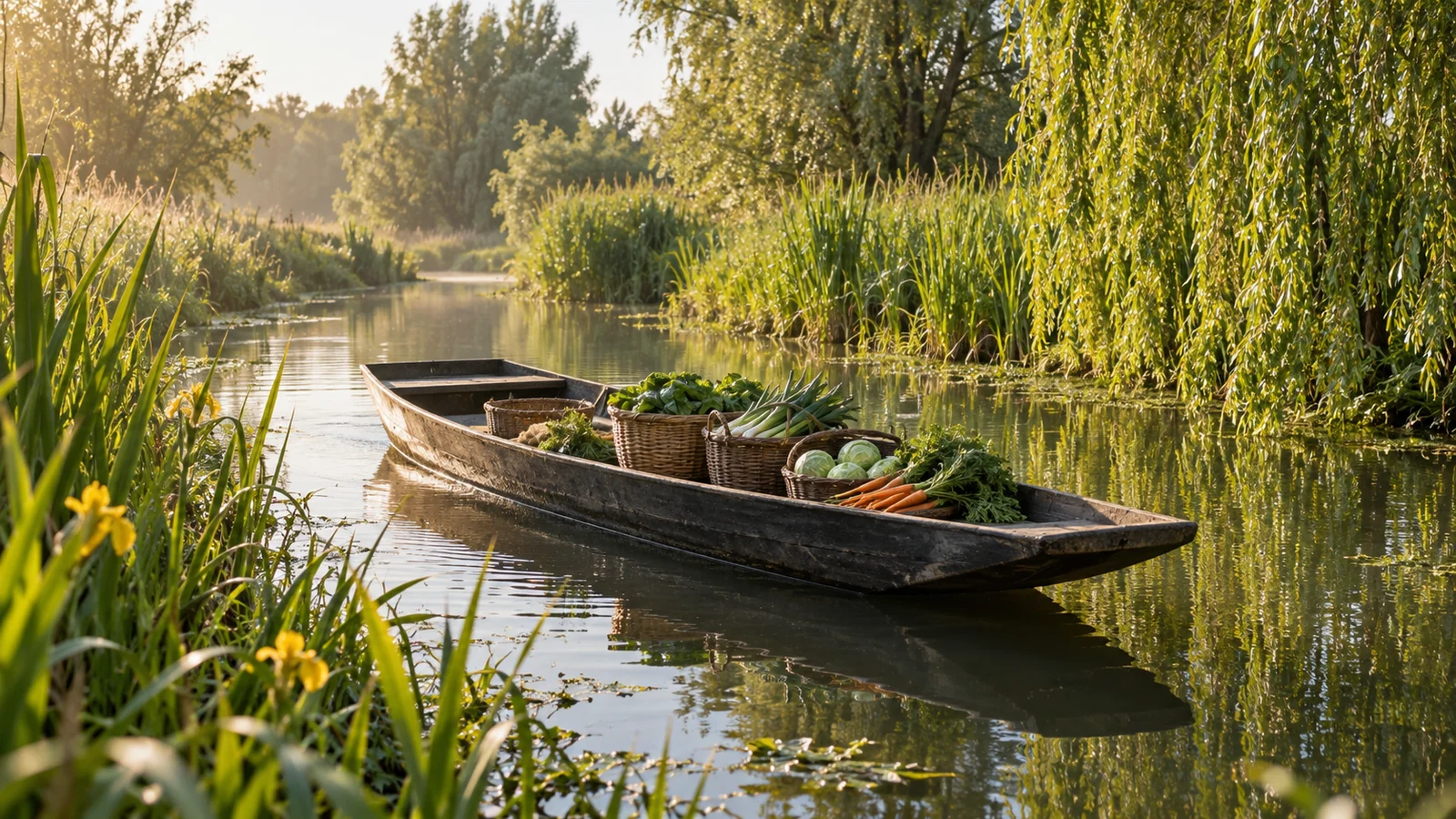
At the gates of the town stretches the Audomarois marsh, one of the most singular and precious landscapes of the region. This vast wetland, criss-crossed with canals and watergangs, forms a maze of water and greenery, shaped by centuries of human activity. The marsh is notably renowned for its market gardening, practised for a long time on its plots, which makes it a unique cultivated space, where the gardeners sometimes reach their land by boat. The traditional boat, the escute or the bacôve, is indeed emblematic of the marsh, where navigation remains a mode of travel and discovery. The Audomarois marsh, rich in a remarkable biodiversity, is recognised as a biosphere reserve, a distinction that underlines its ecological value and its balance between nature and human activity. To stroll in the marsh, on foot, by bicycle or by boat, offers a change-of-scene experience, as close as possible to a preserved ecosystem. This water landscape, shaped by man and nature, constitutes a heritage in its own right, to be discovered and preserved. The Audomarois marsh, with its canals, its crops and its fauna, offers an immersion in a unique environment. To discover the marsh is to explore a living landscape, between market-gardening traditions and natural richness. This marsh, at the gates of Saint-Omer, wonderfully completes the discovery of the town. The Audomarois marsh thus remains one of the natural jewels of the region.
La Coupole, memory of the war
Near Saint-Omer, a site recalls a dark page of history: La Coupole, a former bunker of the Second World War. This immense concrete work, built by the occupier, was destined to serve as a launch base for the V2 rockets, new weapons of the war. An impressive vestige of this period, La Coupole testifies to the extent of the military installations and to the reality of the conflict in the region. Reconverted, the site today shelters a centre of history and memory, which retraces the history of the occupation, the secret weapons and the war. It also hosts a planetarium, adding a scientific dimension linked to the history of the space conquest, heir to the rockets of that era. La Coupole thus offers a visit at once historical and educational, inviting reflection on this period and its consequences. This memory site completes the discovery of Saint-Omer with a plunge into the history of the twentieth century. To visit La Coupole is to understand a little-known aspect of the Second World War in the region. This place, at once impressive and instructive, marks visitors by its extent and its purpose. La Coupole adds a memorial dimension to the discovery of the Audomarois. This site, close to Saint-Omer, deserves a visit to understand the history of the territory during the war.
An escapade in the Audomarois
Saint-Omer and its marsh offer a complete escapade, between heritage, nature and memory, to be lived for a day or a weekend. The diversity of the discoveries, from the cathedral to the marsh, by way of the library and La Coupole, allows one to compose a rich and varied stay. The region of the Audomarois also lends itself to the discovery of the surroundings, in a territory that has other remarkable towns. Nearby, other towns of the Pas-de-Calais are worth the detour, like the fortified towns of the region: Montreuil-sur-Mer, a fortified town, offers another fine escapade, complementary to the discovery of Saint-Omer. To combine the visit of several of these destinations allows one to appreciate the richness of the regional heritage. An escapade in the Audomarois can thus extend to the discovery of the neighbouring towns and landscapes, for a memorable stay. The region, rich in its heritage and its nature, offers multiple possibilities of exploration. To take the time to discover Saint-Omer and its surroundings is to open oneself to the diversity of the treasures of the Pas-de-Calais. This escapade, between culture and nature, leaves a lasting impression. The Audomarois, with Saint-Omer at its heart, constitutes a destination of choice for an escapade in the region. To discover this territory is to taste the richness and diversity of the Hauts-de-France.
Discovering Saint-Omer from Arras
Saint-Omer is easily discovered from Arras, which makes it an ideal destination for an excursion in the Pas-de-Calais. Located at a reasonable distance from the Arras town, it is accessible for a day of discovery, rich in heritage and nature. Arras, by its central position in the region, constitutes a convenient starting point to explore the treasures of the surroundings: Arras between metropolises and European borders illustrates this privileged situation, which puts many destinations within reach of a visit. An excursion to Saint-Omer allows one to complete the discovery of Arras with that of a town with a different heritage, marked by water and religious history. The proximity of the two towns invites one to combine their visit, for a varied stay in the Pas-de-Calais. Saint-Omer, with its cathedral, its marsh and its treasures, offers a discovery complementary to that of Arras. From the Arras town, the excursion is easy and rewards the visitor with the diversity of the riches of Saint-Omer. To explore the surroundings of Arras is thus to open oneself to the variety of the regional heritage. Saint-Omer figures among the not-to-be-missed destinations of a stay in the region. This escapade, between heritage and nature, ideally prolongs the discovery of Arras. To set off to discover Saint-Omer from Arras is thus an invitation to explore the treasures of the Pas-de-Calais.