
Burgundian Arras: what golden age under the dukes of Burgundy?
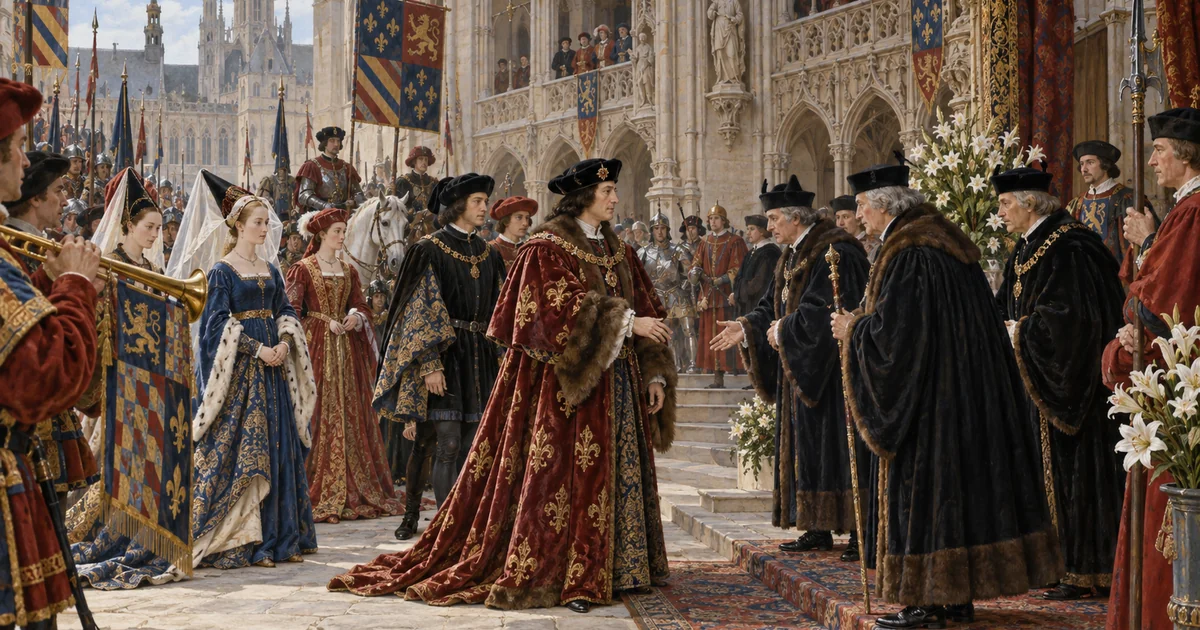
In the 14th and 15th centuries, Arras knew one of the peaks of its history by becoming one of the great towns of the Burgundian state, under the authority of the dukes of Burgundy. These princes, among the most powerful and most sumptuous of Europe, reigned over a vast set of northern territories, including the Artois and its capital. Arras benefited from this period of prosperity and radiance, where merchant wealth mingled with the splendour of the ducal court and an extraordinary artistic flowering. To understand Burgundian Arras is to grasp a golden age of the town, before the upheavals that, with the death of the last duke, were to sweep everything away. A look back at this brilliant era when Arras was one of the pearls of one of the most prestigious states of the ending medieval Europe, that of the great dukes of the West.
The dukes of Burgundy, great princes of the West
To understand Burgundian Arras, one must first measure the power of the dukes of Burgundy. Sprung from the royal house of France, these princes built, over generations and marriages, a vast territorial ensemble that extended from Burgundy to the Low Countries, by way of Flanders and the Artois. This Burgundian state, without being a kingdom, rivalled in power and wealth the greatest monarchies, to the point that its dukes were sometimes nicknamed the great dukes of the West. Their court, renowned for its splendour, was among the most brilliant of Europe, a centre of refinement, art and ceremonial. Arras, a great city of the Artois, was part of this prestigious ensemble. The town, rich in its trade and its craft, benefited from its belonging to a powerful and radiant state. The dukes held an important place there, and it was notably at Arras that the great diplomatic gathering of 1435 took place, of which the Congress of Arras of 1435 testifies. To understand Burgundian power is essential to grasping what Arras was at that time: not an isolated town, but one of the cities of one of the greatest states of its time. This belonging gave Arras a considerable role and prestige, placing it at the heart of the political, economic and cultural dynamics of a principality that fascinated all Europe by its opulence and its brilliance.
Arras, a great city of the Burgundian state
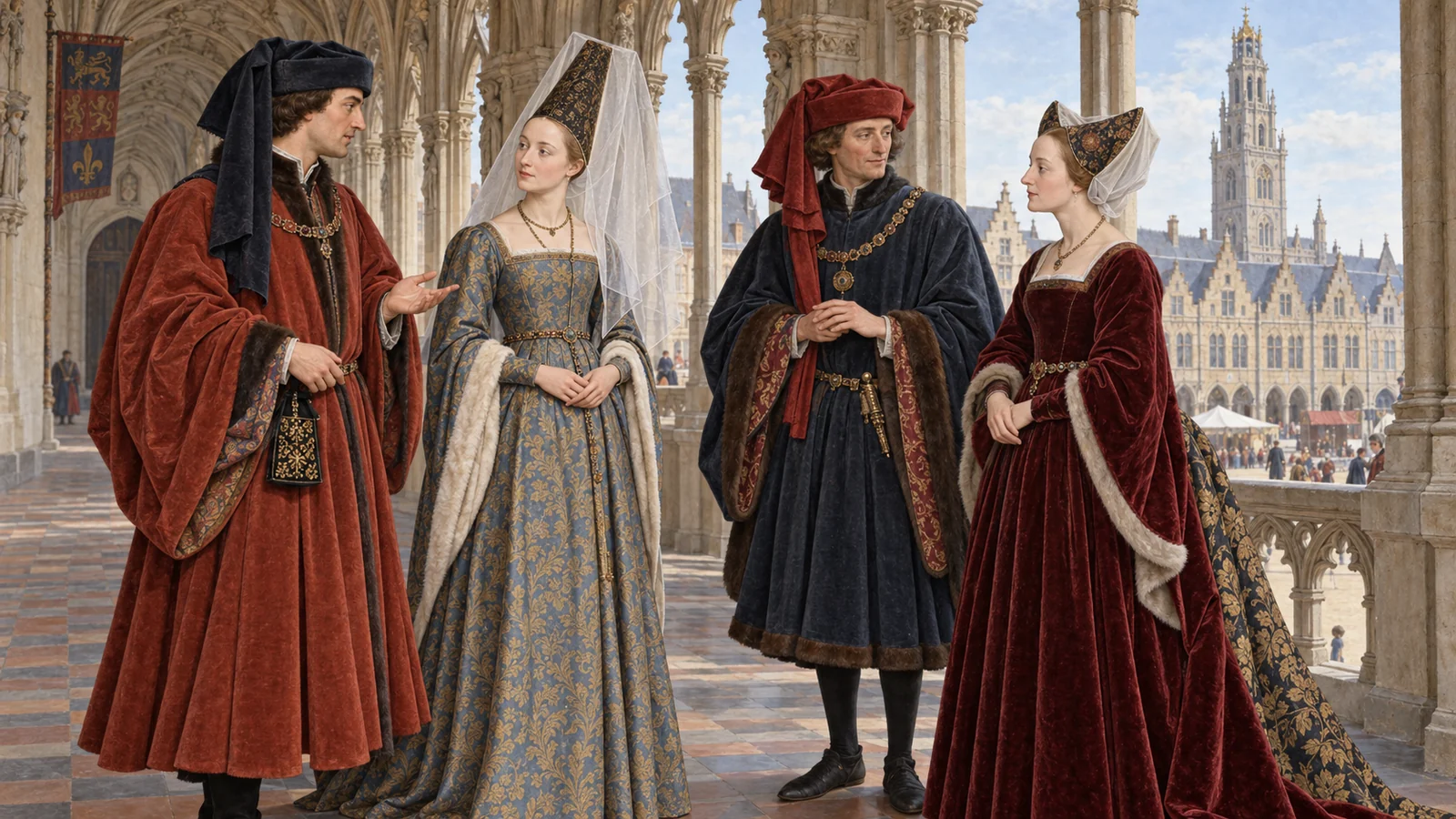
Within the Burgundian state, Arras held the place of a great prosperous city. The town, strong in its past as a drapery capital and in its powerful bourgeoisie, was one of the important economic centres of the principality. It benefited from the relative peace and prosperity that the Burgundian state knew at its peak, notably under the reign of Duke Philip the Good, a period often considered the golden age of Burgundy. Trade, craft and exchange prospered there, in a densely populated and active region. Arras was not the capital of the Burgundian state, whose heart of power moved between several towns, but it was one of its eminent cities, respected for its wealth and its history. This integration into a vast ensemble opened the town onto an extended economic and cultural space, from the Low Countries to Burgundy. The Arras merchants belonged to the exchange networks of this prosperous state, and the town took part in its life. To understand the place of Arras in the Burgundian state is to measure that it then belonged to one of the most dynamic ensembles of Europe, which contributed to its prosperity. This Burgundian period was, for Arras, a favourable time, when the town benefited from its belonging to a powerful and radiant principality, far from isolation and well inserted into the great currents of its time, until the upheavals of the end of the century came to reshuffle the cards.
| Marker | Detail |
|---|---|
| 14th-15th c. | Arras in the Burgundian state |
| The dukes | The great dukes of the West, a sumptuous court |
| Peak | Prosperity and patronage under Philip the Good |
| End | The death of Charles the Bold (1477) |
The splendour of the court and patronage
One of the most striking traits of the Burgundian era was the brilliance of the court and of patronage. The dukes of Burgundy maintained a court of dazzling luxury, famous for its feasts, its ceremonies, its refined etiquette and its magnificence. This splendour was not gratuitous: it served to assert the power and prestige of the dukes, in a permanent staging of power. The Burgundian court was also an extraordinary artistic centre, protecting painters, musicians, writers and luxury craftsmen. It was in the Burgundian framework that one of the great moments of the art of the former Low Countries flourished, with its illustrious painters and its refined productions. Arras, with its artistic tradition and notably its world-renowned workshops of tapestries of Arras, belonged fully to this patronage. The tapestry, a luxury art par excellence, was particularly prized at the court of Burgundy, which was a great client and a great patron of it. Thus, the artistic wealth of Arras and the taste of the dukes met, for the greatest radiance of the town. To understand this splendour and this patronage is essential to grasping the atmosphere of the era: that of a brilliant court, avid for beauty and prestige, which made art an instrument of power. Arras, by its productions and its integration into this universe, took part in this artistic golden age, one of the most fertile of European history, from which the town drew honour and prosperity.
A town between prosperity and tensions
The belonging to the Burgundian state was not without tensions, despite the prosperity. Like the other great towns of the principality, Arras maintained with its dukes an ambivalent relationship, made of cooperation and rivalries. The cities of the North, rich and proud of their liberties, sometimes bore poorly the authority and the fiscal demands of the dukes, which provoked, here and there, tensions and urban revolts. The dukes, for their part, sought to strengthen their power over these powerful towns, in an always delicate balance between communal autonomy and princely authority. Arras, with its tradition of urban liberties and its powerful bourgeoisie, was part of this game. The town could defend its privileges before the duke, while benefiting from the protection and prosperity that belonging to the state offered. This complex relationship is characteristic of the relations between the great towns and the princes at the end of the Middle Ages. One must therefore beware of idealising Burgundian Arras as a perfectly happy and submissive city: it was also the stage of tensions, a reflection of the power stakes of the era. To understand this dimension allows one to nuance the picture and to restore the reality of a rich town but jealous of its rights, prosperous but sometimes in conflict with its prince. This balance between prosperity and tensions is an integral part of the history of Burgundian Arras, a dynamic and proud town within a great state.
The brutal end of Burgundian Arras
The Burgundian golden age of Arras knew a brutal end. The death of Charles the Bold, the last great duke of Burgundy, killed in battle in 1477, opened a major crisis. Without a male heir, the immense Burgundian state was at once coveted and disputed, notably by the king of France, Louis XI, who undertook to seize the Artois. For Arras, this disappearance marked the end of an era. The town, faithful to Burgundy, underwent the royal reconquest and the punishment of Louis XI, who expelled inhabitants and tried to refound it. The Burgundian golden age thus ended in war and ordeal. This brutal shift, from a dazzling prosperity to a period of troubles, is one of the great turning points of the history of Arras. It recalls the fragility of greatnesses: the Burgundian state, so powerful and brilliant, collapsed in a short time after the death of its last duke, dragging into its fall the destiny of towns like Arras. The end of Burgundian Arras was therefore not peaceful, but dramatic, marked by violence and uncertainty. To understand this end allows one to measure how much eras of splendour can be followed by sudden upheavals. Arras, after having shone within the Burgundian state, entered a troubled period, before knowing, later, a new destiny under the authority of the Habsburgs then of Spain.
The Golden Fleece and the Burgundian ceremonial
The court of Burgundy stood out by a ceremonial of unequalled richness, of which one of the most famous symbols was the Order of the Golden Fleece, that prestigious order of chivalry founded by Duke Philip the Good to gather the elite of the nobility around his person. This order, with its insignia, its chapters and its feasts, embodied the chivalric ideal and the prestige of the house of Burgundy. Beyond the Golden Fleece, the whole life of the Burgundian court was regulated by a meticulous ceremonial, mixing splendour, symbols and stagings of power. Sumptuous banquets, tournaments, solemn entries into the towns, dazzling processions: Burgundy excelled in the art of representation, making spectacle a political instrument. The great towns of the state, including Arras, were sometimes the setting of these events, and their population witnessed the deployment of ducal magnificence. This ceremonial was not pure vanity: it served to assert the legitimacy and grandeur of the dukes, to weld the nobility around them and to impress subjects as well as foreign powers. To understand this dimension of splendour and ceremonial is essential to grasping the spirit of the Burgundian era, where power showed itself in a profusion of luxury and symbols. Arras, a city of this state, was bathed in this culture of prestige, of which it perceived the echoes and in which it took part, adding to its own brilliance that, dazzling, of the house of Burgundy at the peak of its glory.
Arras in the networks of the Burgundian Low Countries
The belonging to the Burgundian state durably inserted Arras into the networks of the Low Countries, that set of rich northern provinces that formed the economic heart of the principality. Alongside great towns such as Bruges, Ghent, Brussels or Lille, Arras took part in an economic and cultural space of exceptional density, one of the most developed in Europe. Commercial exchange, the circulation of men, ideas and works of art united these cities within one and the same prosperous ensemble. Arras, with its drapery and artistic tradition, belonged fully to these networks, trading and dialoguing with the other great towns of the Burgundian Low Countries. This integration opened the town onto a wide horizon, favouring its prosperity and its radiance. It also inscribed Arras in a specific cultural area, that of the Burgundian Low Countries, whose art, language and ways of life bore a common imprint. To understand this insertion allows one to measure that Arras did not live folded in on itself, but within a dynamic and interconnected ensemble. This dimension explains part of the vitality of the town at this era, nourished by its links with the great neighbouring cities. Burgundian Arras was thus an open town, turned toward the Low Countries and integrated into their networks, which contributed to making this period one of the most prosperous of its history, before the upheavals of the end of the century came to break this balance and gradually attach the town to other destinies.
The legacy of the Burgundian period
What remains, today, of Burgundian Arras? A legacy both material and symbolic. This period was, for the town, a time of prosperity and radiance, of which the richness of its heritage and the memory of its golden age testify. The belonging to the Burgundian state durably inscribed Arras in a cultural and economic space turned toward the Low Countries, whose imprint marked the town. The great congress of 1435, the tapestries prized by the dukes, merchant prosperity: so many traces of this brilliant era. Burgundian Arras recalls that the town was, at the end of the Middle Ages, one of the cities of one of the most prestigious states of Europe, and that it took part in its brilliance. This legacy, often eclipsed by later periods, deserves to be known and valued, for it constitutes one of the peaks of the history of Arras. To understand Burgundian Arras is to grasp a moment when the town shone within a powerful and refined ensemble, before the upheavals that made it tip into another destiny. To make this period known is to do justice to a golden age too often little known, and to recall that Arras was, for a time, one of the pearls of Burgundy, that fascinating state which, in a century, deeply marked the history of Europe before disappearing, leaving to towns like Arras the memory of a shared greatness and a prosperity that the centuries have not erased.