
Joan of Arc prisoner: what link with Arras and the Artois?
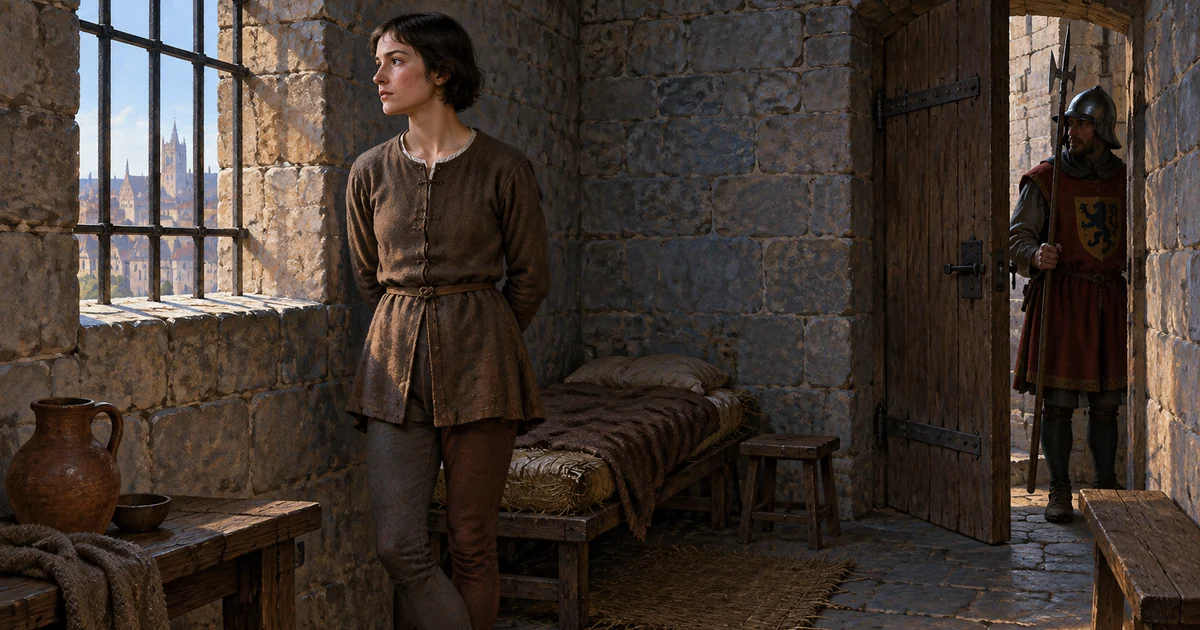
Among the great figures of the history of France who crossed the destiny of Arras, there is an unexpected one: Joan of Arc, prisoner of the Burgundians. Captured in 1430, the young heroine knew, during her captivity, the land of the Artois then held by the duke of Burgundy, of which Arras was the capital. Before being sold to the English and taken to Rouen where she was tried and burned, Joan passed through Burgundian hands, in this region of the North where her fate was partly decided. Her trial even keeps the trace of a link with Arras. To understand this episode is to light up a tragic moment of the Hundred Years' War and to recall that Arras, a Burgundian stronghold, was mixed up in the destiny of the most famous of Frenchwomen. A look back, with the historian's caution, at Joan of Arc and the Artois.
The capture of Joan of Arc in 1430
It all begins with a decisive event: the capture of Joan of Arc, in May 1430, before Compiegne. As she led a sortie against the besiegers, the Maid was taken prisoner by Burgundian soldiers, in the camp allied to the English. This capture was a windfall for Joan's enemies: she who had restored courage to the French and had the king crowned at Reims fell into the hands of the Burgundian party, then at war against the camp of the king of France. The context must be recalled: France was torn by the Hundred Years' War and by the struggle between Armagnacs and Burgundians, the latter allied to the English. Now the Artois and Arras belonged to the duke of Burgundy, a distant heir of the counts of Flanders, whose domain extended over a large part of the North. By falling into Burgundian hands, Joan thus found herself in hostile territory, in the sphere of this powerful principality. Her capture opened a long captivity, during which her fate would be negotiated between her Burgundian jailers and the English who claimed her. To understand the circumstances of this capture is essential to grasping what followed: Joan was not immediately handed to the English, but first held by the Burgundians, in this region of the Artois of which Arras was the heart. It is this pivotal moment, between capture and delivery, that links the Maid to the Arras land.
A captivity in Burgundian lands
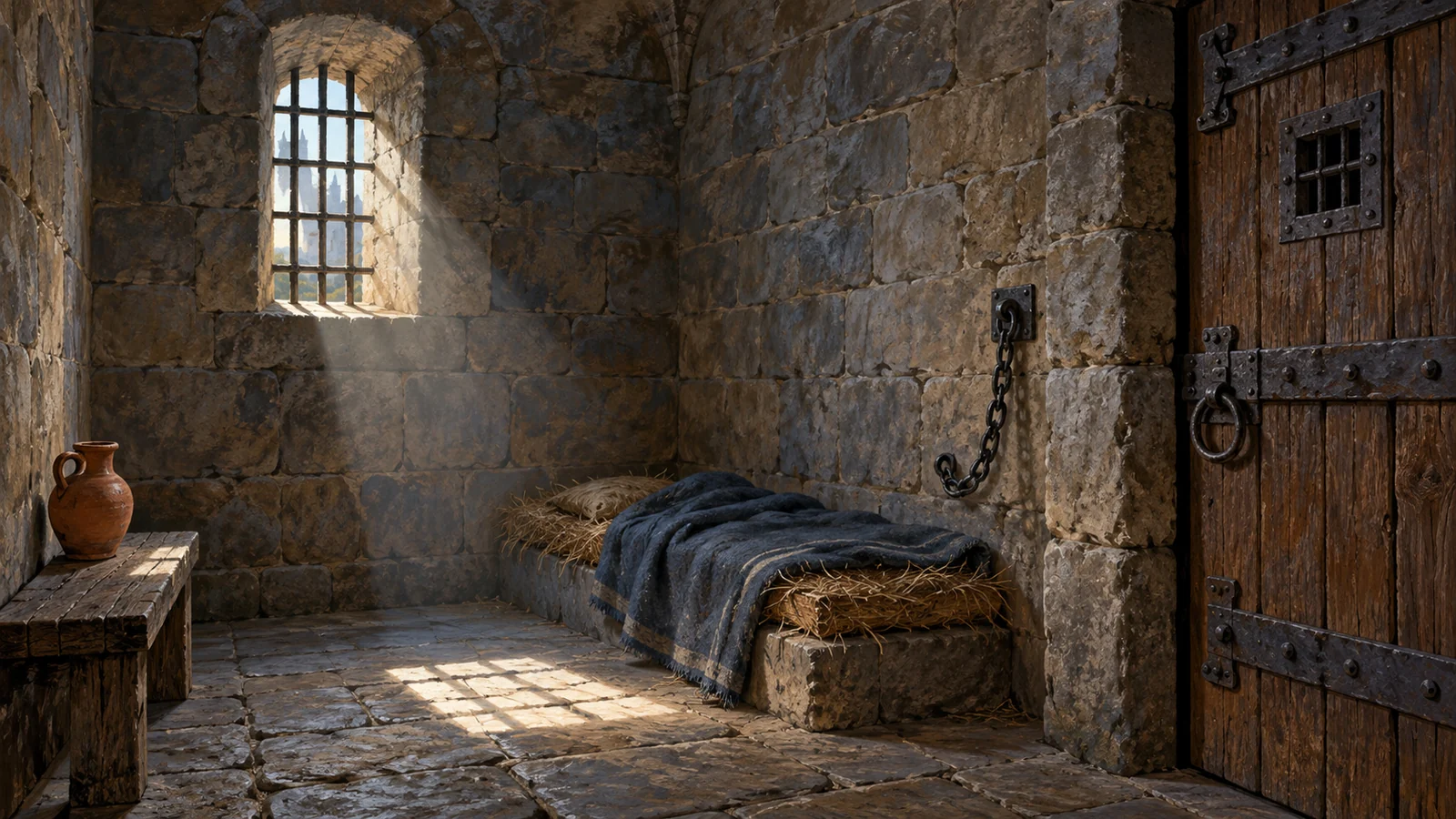
After her capture, Joan knew a captivity in Burgundian lands, in the hands of the lord who had taken her prisoner. She was held in several places of the North, in castles belonging to her jailers, before finally being handed to the English. This period of detention, which lasted several months, took place in the region controlled by Burgundy, of which the Artois and Arras formed an essential part. Joan, a prisoner, became the stake of bitter negotiations: the English wanted to seize her to try and discredit her, while her Burgundian jailers could sell their catch. The camp of the king of France, the one she had served, made little effort to free her, which remains one of the grey areas of this history. During this captivity, Joan showed a courage and firmness that struck her contemporaries, even attempting to escape. She was then at the heart of a hostile territory, that of Burgundy, of which Arras was the great city. A few years earlier, this same Burgundian Arras had resisted the royal army, as the siege of Arras of 1414 recalls. This immersion in the Burgundian world, before her delivery to the English, anchors Joan's destiny in the region. One must here stick to the established facts and beware of legendary embellishments: Joan's Burgundian captivity is documented, notably by the archives and by her own trial, and it is on these bases that the historian reconstructs this episode, without yielding to the fictionalised accounts that have sometimes blurred the reality of this dark period of her life.
| Marker | Detail |
|---|---|
| May 1430 | Capture of Joan before Compiegne |
| Jailers | The Burgundians, masters of the Artois |
| Link | Arras, Burgundian capital of the region |
| 1431 | Sold to the English, tried and burned at Rouen |
Joan and Arras: the trace of the trial
The link between Joan and Arras is not only a matter of geography: it leaves a trace in the sources, and notably in the trial of the Maid. According to the minutes of her trial, Joan mentioned Arras, noting in particular that she had been shown there a representation of herself, a portrait depicting her. This detail, drawn from her own statements before her judges, attests to a contact between the prisoner and the Arras city during her Burgundian captivity. This information must be handled with the required rigour: the trial documents are a precious but complex source, to be interpreted with care. What they reveal is that the name of Arras figures in Joan's history, as one of the places linked to her path as a captive. This mention, however modest, suffices to inscribe the town in the great Joan narrative. It recalls that Arras, capital of the Burgundian Artois, was on the map of Joan's captivity, in this region of the North where part of her destiny was decided. For the local historian, this link is precious: it attaches the town to one of the most universal figures of the history of France. Without exaggerating the place of Arras in Joan's epic, whose decisive moments were played out elsewhere, one can legitimately underline this point of contact, attested by the sources, between the Maid and the city. It is this slender but real thread that justifies evoking Joan of Arc in the history of Arras.
Sold to the English: the end of a heroine
Joan's Burgundian captivity ended with an act that sealed her fate: her delivery to the English. For a large sum of money, the Burgundians handed their prisoner to the English, who took her to Rouen. There, she was subjected to a heresy trial, conducted by judges won over to the English cause, in conditions that made this trial a parody of justice. Condemned, Joan was burned alive at Rouen in 1431, at an age when she was still almost a child. This tragic end, in which politics, religion and vengeance mingled, made her a martyr. The responsibility of the Burgundians, who captured and sold her, is engaged in this outcome, as is that of the English and their French allies. Much later, a rehabilitation trial cleared her memory, and Joan became one of the great figures of French history and spirituality, up to her canonisation in the 20th century. To understand the role of the Artois and Arras in this history, one must measure that it was indeed the Burgundian camp, master of the region, that handed Joan to her judges. The town of Arras, capital of this camp, is thus indirectly linked to the heroine's end. This collective responsibility of the Burgundian party, of which Arras was the heart, is an essential, though uncomfortable, aspect of the link between the city and Joan of Arc, which an honest history cannot pass over in silence.
History and legend of Joan
Few figures have aroused as many tales and legends as Joan of Arc. A very real historical figure, whose existence and great actions are solidly documented, she has also become a myth, taken up and reinterpreted over the centuries by various political and religious currents. The historian must here show great vigilance, distinguishing the attested facts from legendary additions and instrumentalisations. Joan's path, from Domremy to Rouen, by way of the coronation at Reims and her captivity, is known thanks to exceptional sources, foremost among them the minutes of her trial and of her rehabilitation. Reference historians have devoted rigorous works to untangling the truth from the legend, restoring the real Joan beneath the layers of interpretation. This critical approach is particularly necessary for a figure so laden with symbols. As regards Arras, it invites neither overestimating nor neglecting the town's link with Joan: neither a high place of her epic, nor an insignificant detail, Arras was one of the cities of the region where her Burgundian captivity unfolded. To restore this link accurately, without amplifying it abusively, is the best way to honour both Joan's memory and the requirement of historical truth. It is also an occasion to recall the importance of sources and method in the knowledge of the past, before a figure that legend has never ceased to want to appropriate.
The Burgundian Artois in Joan's time
Joan's captivity lights up, in relief, the situation of the Burgundian Artois at the beginning of the 15th century. The region, with Arras as its capital, then belonged to the duke of Burgundy, one of the most powerful princes of Europe, whose domain extended from the Low Countries to Burgundy. An ally of the English against the king of France, the duke of Burgundy played a central role in the Hundred Years' War, and the capture of Joan by his men belongs to this alliance. Arras, a great city of this vast ensemble, lived to the rhythm of Burgundian power, whose court was among the most brilliant of the era. This period, marked by tensions and wars, was also, for the region, a time of prosperity and radiance under the aegis of the dukes, as the aftermath of the battle of Agincourt and its consequences, which had strengthened Burgundy, testify. To understand Joan's captivity supposes keeping in mind this frame: she was the prisoner of a camp, the Burgundian camp, of which Arras was the jewel. The destiny of the Maid and that of the town thus cross in the context of this triumphant Burgundy, before the great reversals to come. A few years after Joan's death, this same Burgundian camp was moreover to reconcile with the king of France, precisely at Arras, during a famous congress. The town, linked to Joan's captivity, was thus to become the stage of a major turning point of the Hundred Years' War.
Why evoke Joan of Arc at Arras
At the end of this journey, a question remains: why evoke Joan of Arc in the history of Arras? Because, without being a major place of her epic, the town and its region were mixed up in one of the darkest episodes of her life, her Burgundian captivity, which led to her death. Because the name of Arras figures in the Joan sources, notably in her trial. And because to make this link known is to inscribe local history in the great national history, showing how the destiny of a universal figure crossed that of a town of the North. It is not a matter of abusively claiming Joan for Arras, nor of artificially inflating a link that remains secondary in her path. It is, more justly, a matter of recognising this point of contact and restoring it accurately, in respect of the facts. This approach illustrates a general truth of local history: the great cities are often mixed up, at one moment or another, in the major events of the country's history. Arras, by its position and its importance, was one of those, crossing the destiny of figures as considerable as Joan of Arc. To give back its just place to this episode is to enrich the knowledge of the past of Arras and to recall that this town, so rich in its own history, was also the witness and the actor, sometimes despite itself, of the great dramas of the history of France.